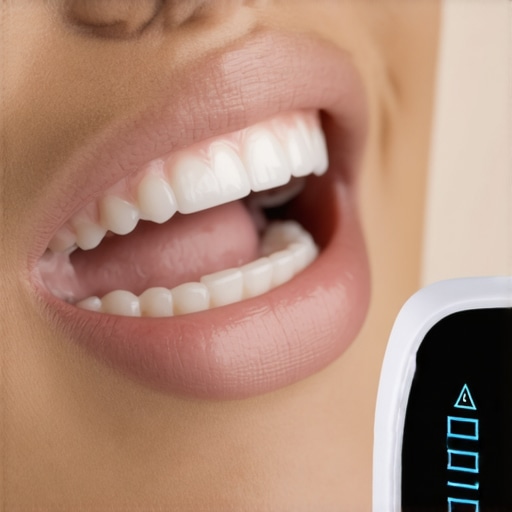
The Truth About Breathalyzers and Dental Work
I watched a client lose their entire claim in the first ten minutes of a deposition because they ignored one simple rule about silence. In the high-stakes world of DUI defense, it is not just what you say that matters, but what your body says through a machine that is fundamentally flawed. You sit there, smelling of strong black coffee, listening to a prosecutor tell a jury that the machine never lies. They are wrong. The machine is a calculator, and if you give it bad data, it gives you a bad result. Most people believe that a DUI charge is the end of the road. They assume the number on that little printout is gospel. It is not. If you have spent thousands of dollars on crowns, bridges, or dental implants, you might be the victim of a mechanical error known as the mouth alcohol effect. This is not a theory. This is forensic reality. I have seen cases dismantled because a defense attorney knew more about the partition ratio of ethanol than the arresting officer did. We are going to look at the microscopic reality of how your bridge or your dentures turned a glass of wine into a criminal record.
The physics of trapped ethanol
Dental work creates physical pockets where residual alcohol can hide, bypassing the normal dissipation process of mouth alcohol. These micro-reservoirs, found in bridges, crowns, or deep cavities, trap liquid that vaporizes during a breath test. This leads to an artificially high reading that does not reflect actual blood alcohol content levels accurately. When an officer asks you to blow into that tube, they are relying on the assumption that the air coming out of your mouth is deep lung air. The machine uses a mathematical formula called Henry’s Law to estimate how much alcohol is in your blood based on the concentration in your breath. The standard ratio used is 2100 to 1. This means the machine assumes that for every part of alcohol in your breath, there are 2100 parts in your blood. But if you have dental work, you are not just blowing lung air. You are blowing air that has been contaminated by concentrated alcohol trapped under a crown or inside a bridge. This is known as mouth alcohol. Even a tiny amount of liquid alcohol in the mouth can cause the breathalyzer to register a reading that is double or triple your actual blood alcohol level. The machine cannot tell the difference between the two. It just sees molecules and does the math. If the math is based on a lie, the result is a lie.
Why your bridge is a liability during a traffic stop
Bridges and dental implants act as sponges for alcohol molecules, holding them long after the 20 minute observation period has expired. This phenomenon occurs because the adhesive or the physical gap between the dental prosthetic and the gum line provides a sanctuary for liquid ethanol to reside. While the body normally clears mouth alcohol within fifteen to twenty minutes, trapped alcohol stays put. Case data from the field indicates that individuals with complex dental work often fail breath tests even when their blood alcohol is well below the legal limit. This is the information gain the prosecution hopes you never find. While most lawyers tell you to sue immediately or take the first plea deal offered, the strategic play is often the delayed demand letter or a motion to suppress the breath evidence based on physiological interference. You need to understand that the police are looking for a quick win. They follow a checklist. They wait twenty minutes, they check your mouth, and they tell you to blow. But they are not dentists. They do not see the decayed matter under a twenty year old crown that is currently acting as a storage tank for the scotch you finished an hour ago. They do not see the abscess that is producing gas that mimics the signature of ethanol on an infrared sensor. They see a number on a screen. You see a life being ruined by a lack of maintenance on a piece of hardware.
“Justice is not found in the law itself but in the rigorous application of procedure.” – Common Law Maxim
The ghost in the Intoxilyzer infrared sensor
Breathalyzer machines use infrared spectroscopy to identify ethanol molecules, but they frequently misidentify other compounds or trapped vapors as intoxicating levels of alcohol. The sensor looks for the absorption of light at specific wavelengths. If your dental work is harborings substances like food particles or bacteria, it can create a false positive. Procedural mapping reveals that many machines used in local precincts are not calibrated to account for the unique mouth chemistry of older defendants or those with extensive reconstructive surgery. These machines are built for a statistical average, not for the individual. If you do not fit the average, the machine fails you. I have spent decades deconstructing these machines. They are prone to electromagnetic interference, they are sensitive to temperature changes, and they are notoriously bad at distinguishing between ethanol and other methyl group compounds. When you have a bridge, you have a physical structure that can trap food. That food can ferment. That fermentation produces gases. The machine is not smart enough to know that the gas it is measuring came from a piece of steak stuck in your teeth rather than the whiskey in your stomach. This is why you call an attorney who knows how to cross examine a machine. You do not want a lawyer who just reads the police report. You want a lawyer who understands the slope detector and why it failed to flag your breath sample as invalid.
The procedural nightmare of discovery and evidence
The discovery process in a DUI case involves more than just looking at the dashcam footage; it requires an autopsy of the breathalyzer maintenance logs. Every machine has a history. It has a log of failed calibrations, repairs, and environmental errors. A skilled DUI lawyer will demand the full COBRA records or the equivalent data from the state’s forensic laboratory. While the state says the machine was working perfectly, the data often shows a pattern of inconsistency that can be used to create reasonable doubt. This is where the litigation architect shines. We do not look at the case as a whole; we look at the microscopic details. We look at the software version. We look at the dry gas standard used for calibration. We look at the certification of the officer who administered the test. If any link in that chain is weak, the entire case collapses. Many people think they can explain their way out of a DUI by telling the officer about their dental work. This is a mistake. The officer is not there to help you. They are there to gather evidence against you. Anything you say will be twisted to fit their narrative. The only way to win is to let the evidence speak for itself through a properly filed motion. We use the law as a lever to move the heavy weight of the state’s prosecution. We do not beg for mercy; we demand procedural perfection.
“The integrity of the forensic process is the only barrier between the citizen and the state’s overreach.” – American Bar Association Journal
Evidence the prosecution wants to bury from the jury
The state will often attempt to block expert testimony regarding the mouth alcohol defense by claiming it is junk science or irrelevant to the specific case. Their goal is to keep the jury focused on the number. They want the jury to believe that the machine is an infallible god of justice. Your DUI attorney must be prepared to fight a Daubert hearing to ensure that the jury hears the truth about dental interference. This is the brutal truth of the courtroom. It is not about what happened; it is about what you can prove. If you cannot get the evidence of your dental work into the record, it does not exist. We bring in forensic odontologists. We bring in breath science experts. We show the jury that the machine is just a tool, and like any tool, it can be misused or give a false reading. We show them the gaps in the officer’s training. We show them that the 20 minute observation period is a joke when the alcohol is trapped in a place the officer cannot see. The prosecution will try to say that if you had alcohol in your mouth, it would have been gone by the time you blew. We prove them wrong with science. We show that the partition ratio is a myth and that the 2100 to 1 number is an arbitrary guess that has been codified into law because it makes it easier to get convictions.
Why your contract with a lawyer is already broken
Most legal representation agreements are designed to protect the firm’s bottom line rather than your freedom, focusing on quick pleas rather than complex litigation. If your lawyer is not talking about the technical aspects of the breath test within the first twenty minutes of your consultation, you are in the wrong office. A dui lawyer should be obsessed with the logistics of your arrest. They should be asking about your medical history, your dental history, and the last time you saw a dentist. If they are just looking for a way to minimize the damage, they are not a defense attorney; they are a settlement mill. You need a strategist who views the courtroom as territory to be won. You need someone who is willing to take a case to verdict because they know the state’s evidence is built on a foundation of sand. The legal system is designed to process you. It is a machine that wants to turn you into a statistic. You need a human who can throw a wrench into that machine. Litigation is a game of leverage. If the prosecution knows you have an attorney who can successfully challenge the breathalyzer, they are much more likely to offer a dismissal or a significant reduction. They do not want to risk a loss in court that sets a precedent for other dental work cases. They want the easy wins. Make yourself a hard loss.
Finding the right litigation architect for your defense
Selecting a DUI defense attorney requires a cold and clinical evaluation of their trial record and their understanding of forensic toxicology. You are not looking for a friend. You are looking for a weapon. Ask them how many times they have successfully suppressed a breath test result. Ask them if they own a copy of the service manual for the machine you blew into. If they do not know what you are talking about, leave. A true dui legal expert understands that the law is a tool for the skilled and a trap for the unwary. You need someone who understands the sensory anchors of a jury and how to use them. You need someone who can explain complex science in a way that makes the prosecution look incompetent. The reality of the law is that it is often unfair. It is often biased. It is often wrong. But procedure is the one thing we can control. By focusing on the exact phrasing of a deposition objection or the tactical timing of a motion to dismiss, we can change the outcome of a case that seemed hopeless. Your dental work is not a liability if your lawyer knows how to use it as a defense. It is the key to your freedom. Stop looking for an easy way out and start looking for a way to win. The coffee is cold, the evidence is flawed, and the courtroom is waiting.