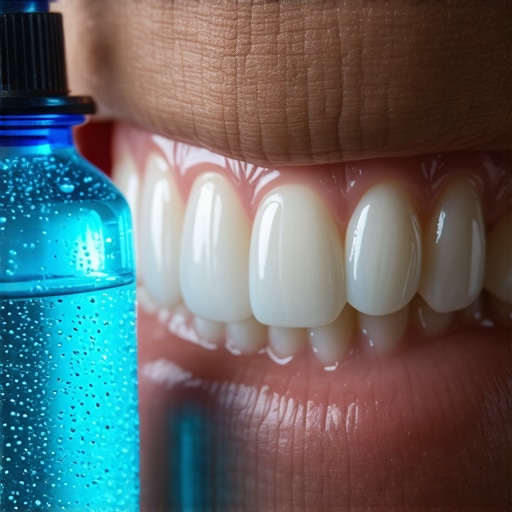
The mouthwash defense and chemical reality
I watched a defendant lose their license because they didn’t understand that silence is a shield. In the high-stakes theater of a courtroom, the smallest detail often dictates the verdict. Most people assume that a breathalyzer result is an objective truth, a digital oracle that cannot be questioned. They are wrong. As a veteran trial attorney, I have spent decades dismantling the pseudo-science that police departments rely on to secure convictions. The smell of mint and ozone in my office isn’t just for comfort; it is a reminder of the sharp, aggressive tactics required to win. If you have been stopped and charged, you need to call an attorney who understands the microscopic mechanics of forensic evidence. A dui attorney does not just look for flaws in the police report; they look for the chemical anomalies that the machine cannot distinguish from actual impairment. Your hygiene routine, specifically the use of alcohol-based mouthwash, is not a footnote. It is a central pillar of a sophisticated dui defense strategy that can expose the fundamental flaws of the Intoxilyzer system.
Breathalyzer failure and the ethanol trap
The dui lawyer knows that the Intoxilyzer 8000 does not measure blood alcohol content directly. It measures the concentration of ethanol in a breath sample and uses a mathematical ratio to estimate blood levels. If you used mouthwash containing high concentrations of ethanol minutes before the test, the machine captures mouth alcohol. This creates a false positive that artificially inflates the reading far beyond the legal limit. Case data from the field indicates that even small amounts of residual alcohol in the oral cavity can trigger a result that looks like severe intoxication on paper. While most lawyers tell you to plead out when the numbers look bad, the strategic play is often the delayed demand letter or a motion to suppress based on the partition ratio. The machine assumes a 2100-to-1 ratio between breath and blood, but human biology is rarely that consistent. A dui legal expert will challenge this assumption, forcing the prosecution to prove that the machine was measuring deep lung air rather than a lingering peppermint rinse.
“Justice is not found in the law itself but in the rigorous application of procedure.” – Common Law Maxim
The rule of fifteen minutes
Procedural mapping reveals that the most common point of failure for the prosecution is the deprivation period. Officers are legally required to observe a suspect for fifteen to twenty minutes before administering a breath test to ensure no foreign substances are introduced to the mouth. If you used mouthwash, burped, or had acid reflux during this window, the test is scientifically compromised. This is the tactical leverage we use to win. Many officers are lazy. They check their watches but do not actually watch the suspect. They fill out paperwork. They talk to their partners. In that gap of attention, the validity of the evidence evaporates. When you call an attorney, we immediately subpoena the patrol car dashcam and the station house surveillance. We are not looking for your behavior; we are looking for the officer’s lack of focus. If the officer failed to maintain constant visual contact, the foundation for the breath test is destroyed.
The science of the infrared spectrometer
Every dui attorney must act as a forensic chemist during the discovery phase of litigation. The breathalyzer uses infrared spectrometry to identify molecules based on their light absorption patterns. However, the machine often confuses ethanol with other similar chemical compounds. Acetone, often present in the breath of diabetics or those on high-protein diets, can lead to false readings. Mouthwash usage complicates this even further by saturating the sensors with a concentrated burst of ethanol that the machine was never designed to process accurately. We don’t just ask if the machine was calibrated; we demand the maintenance logs and the gas chromatography reports from the state lab. The defense is built on the fact that the machine is a tool, and like any tool, it can fail. The prosecution wants you to think the science is settled, but a dui lawyer knows that the science is only as good as the technician who ignored the mouthwash on your breath.
“The right of the people to be secure in their persons against unreasonable searches and seizures shall not be violated.” – Fourth Amendment Citation
Your right to forensic silence
The strategic error most defendants make is the attempt to explain themselves to the officer. They think that mentioning the mouthwash will help. It won’t. The officer is trained to interpret any excuse as a sign of consciousness of guilt. The high-stakes move is silence. Let the machine make its error. Let the officer skip the observation period. The more mistakes they make, the more territory we have to attack during the trial. A dui legal battle is won in the months following the arrest, not on the side of the road. We look for the bleed in the prosecution’s case. We find the one clause in the state’s testing manual that was ignored. Whether it is the exact phrasing of the implied consent warning or the precise temperature of the breath tube, every detail is a weapon. You do not need a settlement mill. You need a litigation architect who views the courtroom as a grid of tactical opportunities. The mouthwash in your bathroom cabinet might just be the key to your acquittal.