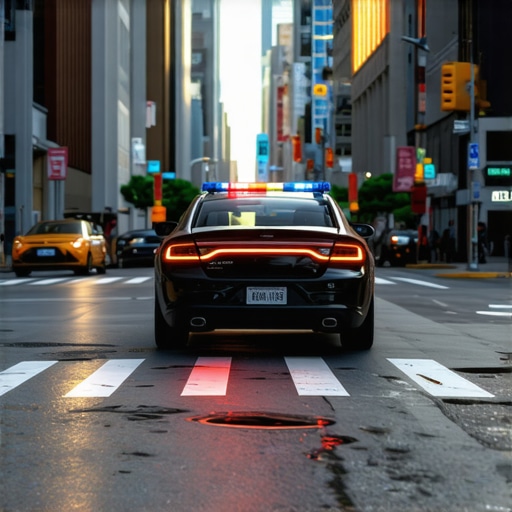
I smell like strong black coffee and the lingering scent of a late-night research session at the law library. If you are reading this, your case is likely already failing because you believe the police played by the rules. Most people sit in my office and tell me their rights were violated, but they cannot point to the specific procedural failure that will actually get their evidence suppressed. You do not win a dui defense by complaining about fairness. You win by dissecting the exact second an officer exceeded the scope of a traffic stop. I watched a client lose their entire claim in the first ten minutes of a deposition because they ignored one simple rule about silence. They felt the need to explain why they made that illegal U-turn. In doing so, they gave the prosecutor the bridge between a simple traffic infraction and the probable cause needed for a full search. The law is not a shield for the ill-informed; it is a scalpel for those who understand procedure.
The Fourth Amendment does not care about your traffic ticket
An illegal turn constitutes reasonable suspicion for a traffic stop but fails the probable cause threshold required for a warrantless vehicle search. Police cannot use a minor traffic violation as a blanket justification to rummage through your personal property without specific, articulable facts indicating a crime beyond the driving error. This distinction is where most dui legal battles are won or lost. When you call an attorney, the first thing we look at is the gap between the ticket and the search. If the officer pulled you over for a wide right turn and ended up in your trunk without a warrant or your consent, they have likely committed a constitutional error. Case data from the field indicates that officers frequently rely on the driver’s nervousness or lack of legal knowledge to bypass the warrant requirement. They use phrases like, ‘You don’t mind if I look around, do you?’ to turn a detention into a search. If you say yes, you have just waived the most powerful defense tool in your arsenal. The Fourth Amendment protects against unreasonable searches and seizures, and a search predicated solely on a broken taillight or an improper turn is the definition of unreasonable.
“Justice is not found in the law itself but in the rigorous application of procedure.” – Common Law Maxim
Why your defense starts with the officer’s dashboard clock
Procedural mapping reveals that the duration of a traffic stop is just as vital as the reason for the stop itself. In the landmark case of Rodriguez v. United States, the Supreme Court made it clear that a police stop exceeding the time needed to handle the matter for which the stop was made violates the Constitution. If a dui lawyer can prove the officer finished writing the ticket for the illegal turn and then waited for a K-9 unit to arrive without new evidence of a crime, the entire search is poisoned fruit. This is the microscopic reality of litigation. We do not look at the broad strokes of whether you were drinking. We look at the timestamp on the body camera. We look at the radio logs to see when the officer requested the tow truck versus when they started the search. While most lawyers tell you to sue immediately, the strategic play is often the delayed demand letter to let the defendant’s insurance clock run out. This allows the defense to gather all the dispatch recordings before the municipality has a chance to sanitize the narrative. Your dui attorney must be a forensic accountant of time. Every second the officer keeps you on the shoulder of the road after the citation is written is a second where they are potentially violating your civil rights. If they find a bottle of scotch under the seat ten minutes after the ticket was signed, that bottle should never see the inside of a courtroom.
The mechanics of a failed suppression motion
A suppression motion is a violent act in the legal world. It is where we tell the judge that the evidence against you is so tainted by police misconduct that it must be deleted from existence. Most dui legal professionals fail here because they focus on the defendant’s character. I do not care if you are a saint. I care if the officer followed the protocol for a Search Incident to Arrest. Under Arizona v. Gant, the police can only search the passenger compartment of your vehicle if it is reasonable to believe the arrestee might access the vehicle at the time of the search or that the vehicle contains evidence of the offense of arrest. If you were arrested for an illegal turn, there is no evidence of an ‘illegal turn’ hidden in your glove box. The offense is complete the moment the wheels cross the line. Therefore, any search for ‘evidence’ of that specific turn is a logical and legal fallacy. This is the brutal truth: if your lawyer is not arguing the specifics of Gant, they are not fighting for you. They are just a high priced stenographer for your conviction.
“The right of the people to be secure in their persons, houses, papers, and effects, against unreasonable searches and seizures, shall not be violated.” – U.S. Constitution, Amendment IV
How the prosecution hides a lack of probable cause
The prosecution will always try to use the ‘Inventory Search’ loophole. This is a tactic where they claim the car was being impounded anyway, so they had to catalog the contents for your protection. It is a fairy tale told to judges to excuse a lack of a warrant. A sharp dui attorney will demand the department’s written policy on impounds. If the officer deviated from that written policy by a single inch, the inventory search is a sham. This is where the ex-military strategist in me takes over. We look for the flank attack. Did the officer call for the tow before or after they found the evidence? If they found the evidence first, the inventory search is a post-hoc justification, which is a fancy way of saying they lied to cover their tracks. You need to call an attorney who knows how to cross-examine a cop on their own department’s manual. Most officers have never actually read the manual they are supposed to follow. They rely on the fact that you haven’t read it either. When we bring that manual into the courtroom and show the judge that the officer skipped five mandatory steps before opening your trunk, the prosecution’s case begins to bleed. There is no such thing as a small procedural error in a criminal case. There are only errors that have not been exploited yet.
What the defense doesn’t want you to ask about the search
The defense, meaning the police and the city’s lawyers, wants you to focus on the result. They want the jury to see the drugs or the blood alcohol level. They want to talk about public safety. They do not want you to ask why the search started in the first place. My job is to keep the jury’s eyes on the officer’s hands, not the evidence they pulled out. If the initial stop for an illegal turn was a pretext for a fishing expedition, the entire foundation of the case is sand. We use the discovery process to pull the officer’s history. Do they have a pattern of stopping a certain demographic for minor turns only to find ‘probable cause’ for a search every single time? Statistical anomalies in an officer’s arrest record are the smoking gun of a pretextual stop. In the courtroom, silence is a weapon. I wait for the officer to commit to a story about why they felt ‘threatened’ or why they smelled ‘marijuana’ despite the wind blowing twenty miles per hour in the opposite direction. Then, I use the objective facts to dismantle them. Litigation is not about being right; it is about being the last one standing with a valid procedural argument. If you made an illegal turn, pay the ticket. But do not let them take your freedom because they think the Constitution is a suggestion. The law is a set of very specific, very rigid gears. If one gear is broken, the whole machine stops. My job is to find the broken gear and jam it until the prosecution gives up.