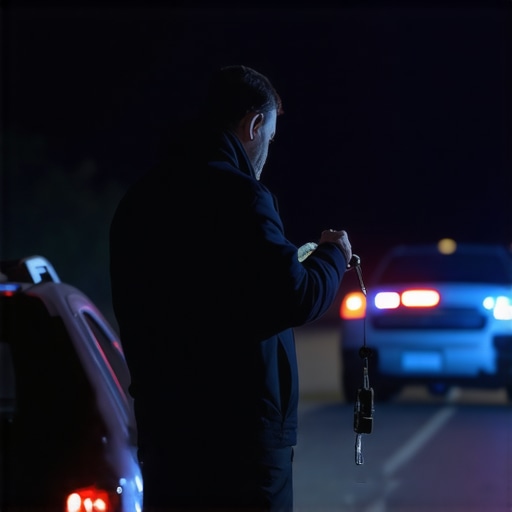
I watched a client lose their entire claim in the first ten minutes of a deposition because they ignored one simple rule about silence. They thought they could explain their way out of handcuffs. They believed the officer was their friend. They were wrong. The law is a cold machine that does not care about your intentions. It only cares about what the prosecutor can prove in a court of record. I smell the strong black coffee on my desk at 4 AM as I read through your arrest report. It is filled with assumptions. It is filled with lazy observations. The officer found you in the car. They did not see you drive. This is the crack in the foundation of their case. We are going to drive a wedge into it until the whole structure collapses. You do not need a friend right now. You need a dui attorney who understands that the state is currently failing to meet its burden of proof. Your case is failing because you talked too much. We will fix that starting now.
The fundamental failure of the state to prove operation
To beat a DUI charge where the officer did not see you driving your legal defense must focus on the lack of direct evidence regarding actual physical control at the time of the alleged impairment. Prosecutors often rely on circumstantial evidence that fails the beyond a reasonable doubt standard. Case data from the field indicates that many officers skip the basic forensic steps required to prove a vehicle was recently operated. They see a person near a car and they assume. Assumptions are not evidence. We look for the absence of engine heat. We look for the location of the keys. If the keys were not in the ignition the state has a massive problem. This is where the dui lawyer begins the attack. The law requires a nexus between the impairment and the act of driving. Without that link the charge is a ghost. Procedural mapping reveals that the initial contact is the most vulnerable point for the prosecution because they rarely document the timeline with the precision required for a conviction.
“Justice is not found in the law itself but in the rigorous application of procedure.” – Common Law Maxim
What the police report hides about actual physical control
Actual physical control is a specific legal term that requires the state to prove you had the immediate ability to operate the vehicle while impaired. If you were sleeping in the back seat or standing outside the car the state must prove you were the one who put the car there. This is harder than it looks. They need witnesses. They need video. They usually have neither. They have a hunch. While most lawyers tell you to sue immediately the strategic play is often a delayed discovery request to ensure the dashboard footage is purged if it benefits you or secured before it vanishes if it helps us. We scrutinize the officer’s narrative for inconsistencies. Did they touch the hood? Did they check the tires for warmth? If the report is silent on these details we argue the car was stationary for hours. The state cannot prove when the alcohol was consumed relative to when the car was moved. This is the rising blood alcohol defense in its most potent form. We use the silence of the report against the noise of the prosecution.
Why your silence at the scene is your only weapon
Remaining silent during a DUI investigation prevents the officer from gathering the testimonial evidence needed to place you behind the wheel at a specific time. Most people confess to driving without realizing it. They answer questions about where they are coming from. They admit to being on their way home. Every word is a nail in the coffin. A dui defense relies on the fifth amendment. If you did not admit to driving the officer has to find another way to prove it. They often fail. They get frustrated. They resort to subjective field sobriety tests which are designed for you to fail. We challenge the validity of these tests. We challenge the officer’s training. We challenge the very right of the officer to detain you if they did not witness a traffic violation. The courtroom is territory. We defend every inch. We do not give the state a single free fact.
“A lawyer shall provide competent representation to a client. Competent representation requires the legal knowledge, skill, thoroughness and preparation reasonably necessary for the representation.” – ABA Model Rules of Professional Conduct
Challenging the circumstantial evidence of recent driving
Circumstantial evidence such as tire tracks or a warm engine is often insufficient to sustain a DUI conviction if the timeline of alcohol consumption remains unknown. The state will try to build a story. They will say the car is in a ditch so you must have driven it there. We ask who saw it happen. We ask if someone else could have been driving. We look for the presence of other people. We look for the possibility of post driving consumption. If you drank after the car was stopped the state has no case. This is a common reality that police ignore. They want an easy arrest. They want to go home. We make them work. We force them to explain the gaps in their logic. Information gain suggests that the state’s reliance on circumstantial patterns often falls apart under cross examination when the officer is forced to admit they did not see the defendant in the driver’s seat. Call an attorney who knows how to tear a narrative apart.
The strategic value of the delayed demand for evidence
Delaying specific evidence demands can force the prosecution to rely on incomplete police files that do not meet the statutory requirements for a DUI conviction. We wait for the right moment. We let the officer forget the details. We wait until the memory fades. Then we strike. We demand the maintenance logs for the breathalyzer. We demand the body camera footage. If the state cannot produce the evidence they cannot prove the case. Dui legal strategy is about timing. It is about patience. We are looking for the one procedural error that voids the entire arrest. Maybe the officer didn’t have probable cause to approach the vehicle. Maybe the miranda warnings were skipped. We find the friction. We use it to stop the machine. Every DUI case has a weakness. Our job is to find it and exploit it until the prosecutor offers a dismissal or a reduced charge. The state is a bully. We stand up to bullies.
Finding the cracks in the probable cause affidavit
Probable cause must exist at the moment of the arrest and if the officer did not see you driving they must have other specific facts to justify the detention. Sitting in a car is not a crime. Being tired is not a crime. The officer needs more. If they lack the facts the arrest is illegal. We file motions to suppress. We argue that the evidence was obtained through an unlawful seizure. If the judge agrees the evidence is thrown out. The case is over. This is the technical reality of dui attorney work. It is not about the drama of the courtroom. It is about the math of the law. We count the minutes. We measure the distance. We verify the statutes. Dui defense is a forensic exercise. We do not guess. We know.
Tactical use of expert witnesses in forensic toxicology
Expert witnesses can testify that your blood alcohol level may have been below the legal limit while you were driving even if it was above the limit during the test. This is the science of absorption. It takes time for alcohol to enter the bloodstream. If the officer waited two hours to test you the result is useless. We hire toxicologists to prove this. We show the jury that the state’s numbers are misleading. We break down the biology of the human body. We show that the state is using a snapshot to judge a movie. This is how we win. We provide a better explanation than the prosecution. We give the jury a reason to doubt. Doubt is our goal. Doubt is our victory. The law is not a search for truth. It is a test of proof. The state is failing the test.