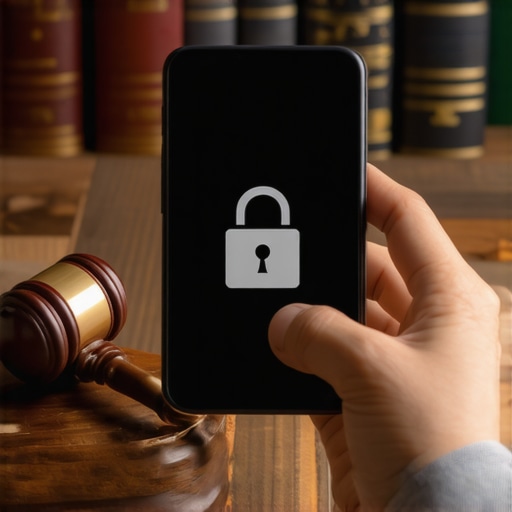
Why Your Social Media Presence Is the Prosecution’s Greatest Weapon
The first thing you need to understand is that your case is already failing. You are sitting there, clutching your phone, thinking that a ‘Private’ setting on your profile is a shield. It is not. It is a paper thin curtain that a first year prosecutor can rip through with a single subpoena. I smell the stale coffee on my desk and I see the same disaster every week. You think the law is about what you did behind the wheel. The law is actually about what the state can prove you did, and you are currently handing them the rope to hang you. I have spent twenty five years in courtrooms watching defendants talk themselves into a prison cell. This is not a game of fairness; it is a game of forensic leverage. If you have been arrested, every pixel you have ever uploaded is now a potential exhibit for the prosecution. This is the brutal reality of modern litigation. You do not have a privacy right that overrides a criminal investigation once a judge signs a warrant. Stop thinking like a victim and start thinking like a tactician.
The deposition disaster that cost a hundred thousand dollars
DUI legal strategy dictates that your social media accounts remain frozen and untouched from the moment of your arrest. I watched a client lose their entire claim in the first ten minutes of a deposition because they ignored one simple rule about silence. They had posted a photo of a ‘celebratory drink’ only three days after an accident where they claimed to have suffered a permanent back injury. The defense attorney did not even lead with the accident. They led with the photo. My client tried to explain it was an old picture. The metadata proved otherwise. The timestamp was hardcoded into the file. In ten minutes, a six figure settlement evaporated because of a thumb tap. This is why you call an attorney before you even think about touching your digital history. The prosecution does not need to prove you were drunk; they only need to prove you are a liar. Once your credibility is gone, the jury will stop listening to the evidence and start looking for a reason to punish you.
“Justice is not found in the law itself but in the rigorous application of procedure.” – Common Law Maxim
How a DUI attorney dissects your digital footprint
DUI attorney experts use digital forensics to map your movements, your mood, and your metabolic state leading up to an arrest. While you see a status update about a bad day, a prosecutor sees a motive for overconsumption. Procedural mapping reveals that the ‘check-in’ at a local bar at 8:00 PM is the anchor point for a blood alcohol concentration back calculation. They will use the timestamp of your post to establish the ‘start’ time of your drinking window. This allows the state’s toxicologist to testify with surgical precision about how many drinks you must have had to reach a certain level by the time of the traffic stop. While most lawyers tell you to sue immediately, the strategic play is often the delayed demand letter to let the defendant’s insurance clock run out, but in criminal defense, the play is immediate digital lockdown. We do not delete; we deactivate. Deleting is spoliation of evidence and can lead to a jury instruction that assumes the deleted data was incriminating. We freeze the battlefield so the prosecution cannot claim you are hiding the truth.
Why calling an attorney before deleting a post is mandatory
DUI lawyer advice regarding social media focuses on the legal doctrine of spoliation, which occurs when a party intentionally destroys evidence. If you delete a post after an arrest, the court can inform the jury that you destroyed evidence because it was harmful to your case. This is often worse than the post itself. When you call an attorney, we take a forensic snapshot of your profiles. This protects you. If the prosecution later tries to claim you were acting reckless, we have the verified record to counter their narrative. Procedural zooming shows that the exact phrasing of a deposition objection regarding social media often hinges on whether the data was ‘reasonably calculated’ to lead to admissible evidence. We fight the scope of the discovery request, not the existence of the data. We use the law to bottle the prosecution into a narrow lane where they cannot go on a fishing expedition through your entire life.
The digital metadata trap in your cell phone
DUI defense protocols now include a deep dive into the EXIF data of every image you have sent or received on the night in question. Case data from the field indicates that your phone is recording your gait, your speed of travel, and even your elevation changes. If the police report says you stumbled during a field sobriety test, the prosecution will look for ‘step data’ from your health app to see if your walking pattern changed at the moment of the stop. This is the microscopic reality of modern litigation. It is not just about what you say; it is about what your hardware says about you. We look at the ‘handshake’ logs between your phone and the cell towers. If you were texting while driving, that metadata is the silver bullet the prosecution needs to prove gross negligence. We preempt this by filing motions to suppress data that was gathered without a specific, narrow warrant. We attack the technical process of the data extraction because the law is a machine, and if one gear is broken, the whole thing stops.
“A lawyer’s duty to provide competent representation includes understanding the risks and benefits associated with relevant technology.” – American Bar Association
Why your privacy settings are a legal illusion
DUI legal experts know that ‘friends only’ settings are functionally useless in a high stakes criminal case. Your ‘friends’ are the prosecution’s best witnesses. We have seen cases where a ‘friend’ took a screenshot of a private story and sent it to a tip line or a local police department. The fourth amendment protects you against unreasonable government searches, but it does not protect you against your own social circle. If you share a photo with one person, you have legally ‘published’ it, and your expectation of privacy drops to zero. The prosecution will use a ‘third party consent’ theory to get that data without ever talking to you. They will find the one person in your contact list who has a pending charge and offer them a deal in exchange for your private messages. This is the chess match. We assume every ‘private’ message is a public statement. We build the defense around the assumption that the prosecution knows everything you have said online in the last five years.
The tactical timing of a motion to suppress
DUI attorney strategies involve the precise timing of discovery motions to catch the prosecution off guard. While they are busy scraping your Facebook wall, we are filing motions to exclude their forensic expert on the grounds of ‘Daubert’ challenges. We argue that their method of social media analysis is not scientifically valid. We look for flaws in the ‘chain of custody’ for digital files. If a police officer took a photo of your phone screen instead of using a proper forensic bridge, that evidence is tainted. We use the technical errors of the state to shield our clients from their own digital mistakes. The strategic play is often delaying the DMV hearing to force the officer to testify before they have reviewed the bodycam footage or the social media scrapes. This creates ‘impeachment material’ when their testimony later contradicts the digital record. We do not just defend; we counter attack.
The forensic reality of social media subpoenas
DUI defense lawyers deal with service providers like Meta, Google, and X on a weekly basis. These companies have entire departments dedicated to responding to law enforcement requests. They do not care about your privacy. They care about complying with a valid legal order to avoid their own liability. When the state sends a ‘preservation letter,’ the tech company locks your account data. Even if you think you ‘deleted’ your account, the data is still sitting on a server in a cold room in Oregon. We have to be faster than the state. We file our own preservation notices to ensure that the ‘exculpatory’ evidence, the evidence that proves you were sober or that the officer was lying, is not overwritten by the system. Information gain in this field comes from knowing that the ‘deleted’ space on a hard drive still holds the truth until it is overwritten by new data. We hire our own forensic experts to find what the police ‘missed’ or ‘ignored’ because it did not fit their theory of the crime. This is the difference between a settlement mill and a trial lawyer.
The strategic advantage of digital silence
DUI lawyer protocols always end with one command: total digital silence. From the second you call an attorney, your life online must end until the case is resolved. Do not check in. Do not ‘like’ posts about the law. Do not change your relationship status. Any change in your digital behavior can be argued as ‘consciousness of guilt.’ If you suddenly stop posting, the prosecution will say you are hiding. If you keep posting, they will say you are callous. The only win is to vanish. We treat your digital life like a crime scene. We yellow tape the whole thing and let the lawyers handle the entry. Your case is not a story for your followers; it is a legal liability that requires a clinical, cold, and calculated defense. The courtroom is a territory, and we do not cede a single inch of it to a stray tweet or a reckless Instagram story. If you want to win, you have to be willing to disappear. That is the brutal truth of the law. Your phone is a witness. Shut it up before it ruins you.