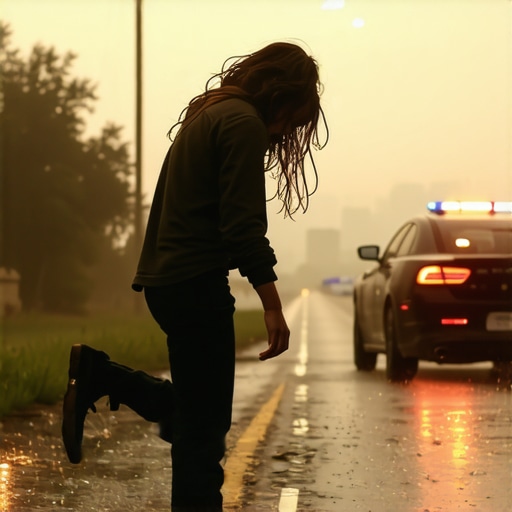
I smell like strong black coffee and the stale air of a courtroom that has seen too many lies. Let me be blunt. Your DUI case is likely failing because you believe the truth will save you. It will not. The legal system is a machine of procedure and the roadside field sobriety test is its primary manufacturing plant for probable cause. I watched a client lose their entire claim in the first ten minutes of a deposition because they ignored one simple rule about silence. They tried to explain why they wobbled on the one-leg stand during a windstorm. Instead of just stating the wind was blowing, they admitted they were tired. That admission killed the case. In the world of DUI defense, your mouth is often a faster enemy than the breathalyzer. You are here because you think the wind made you fail a balance test. You are right, but your reasoning is likely wrong from a tactical perspective. You do not win a case by complaining about the weather. You win by proving the officer violated the very protocols designed to ensure scientific accuracy.
The engineering of a failed balance test
Field sobriety tests like the One-Leg Stand require absolute environmental stability to be valid indicators of impairment. A DUI attorney knows that high winds introduce external kinetic forces that mimic neurological impairment, making the test scientifically unreliable for a DUI defense if the officer fails to document wind speeds. The National Highway Traffic Safety Administration (NHTSA) is the bible of the DUI lawyer. If the officer deviates from the manual by one inch, the test is garbage. The manual specifically notes that the surface must be level and the conditions must be appropriate. High winds are not appropriate. They create a physical force against the body that the brain must compensate for using the vestibular system. When you are being watched by a man with a gun and a badge under flashing blue lights, your adrenaline is already spiking. Add a 20 mile per hour gust of wind, and you are going to sway. The officer will mark that sway as a clue for impairment. They call it a clue. I call it a trap. Case data from the field indicates that officers rarely note wind speed in their reports because it weakens the narrative of a clean arrest.
Why the NHTSA manual is a defense weapon
The NHTSA training manual provides the specific criteria for the One-Leg Stand test which consists of four clues: swaying, using arms for balance, hopping, and putting the foot down. A DUI defense relies on proving that these clues were caused by environmental factors rather than alcohol or controlled substances. Most people think they can talk their way out of a stop. You cannot. The officer is a data collector. Every time your arms move six inches away from your sides to stabilize yourself against a gust of wind, they are checking a box.
“Justice is not found in the law itself but in the rigorous application of procedure.” – Common Law Maxim
This maxim is the foundation of every motion to suppress I file. If the procedure was flawed because the wind was gusting at fifteen miles per hour, the results are legally void. While most lawyers tell you to sue immediately, the strategic play is often the delayed demand letter to let the defendant’s insurance clock run out or to wait for the dashcam footage to be preserved before the department overwrites it. Procedural mapping reveals that the instruction phase of the test is just as critical as the performance phase. If the officer gave instructions while the wind was howling, you could not hear the specific requirements, meaning you did not fail the test, you failed to receive clear instructions.
The physics of a roadside crosswind
Physical balance is a complex interaction between the inner ear and the ocular system that is easily disrupted by external pressure. In a DUI legal context, a crosswind creates a lateral force that forces the subject to utilize their arms or sway to maintain a center of gravity. Think about the mechanics. You are told to stand on one leg, six inches off the ground, eyes on your foot, and count. This is a divided attention task. Now, imagine a wind gust hitting your shoulder. Your body has a natural reflex to move. If you fight the reflex, you sway. If you follow the reflex, you move your foot. Both are counted as evidence of intoxication. A DUI lawyer will look at the weather station data from the nearest airport at the exact time of your stop. If the wind was significant, that test is no longer a measure of your sobriety. It is a measure of your ability to fight gravity. The defense doesn’t want you to ask about the wind. They want you to focus on the drink you had three hours ago. We focus on the wind.
The phantom sway of a passing semi truck
The air pressure displacement caused by a passing vehicle creates a vacuum effect that can pull a stationary person toward the roadway. In the context of a DUI defense, this momentary loss of balance is often mischaracterized by the officer as a sign of central nervous system depression. When you are on the side of a highway, the wind is not just coming from the clouds. It is coming from the traffic. A semi truck moving at 70 miles per hour moves a massive volume of air. If you are performing the one-leg stand when that truck passes, you are going to move. It is physics. The officer is standing several feet away, likely braced against their own vehicle, and they see you stumble. They do not record the truck. They record your stumble. This is why you must call an attorney who understands the logistics of the stop. We look for the gaps in the officer’s perception.
“The reliability of field sobriety tests is contingent upon the strict adherence to administration protocols regardless of the environment.” – American Bar Association Journal of Criminal Justice
If the environment was hostile, the test was a failure of the officer, not the driver.
How a DUI lawyer exposes the officer bias
Officer bias is the tendency for a law enforcement official to interpret neutral physical movements as evidence of intoxication once they have already formed the opinion that the driver is impaired. A DUI lawyer uses dashcam and bodycam footage to prove that external factors were the true cause. The truth is that most officers have made up their mind before you even step out of the car. The field sobriety tests are merely a way to gather evidence to support the arrest they already want to make. They are looking for the clues. They are not looking for the wind. They are not looking for the uneven gravel. They are not looking for the glare of the oncoming headlights. My job is to force the jury to see what the officer ignored. We use the video to show the trees blowing in the background or the way the officer’s own uniform is flapping in the gale. If the wind is moving his heavy polyester shirt, it sure as hell was moving you while you were on one leg.
The psychological pressure of the blue lights
The visual stimulus of flashing strobe lights combined with the auditory distraction of a radio creates a high-stress environment that impairs the vestibular system. This environmental stressor is amplified by weather conditions, making the one-leg stand an unfair assessment of a driver’s true physical state. You are not in a lab. You are on a dark road. The lights are blinding. The wind is cold. Your heart is racing. This is the reality of the DUI stop. The prosecution wants the jury to believe the test is a clinical, objective measurement. It is anything but. It is a subjective performance evaluated by an adversary. You need a DUI attorney who can break down the forensic psychology of that moment. You need someone who can explain to a judge that a failure on a balance test in a windstorm is the only logical outcome for a sober person. Do not apologize for failing. Do not explain it away to the officer. Keep your mouth shut and let the procedural errors do the talking for you. This is how we win. This is the only way the machine stops.