The Flaw in the Fluid
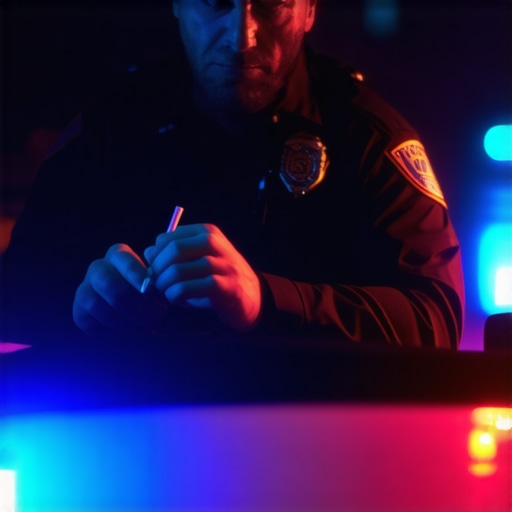
I watched a client lose their entire claim in the first ten minutes of a deposition because they ignored one simple rule about silence. They thought they could explain why the saliva test was wrong. They believed that if they just shared their medical history, the system would find the truth. The law does not seek the truth; the law seeks evidence that fits a protocol. My office smells like strong black coffee and the cold reality of forensic reports. When you are pulled over and an officer produces a small plastic stick, you are not being tested for safety. You are being processed for a conviction. These roadside oral fluid tests are sold to departments as high-tech solutions, but in the courtroom, they are often nothing more than junk science masquerading as a lab report. A dui lawyer knows that the moment that swab touches your cheek, the margin for error expands beyond the limits of constitutional fairness.
The myth of oral fluid accuracy
Saliva swabs and roadside drug tests are often inaccurate because biological contaminants like blood, food, and bacteria skew the results. A dui lawyer understands that these preliminary screenings are not confirmatory tests and frequently produce false positives for THC or methamphetamine due to cross-reactivity with common over-the-counter medications. Case data from the field indicates that these devices are sensitive to ambient temperature. If the officer leaves the test kit in a hot patrol car, the chemical reagents degrade. The lateral flow immunoassay technology used in these kits is the same tech found in pregnancy tests. It is designed for a binary yes or no, not for the nuanced measurement of impairment levels required for a criminal dui defense. When the officer tells you the machine is foolproof, they are lying. The device has a high threshold for error that your dui attorney can exploit during the discovery phase of your case.
“Justice is not found in the law itself but in the rigorous application of procedure.” – Common Law Maxim
Why your biology is a legal trap
Human physiology dictates that oral fluid drug concentrations do not always correlate with active impairment because THC metabolites and other chemicals stay in the saliva long after the psychoactive effects have vanished. For a dui defense, this means the evidence collected at the scene is a biological snapshot that fails the scientific standard of beyond a reasonable doubt. Procedural mapping reveals that the rate at which an individual produces saliva can change the concentration of the substance being tested. A person with dry mouth, perhaps caused by the stress of being pulled over, will provide a sample that is far more concentrated than a person who is hydrated. This is not science; it is a lottery where the stakes are your driver’s license and your freedom. You should call an attorney before you assume the lab results are final. The legal reality is that your body chemistry is being used against you in a way that ignores the basic principles of toxicology.
The failure of current testing devices
Roadside drug testing equipment such as the Dräger DrugCheck 5000 or the Alere DDS2 relies on antibody reactions that can be triggered by unrelated substances in the mouth. A dui attorney will look for maintenance logs and calibration records to prove that the equipment was not sunctioning according to manufacturer specifications at the time of the arrest. While most people believe the machine is a neutral arbiter, the truth is that these devices have a significant failure rate in cold weather. The chemical reaction required to show a positive result is timed to the second. If the officer is distracted, if the lighting is poor, or if the officer is not properly trained in the nuances of the buffer solution, the result is invalid. Procedural errors during the collection phase are the primary reason these cases fall apart under the scrutiny of a skilled legal team. Every second the swab stays in your mouth matters. Every drop of the reagent matters. If the officer skips a single step, the entire case is built on a foundation of sand.
How police manuals ignore chemical reality
Law enforcement training for oral fluid testing often glosses over the limitations of the technology, leading officers to believe that a positive swab is conclusive proof of impairment. This creates a confirmation bias where the officer ignores sober behavior to focus on a chemical reading that may be erroneous. The strategic play is often the delayed demand letter to let the prosecution’s internal clock run out while we secure the raw data from the device. Most lawyers tell you to plea early if there is a positive test, but the brutal truth is that many of these tests are inadmissible if the officer failed to observe a fifteen minute deprivation period. During those fifteen minutes, you must not eat, drink, or smoke. If the officer cannot prove they watched you every second of that window, the integrity of the sample is compromised. We find that officers rarely follow this protocol to the letter because they are in a hurry to clear the scene. Their haste is your leverage.
“The defense of the accused must rest on the integrity of the evidence, and when that integrity is compromised by faulty science, the case must fail.” – American Bar Association Standards for Criminal Justice
Why you must call an attorney early
Contacting a dui attorney immediately after a roadside test is essential because the window for preserving evidence like dashcam footage and device sensor data is extremely short. A dui legal expert can subpoena the raw logs from the testing device to see if the internal sensors flagged an error that the officer ignored. Information gain from recent litigation shows that these devices often record internal temperature warnings that do not stop the officer from printing a result. Your legal representative needs to get into the weeds of the device’s firmware. Did the device have a software update pending? Was the cartridge from a batch that was recalled? These are the questions that win trials. While the prosecution wants you to think the case is open and shut, the reality is that the science behind saliva testing is still in its infancy. It is prone to error, sensitive to the environment, and frequently misinterpreted by the people wearing the badge. You do not have to accept the result of a flawed test as the final word on your character or your guilt.