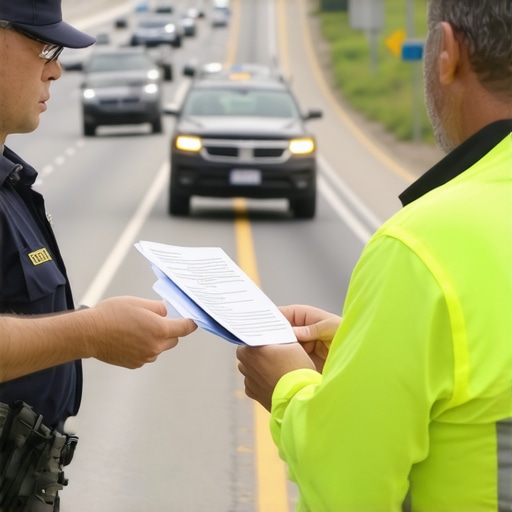
I am drinking my fourth cup of black coffee because I spent all night reviewing a dashcam video that should have never existed. My desk is covered in transcripts that tell the same story of avoidable failure. I watched a client lose their entire claim in the first ten minutes of a deposition because they ignored one simple rule about silence, and that same catastrophic mistake happens every night on the side of the road during a DUI stop. If you think your charm or your explanation will save you from handcuffs, you have already lost. The law is not a conversation; it is a clinical process of data collection where you are the only source of incriminating evidence. When you see those blue lights, you are not a citizen having a chat with a neighbor; you are the subject of a criminal investigation. The officer is not your friend, and your cooperation is the fuel for your own prosecution. You need to understand that the system is built to convert your politeness into a conviction. This is the reality of the courtroom, far away from the sanitized versions of justice you see on television.
Why your cooperation is a signed confession
Roadside cooperation during a DUI investigation is almost always a tactical disaster because the police officer is not searching for reasons to let you go. Every dui lawyer knows that incriminating statements made during the initial traffic stop form the foundation of the prosecution. When you answer the question about how much you had to drink, you are providing the probable cause required for an arrest. Even a minor admission like having two beers three hours ago is enough for the state to argue impairment. The officer is trained to document your slurred speech, the smell of alcohol, and your bloodshot eyes. If you provide them with a narrative, you are simply filling in the blanks of their police report. Your words are recorded, analyzed, and used to impeach your testimony later in court. There is no such thing as an off the record conversation during a stop. Every syllable is a brick in the wall the state is building around you. If you want to protect your future, you must recognize that silence is a constitutional right, not a sign of guilt. The most effective dui defense begins with a driver who knows when to stop talking.
“Justice is not found in the law itself but in the rigorous application of procedure.” – Common Law Maxim
The rigged mechanics of the walk and turn
Field sobriety tests such as the Walk and Turn or the One Leg Stand are not objective measures of sobriety but are instead standardized tests designed for failure. The NHTSA guidelines specify a strict set of criteria that most sober people find difficult to satisfy under the pressure of flashing lights and passing traffic. For example, in the Walk and Turn, the officer looks for eight specific clues of impairment. If you start before the instructions are finished, that is a clue. If you lose your balance while listening, that is a clue. If you leave a gap larger than half an inch between your heel and toe, that is a clue. The arresting officer is the sole judge and jury during this process. There is no neutral observer. Your dui attorney will tell you that these tests are essentially a theatrical performance intended to create a visual record of failure for the jury. Physical conditions like inner ear issues, back pain, or even the type of shoes you are wearing can lead to a false positive for impairment. Most people do not realize they have the legal right to refuse these roadside tests in many jurisdictions. By participating, you are giving the state subjective evidence that is incredibly difficult to challenge once it is captured on video. The methodology is flawed, the environment is hostile, and the scoring is biased.
What the patrol officer never tells you
Police procedures during a DUI stop are dictated by the need to establish reasonable suspicion and then probable cause for a custodial arrest. The officer will not inform you that the Preliminary Alcohol Screening or PBT is often voluntary and its results are frequently inadmissible as direct evidence of a specific blood alcohol content level in some states. They use the handheld breathalyzer as a tool to justify taking you to the station for the real test. The science behind these portable units is often abysmal. They are sensitive to temperature, mouth alcohol, and even certain chemical compounds found in common diets or medications. While the implied consent laws require you to take a chemical test after a lawful arrest, the roadside gadget is a different matter. The officer wants you to think you have no choice. They want you to feel that compliance is your only path to a favorable outcome. This is a deception. The moment they suspect you of driving under the influence, their goal shifts from safety to evidence collection. They are looking for the nystagmus in your eyes, which is an involuntary jerking that occurs when you look to the side. This HGN test is often touted as the most reliable, yet it requires precise administrative conditions that are rarely met on a dark, windy shoulder of a highway. You are being evaluated against a rubric you have never seen, and the officer is the one holding the pen.
“The right to remain silent is the first and most fundamental protection of the accused.” – ABA Criminal Justice Standards
The science of faulty breath testing
Breathalyzer technology relies on a scientific principle known as Henry’s Law, which assumes a constant ratio between the alcohol in your breath and the alcohol in your blood. However, this partitioning ratio of 2100 to 1 is a biological average, not a universal constant. Many factors can skew this BAC reading, including your body temperature, your hematocrit levels, and your breathing pattern. A dui defense attorney will examine the maintenance logs of the evidentiary breath test machine to look for patterns of inaccuracy. These machines are not infallible computers; they are sensitive instruments that require regular calibration and a strictly controlled environment. If the officer fails to conduct a proper 20 minute observation period, the test results can be contaminated by residual mouth alcohol from a recent burp or hiccup. This is the procedural zooming that wins cases. We look at the slope detector data and the source code of the devices. We analyze whether the officer was properly certified to operate the specific model of the Intoxilyzer used. Most defendants assume the number on the machine is the final word. In reality, that number is the start of a complex scientific argument. If the machine was not maintained according to the state department of health regulations, the entire case against you could collapse. Do not accept the state’s data as gospel; it is often riddled with mechanical and human error.
Your defense begins with absolute silence
Legal strategy in a DUI case must be proactive rather than reactive, and the most powerful move you can make is to call an attorney immediately. Every second you spend explaining yourself to the police is a second spent weakening your dui defense. You must state clearly that you are exercising your right to remain silent and that you wish to speak with your dui lawyer. This stops the interrogation and prevents the further creation of testimonial evidence. Look, I will be blunt: your case is currently a disaster if you have already spent thirty minutes performing circus tricks on the side of the road. But even then, a skilled litigator can work to suppress that evidence if the officer deviated from legal protocol. We look for the flank attack. Did the officer have a valid reason for the traffic stop? Was the detention unnecessarily prolonged? Was the arrest based on a totality of circumstances or just a hunch? The courtroom is a battlefield of logistics and procedural timing. If the state cannot prove every element of the stop was handled with constitutional precision, the evidence disappears. This is why you never settle for a settlement mill lawyer who just wants to plea you out. You need someone who views the prosecution as an adversary to be dismantled through forensic analysis of their own mistakes. The trial attorney knows that the ghost in the machine is often the officer’s failure to follow the manual. Protect yourself by stopping the flow of information at the source. Your silence is not an admission; it is your strongest shield.