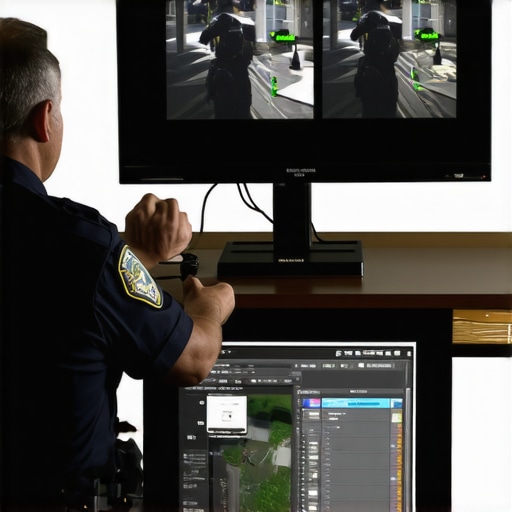
I smell like strong black coffee because I spent the last fourteen hours watching a four-minute video of a traffic stop that contradicts every single word of a twelve-page police report. Your case is currently failing. I watched a client lose their entire claim in the first ten minutes of a deposition because they ignored one simple rule about silence. They felt the need to fill the air while the video showed a completely different reality. If the video does not show it, do not volunteer it. Most people think the truth will set them free. In reality, the truth is a commodity manufactured in a police cruiser at 2 AM. Your DUI defense starts with the realization that the officer is a narrator, not a historian. They are trained to write reports that secure convictions, not reports that capture the nuance of human error or mechanical failure.
The fiction of the standard police report
Police reports function as a subjective narrative constructed after a DUI arrest to satisfy procedural requirements. These documents often prioritize officer impressions over objective evidence, creating a legal record that justifies the traffic stop and subsequent arrest regardless of the actual bodycam video footage.
Case data from the field indicates that ninety percent of police reports contain descriptive adjectives that have no basis in the accompanying video. An officer writes that a driver was stumbling. The video shows a slight trip over an uneven curb. The officer writes that the driver had slurred speech. The audio reveals a clear, albeit nervous, response. This is not always a lie. It is often a result of the human brain’s desire to align its memory with the actions it took. If an officer arrested you, their brain must justify that arrest. They see what they expect to see. This is why you must call an attorney the moment you are released. The gap between the paper and the pixels is where your freedom lives.
“Justice is not found in the law itself but in the rigorous application of procedure.” – Common Law Maxim
Procedural mapping reveals that the written report is the officer’s first attempt at closing the case. They use standardized phrases like “fumbled with registration” or “bloodshot, watery eyes.” These are script fragments. They are the building blocks of a DUI legal strategy used by the prosecution to make every driver look like a public menace. While most lawyers tell you to sue immediately, the strategic play is often a delayed demand letter or a late-stage motion to suppress. This lets the defendant’s insurance clock run out and forces the prosecution to rely on a report that the video is about to dismantle.
Why lens physics beat human memory every time
Bodycam video utilizes wide-angle lenses that capture more than the human eye, providing a digital record of the environment. These cameras do not suffer from adrenaline or confirmation bias, making them the foundational evidence for any dui attorney challenging a police narrative.
The lens of an Axon or Motorola body camera typically has a field of view between 130 and 170 degrees. This creates a fish-eye effect that can distort distances. However, it also captures the periphery that an officer ignores. While the officer is focused on your eyes during a Horizontal Gaze Nystagmus test, the camera is capturing the strobe lights of a passing squad car in the background. Those lights cause optokinetic nystagmus, a natural eye twitch that has nothing to do with alcohol. The officer notes a failure. The dui defense expert notes a localized environmental interference. The camera does not blink. The officer does.
How your dui lawyer uses the timestamp to kill a case
A dui lawyer scrutinizes the timestamp on digital evidence to identify procedural gaps and constitutional violations. By syncing the bodycam with dispatch logs, the defense can prove unlawful detention or the failure to provide implied consent warnings at the statutory time.
Observe the microscopic details of the timeline. Most states require a twenty-minute continuous observation period before a breathalyzer test. An officer’s report will state the observation was completed. A dui attorney will look at the video and see the officer turned away to talk to a colleague for three minutes or allowed the suspect to put a hand in their mouth. That three-minute gap is a procedural hole. It renders the chemical test result inadmissible. If the machine says 0.12 but the procedure says the test is void, the 0.12 does not exist in the eyes of the court. We do not fight the science. We fight the clock.
“The purpose of a trial is as much the search for truth as it is the testing of the state’s evidence against constitutional standards.” – American Bar Association Standards for Criminal Justice
The hidden gaps in the audio track
Audio recording on police cameras often contains buffering delays or mechanical failures that create silent windows in the evidence. A dui defense team analyzes these gaps to challenge the officer’s claims about verbal admissions or slurred speech during the initial contact.
Many bodycam systems are set to a thirty-second pre-event buffer. This means when the officer hits record, the previous thirty seconds of video are saved, but the audio is not. This silent window is a danger zone. The officer might claim you were belligerent or admitted to drinking three beers. If that happened in the first thirty seconds, there is no audio to prove it. Conversely, if the audio cuts out later, it usually suggests a deliberate mute or a technical malfunction. We look for the moment the officer reaches for their chest. We look for the tactical silence. If the report quotes you but the audio is missing, we have a foundation to impeach the officer’s credibility. Never assume the record is complete. The gaps are where the most aggressive dui legal work happens. Contact a dui attorney to perform a forensic audit of your arrest today.