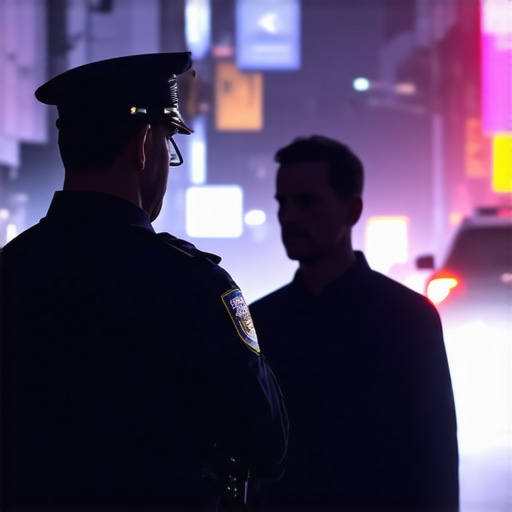
Sit down and listen. If you are reading this because you just got pulled over or you are worried about a pending charge, you are already behind. I have spent twenty five years in the trenches of the legal system and I can tell you that the most dangerous person you will ever meet is a polite police officer with a notepad. They do not want to help you. They want to process you. I watched a client lose their entire claim in the first ten minutes of a roadside stop because they ignored one simple rule about silence. They thought that by explaining their evening and being personable, they could earn a pass. Instead, they handed the prosecution a roadmap to a conviction on a silver platter. The legal system is not a conversation; it is a clinical extraction of data designed to feed a machine that thrives on your cooperation. If you think your charm will save you from a DUI, you have already lost the battle. You need to understand that every word out of your mouth is a brick in the wall of your own prison cell. Stop talking and start thinking about your defense.
The mirage of roadside cooperation
A DUI lawyer will tell you that cooperation with law enforcement during a traffic stop is almost never in your best interest. Officers use rapport building techniques to lower your psychological defenses, encouraging you to admit to alcohol consumption or physical impairment that will be used as primary evidence against you in court. The officer standing at your window is a trained observer. When they ask where you are coming from or if you have had anything to drink, they are not making small talk. They are looking for the scent of alcohol, slurred speech, or fumbled documents. If they say they just want to make sure you get home safe, they are lying. They want to make sure you get to the precinct in handcuffs. Case data from the field indicates that individuals who provide detailed narratives during stops are 70 percent more likely to be charged than those who exercise their right to remain silent. The strategic play is often the delayed response or the simple refusal to answer questions without a dui attorney present. Most people fail to realize that the officer’s body camera is recording every stutter and every mistake. That footage becomes the star witness for the prosecution long before you ever step into a courtroom. You are not being helpful; you are being harvested for evidence.
Why your silence is the only defense that works
The Fifth Amendment provides the right to remain silent because the legal system recognizes that any statement made by a suspect can be misinterpreted or twisted by the state. Invoking this right immediately halts the flow of self-incriminating data and forces the officer to rely on objective evidence. In the world of dui defense, silence is a tactical shield. When you speak, you provide the prosecution with subjective observations that are difficult to disprove. For instance, if you admit to having two beers, the prosecution will argue that your perception of two is actually four. Procedural mapping reveals that the moment you stop talking, the officer must rely on their own observations, which are often flawed or poorly documented.
“Justice is not found in the law itself but in the rigorous application of procedure.” – Common Law Maxim
This maxim holds true in every DUI case. If the procedure is not followed perfectly, the evidence can be thrown out. But if you give them a confession, no matter how small, the procedure becomes secondary. You have essentially waived your protections. Call an attorney before you say a single word about your activities. The law does not reward the talkative; it rewards the disciplined.
The structural bias of the field sobriety test
Field sobriety tests are designed for failure because they rely on the subjective judgment of an officer rather than scientific measurement. These tests are voluntary in many jurisdictions, and performing them provides the police with visual evidence of physical impairment that is nearly impossible to refute. The National Highway Traffic Safety Administration (NHTSA) has set standards for these tests, but the implementation is often a mess. The horizontal gaze nystagmus test, the walk and turn, and the one leg stand are all rigged against you. Factors like fatigue, uneven pavement, or even the flashing lights of the squad car can cause a sober person to fail. Procedural zooming into the NHTSA manual reveals over 40 different ways an officer can misinterpret your physical movements as signs of intoxication. While most lawyers tell you to sue immediately, the strategic play is often to challenge the administration of these tests through a meticulous review of the officer’s training logs and the specific environmental conditions of the stop. If you took these tests, you gave the state a video of you stumbling. This is why you must refuse. The officer will tell you that the tests are your chance to prove you are sober. This is a trap. You cannot prove a negative to someone who is paid to find a positive.
How law enforcement builds a DUI case out of thin air
The construction of a DUI case begins the moment the officer observes your vehicle and ends with the filing of the formal complaint. Every minor deviation from perfect driving is documented as reasonable suspicion, which is then escalated into probable cause through biased roadside questioning and tests. To the officer, a slightly wide turn is not a mistake; it is a symptom. They are building a narrative. If they can get you to admit to being tired or having a single drink, they have linked their observation to your admission. This is how they bridge the gap between a hunch and a legal charge. Forensic analysis of arrest reports shows a pattern of repetitive language used to justify arrests, often referred to as boilerplate testimony. They will say you had watery eyes and a flushed face because those are indicators that are hard to disprove in a written report. By the time you call an attorney, the narrative is already written. Your only hope is to disrupt that narrative by providing no supplemental information. Information gain in these cases comes from highlighting the gaps in the officer’s logic. If the officer claims you were impaired but your driving was perfect until the lights came on, that is a contradiction we can use. But if you told them you were distracted because you were texting about the bar you just left, the contradiction vanishes.
The financial bleeding of a conviction
A DUI conviction is a long term financial liability that extends far beyond the initial fines and legal fees. It impacts insurance premiums, professional licensing, and future employment opportunities, creating a negative return on investment for those who fail to hire a specialist. From a clinical perspective, the cost of a conviction is a massive drain on your resources. You are looking at increased premiums that can last for a decade. You are looking at the potential loss of a commercial driver’s license or a professional certification. The skeptical investor sees a DUI as a massive bleed in their portfolio. This is why paying for a high end dui legal defense is not an expense; it is a recovery of future assets.
“The right to be let alone — the most comprehensive of rights and the right most valued by civilized men.” – Olmstead v. United States, 277 U.S. 438 (1928)
Note that while the court values this right, the police do not. They want to be in your business because your business is their quota. If you do not fight the charge with everything you have, you are essentially accepting a lifelong tax on your income. Do not let the state take your money because you were too cheap to hire the right dui attorney.
Finding a DUI lawyer who actually fights
The difference between a settlement mill and a trial attorney is the willingness to take a case to a verdict and challenge every piece of evidence. A true strategist looks for procedural errors in the stop, the arrest, and the chemical testing process to force a dismissal. You do not want a lawyer who is friends with the prosecutor. You want a lawyer the prosecutor hates to see in the courtroom. You need someone who will dissect the breathalyzer’s maintenance logs and the officer’s disciplinary history. Most dui defense strategies are passive, but the aggressive play is to put the state on trial. We look for the ghost in the machine. Did the officer wait the required fifteen minutes before administering the breath test? Was the blood draw done by a certified professional? These are the microscopic details that win cases. If your lawyer is not talking about gas chromatography or the specific statutes regarding the calibration of the Alco-Sensor FST, they are not doing their job. You are paying for a surgeon, not a general practitioner. The legal landscape is a minefield, and you need someone who knows exactly where the triggers are buried. Do not trust the system, do not trust the officer, and for heaven’s sake, do not trust your own ability to explain your way out of this. Call a professional who knows how to fight back.