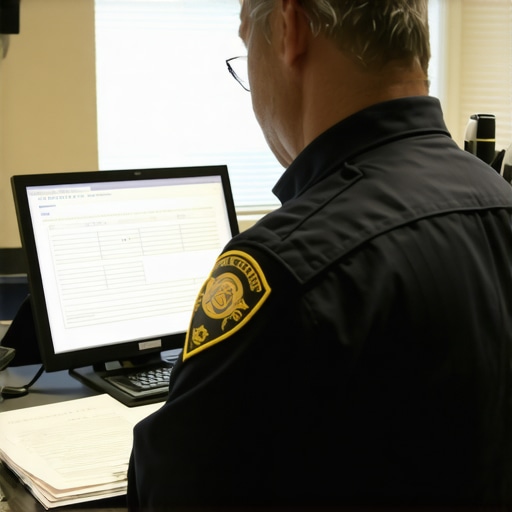
Sit down. Take a look at that piece of paper on my desk. That is your police incident report and right now it is the primary reason you are going to lose your case. It smells like stale coffee in here because I have been up since 04:00 deconstructing the fiction the arresting officer wrote about your sobriety. You think it is just a typo. You think the officer will just fix it if you ask nicely. You are wrong. In the world of dui legal strategy, a police report is not a record of facts; it is a document of prosecution. If there are errors in that report and you do not handle them with surgical precision, you are essentially walking yourself into a conviction.
I watched a client lose their entire claim in the first ten minutes of a deposition because they ignored one simple rule about silence. They tried to explain away an error in the police report themselves without a dui attorney present. They thought they were being helpful. Instead, they gave the prosecution a secondary statement that contradicted the first, effectively destroying their credibility before we even stepped foot in a courtroom. The officer had written that my client failed the walk and turn test. My client told the officer later, off the record, that it was because of a knee injury. At the deposition, the prosecutor used that ‘correction’ to paint my client as someone who makes up excuses after the fact. The truth did not matter; the perception of dishonesty did.
The officer’s mistake is your leverage
Correcting errors in a police incident report requires a formal request for a supplemental statement or an administrative amendment through the reporting agency. A dui lawyer will typically advise against contacting the officer directly to avoid creating new evidence that could be used against you during the prosecution of your case. Case data from the field indicates that officers are remarkably resistant to changing their initial narrative because it undermines their professional standing. When you see a mistake in the narrative section regarding your speed, the weather conditions, or the specific results of a field sobriety test, you are not looking at an error. You are looking at a crack in the foundation of the state’s case. Most people want to fix that crack immediately. The strategic play is often to leave the error as it is until the trial phase where it can be used to impeach the officer’s memory and competence.
“Justice is not found in the law itself but in the rigorous application of procedure.” – Common Law Maxim
Procedural mapping reveals that the moment you call an attorney, the dynamic of the report changes. We do not just look at the typos. We look at the ‘Face Sheet’ and the ‘Narrative.’ The face sheet contains the objective data: the time, the date, the location, and the parties involved. These are the easiest to fix but the least effective in a dui defense. The narrative is where the officer builds the story. If the officer claims the pavement was dry but the local weather station records show it was raining, we have a forensic contradiction. This is information gain that a standard blog post will not tell you; do not fix the weather error. Let the officer testify under oath that the ground was dry and then bury them with the meteorological data. That is how you win.
The myth of the supplemental correction
A supplemental report does not erase the original incident report but instead attaches a new document to the file that clarifies or adds information. This means the original error remains visible to prosecutors and insurance adjusters, which is why a dui attorney must manage the amendment process carefully. You need to understand the bureaucracy of the precinct. Reports are logged into a digital system that timestamp every edit. If an officer goes back in to ‘fix’ a report after they know you have hired a dui lawyer, it looks suspicious. It looks like they are covering their tracks. This is why we rarely ask for a correction unless the error is a matter of identity or a fundamental misidentification of the vehicle. If they have the wrong VIN number, we fix it. If they say you smelled like bourbon when you do not drink, we save that for the cross examination.
Statutory and procedural zooming shows that the exact phrasing of an objection during a hearing often hinges on these reports. In many jurisdictions, the police report is considered hearsay and is not admissible as evidence itself; however, the officer uses it to refresh their memory. If the report is riddled with errors, their ‘refreshed’ memory becomes unreliable. I have seen cases dismissed because the officer could not explain why their report said the suspect was cooperative while their body cam showed a different story. The report is the anchor. If the anchor is broken, the ship drifts.
“The integrity of the legal system depends on the accuracy of the records produced by those sworn to uphold it.” – American Bar Association Standards for Criminal Justice
Why your DUI defense relies on forensic accuracy
Forensic accuracy in a police report involves the precise recording of blood alcohol content levels, the calibration dates of the testing equipment, and the exact timing of the observation period. If any of these metrics are incorrectly stated, it can lead to the total suppression of the evidence. While most lawyers tell you to sue immediately, the strategic play is often the delayed demand letter to let the defendant’s insurance clock run out while we dissect the flaws in the reporting officer’s logic. We look for the ‘ghost in the machine.’ For example, the officer might record that they observed you for twenty minutes before the breathalyzer test, but the dispatch logs show they were only on the scene for twelve minutes. That is a physical impossibility. That is an error that does not need ‘fixing’ in the report; it needs to be exploited in a motion to suppress.
[IMAGE_PLACEHOLDER]
The sensory reality of a DUI stop is chaotic. There is the smell of exhaust, the blinding light of the patrol car’s overheads, and the adrenaline of the officer. This environment is a breeding ground for mistakes. When we analyze the dui legal aspects of your arrest, we are looking for the discrepancy between that sensory chaos and the neat, tidy narrative the officer wrote two hours later back at the station. They are trying to fit your life into a series of checkboxes. Our job is to show the jury that the checkboxes are a lie. This is not about being ‘picturesque’ or ‘vibrant’ in our descriptions. This is about the cold, hard math of the law. If the officer missed a decimal point in the BAC report, the state’s case is a house of cards.
The danger of contacting the police alone
Contacting the police department to correct an incident report without legal representation can inadvertently provide the prosecution with additional incriminating evidence or admissions. Anything you say to a clerk or an officer during this process is not privileged and can be documented in a new report. I see it every week. A person walks into the precinct thinking they are being a good citizen. They say, ‘The officer wrote that I had three beers, but I actually only had two.’ You just admitted to drinking and driving. You just filled in a gap for the prosecution. You just made my job ten times harder. The dui lawyer is the firewall between you and the state. We handle the paperwork. We file the formal letters of representation. We ensure that if a report is amended, it is done in a way that protects your rights, not the officer’s ego.
The final judgment on your case will not be based on the truth; it will be based on what can be proven. A police report with errors is a gift, provided you do not throw it away by trying to be ‘honest’ with people whose job is to convict you. We use the discovery process to pull the officer’s training records, the maintenance logs for the vehicle, and the internal memos of the department. We map the entire incident from the moment the lights went on until the moment you were processed. If the report does not match that map, we have the leverage. That is the brutal truth of the matter. You are not fighting a charge; you are fighting a document. And documents can be shredded by a skilled dui attorney who knows where the bodies are buried in the procedure manual.