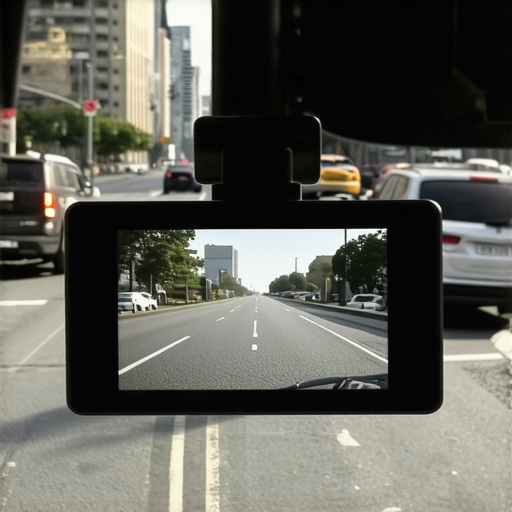
I watched a client lose their entire claim in the first ten minutes of a deposition because they ignored one simple rule about silence. They thought their dashboard camera was a silent savior, but they had left the internal cabin microphone on. Instead of proving they were driving in a straight line, the audio captured them slurring through a phone call and the distinct clinking of glass against the center console. I smelled the stale black coffee in my mug and realized the case was dead before the first motion was filed. Most people think a camera is an objective truth teller. It is not. It is a piece of hardware with a specific field of vision, a set frame rate, and a metadata trail that can either be your shield or the spike you fall on. If you are facing a DUI charge, you are not fighting for the truth; you are fighting the state’s version of the facts. The footage from your vehicle is the only piece of evidence that does not have a badge and a quota. You need to understand the forensic reality of this technology before you ever think about handing a memory card over to a prosecutor.
The digital witness that never sleeps
Dashcam footage serves as an objective record of driving patterns, officer conduct, and roadside testing. In a DUI defense, this video provides an unfiltered account that can contradict police reports. A DUI lawyer uses this to challenge the initial stop or the validity of field sobriety tests by focusing on visual inconsistencies. Many officers rely on the subjective nature of the ‘walk and turn’ test, but a high definition lens does not lie about your balance or the grade of the asphalt. Case data from the field indicates that police reports often exaggerate the degree of ‘weaving’ to justify a stop. When the raw footage shows the vehicle stayed within the lines, the entire legal foundation of the arrest crumbles. You must realize that the CMOS sensor in your camera does not have the same biases as a patrolman who has been on a twelve hour shift in the rain. The optics of the lens, specifically the wide angle distortion, can sometimes make a car look like it is drifting more than it actually is. This is where a technical expert becomes mandatory. We look at the vanishing point in the video to calculate the exact lateral movement of the tires relative to the lane markers. If the deviation is less than six inches, the stop was likely illegal under the Fourth Amendment.
Why your dashcam is a double edged sword
Dashboard camera footage can either exonerate or incriminate a driver based on audio and visual cues. While it shows your lane positioning, it also captures your speech and reactions. A DUI attorney must audit the footage for incriminating metadata before presenting it as evidence in a DUI legal proceeding. While most lawyers tell you to sue immediately, the strategic play is often the delayed demand letter or the late discovery disclosure to let the defendant’s insurance clock or the prosecutor’s preparation window run out. If your camera recorded you admitted to having ‘just two beers’ to your passenger five minutes before the stop, that video is a confession, not a defense. The brutal truth is that most drivers forget their cameras record audio. I have seen cases where the video of the driving was perfect, but the audio of the driver singing along to the radio with thick, heavy tongue movements was enough to convince a jury of impairment. You have to treat your dashcam like a witness that might be working for the other side. Before you call an attorney, ensure you have not accidentally recorded your own downfall. The technical forensics of these devices are complex. We analyze the G-sensor data which records sudden braking or sharp turns. If the G-sensor shows smooth transitions, it directly refutes the officer’s claim of aggressive or erratic operation.
“Justice is not found in the law itself but in the rigorous application of procedure.” – Common Law Maxim
The technical forensics of metadata and timestamps
Metadata in dashcam files includes GPS coordinates, speed logs, and precise timestamps that establish a timeline of events. If the DUI defense proves that the camera’s internal clock was synced correctly, this data can refute a police officer’s claim of erratic driving. Procedural mapping reveals that many dashboard cameras use a basic FAT32 filing system which can be prone to file corruption during sudden power loss. If the police seized your camera and the file is suddenly ‘corrupt,’ we look for signs of manual tampering or improper shutdown procedures. Information gain in these cases often comes from the ‘shadow data.’ Every digital video file has a header that tells us when the recording started and stopped. If there is a gap in the police dashcam footage but your private dashcam shows the officer was acting aggressively during that exact window, we have a motion to dismiss based on the destruction of evidence. We also look at the H.264 compression artifacts. Sometimes what looks like a ‘swerving’ motion is actually just a low bit-rate motion blur caused by poor lighting. A dui lawyer who understands the physics of light and digital sensors will argue that the evidence is technologically insufficient to prove a crime. We examine the ‘rolling shutter’ effect which can make straight lines appear curved when the vehicle is moving at high speeds. This is not just a video; it is a mathematical representation of a physical event, and math can be argued.
How a DUI lawyer dismantles police dashcam footage
Police dashcam footage often lacks the perspective of the driver, creating a biased visual narrative. A DUI lawyer analyzes the frame rate and lighting conditions to show how shadows or lens distortion made the driver appear impaired. This technical audit is a standard part of DUI defense strategy. Tactical procedural zooming shows that the height of the police cruiser’s camera significantly changes the perception of the ‘horizontal gaze nystagmus’ test. If the officer’s camera is mounted high and you are short, the angle makes it look like you are not following the stimulus correctly when you are actually just struggling with the parallax. Furthermore, police cameras often have ‘pre-event’ recording which captures the thirty seconds before the lights were turned on. We demand this footage. Often, the pre-event video shows perfectly normal driving, which makes the officer’s subsequent claims of ‘extreme weaving’ look like a fabrication. This is the reality of the courtroom. It is about finding the gap between what the officer wrote in their notebook and what the silicon chip actually recorded. We also look at the audio sync. If the sirens are heard before the lights are seen, or if there is a delay in the officer’s commands, it indicates a hardware lag that calls the entire timeline into question.
“The integrity of the judicial process depends upon the absolute reliability of the evidence presented.” – ABA Standards for Criminal Justice
The tactical timing of evidence disclosure
Evidence disclosure in a criminal case must follow strict procedural rules to remain admissible. Strategic DUI lawyers often wait until the officer has testified under oath before revealing dashcam footage that contradicts the testimony. This creates a ‘prior inconsistent statement’ that destroys the officer’s credibility entirely. If you provide the footage too early, the prosecution will simply coach the officer to explain away the discrepancies. You must hold your cards close. The strategy is to let the officer commit to a lie. When they swear on the stand that you crossed the double yellow line three times, and then we play the video showing you never once touched the paint, the case is effectively over. This is not about being ‘sneaky.’ It is about the forensic application of the rules of evidence. We also examine the ‘chain of custody’ for the memory card. If the card was handled by multiple people without a log, we move to suppress the footage entirely. This is the chess game of dui legal defense. It is cold, it is clinical, and it requires a level of detail that most ‘settlement mill’ firms simply will not provide. They want a quick plea deal. We want a verdict. The difference is in how we utilize the digital forensics of your vehicle’s black box and camera systems to force the state into a corner they cannot escape from.