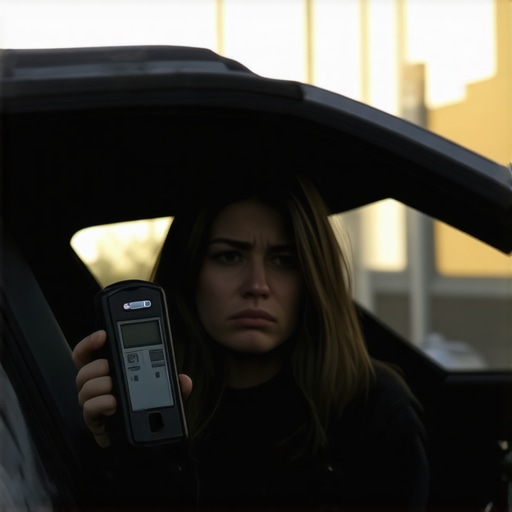
I am drinking a cup of coffee so black it looks like motor oil, and I am looking at your case file. It is a disaster. You think you were being a good citizen. You think that by blowing into that little plastic tube at the window of your car, you were proving your innocence. You were actually signing your own conviction. I have been in this game for twenty five years, and I have seen the same story play out in every precinct from the city center to the rural outposts. You are not a customer to the officer; you are a data point in a quota. The portable breathalyzer test, or PBT, is not your friend. It is a handheld conviction machine designed to give the prosecution the one thing they need to ruin your life: probable cause.
“Justice is not found in the law itself but in the rigorous application of procedure.” – Common Law Maxim
I watched a client lose their entire claim in the first ten minutes of a deposition because they ignored one simple rule about silence. They thought they could explain their way out of a chemical reading. They thought if they were polite enough, the officer would let them slide with a 0.09. That is not how the world works. The moment that officer smells the coffee or the mint or whatever you used to mask the night, the hunt is on. If you give them the breath sample at the window, you have already lost the first three rounds of the fight before the dui lawyer even gets the call. You are providing a numerical baseline that is notoriously inaccurate, yet devastatingly persuasive to a jury of people who want to believe the machine cannot lie.
The mechanical fallacy of roadside testing
Refusing the PBT is the only way to prevent a dui lawyer from fighting uphill against faulty data. These devices use fuel cell sensors that react to alcohols other than ethanol, creating false positives that lead to an immediate, yet often unjustified arrest. Case data from the field indicates that these handheld units are prone to massive fluctuations based on ambient temperature and the presence of mouth alcohol. The officer knows this. The prosecutor knows this. But they also know that once that number hits the report, your dui legal standing is severely compromised. These units do not have the sophisticated infrared spectroscopy found in the heavy machines at the station. They are cheap, they are rugged, and they are often uncalibrated. When you blow into that tube, you are trusting a device that might have been bouncing around in a trunk for six months without a single maintenance check. While most lawyers tell you to argue about the machine later, the strategic play is to never give them the number in the first place.
The gap between the window and the station
A dui legal strategy hinges on the difference between the portable unit and the evidentiary station machine. The portable test is a voluntary search in most jurisdictions, and by saying no, you force the officer to rely on subjective field sobriety tests which are much easier for a dui defense to dismantle in court. Procedural mapping reveals that the PBT is often used as a bridge. The officer has a hunch, but they do not have enough for an arrest. They ask you to blow. You comply. Now they have a number. That number, even if it is not admissible as proof of guilt in a trial, is perfectly admissible to prove that the officer had the right to handcuff you. By refusing, you keep the burden of proof exactly where it belongs: on the state. You make them work for every inch of the case. You make them rely on their own faulty memory of your eye movements instead of a digital readout.
“The right of the people to be secure in their persons against unreasonable searches shall not be violated by shifting the burden of proof to the accused.” – ABA Standards for Criminal Justice
The lie of the officer’s friendly request
Your dui defense starts the moment you stop talking and call an attorney because the officer’s tone is a tactical deception. They ask for the breath sample as if they are giving you a chance to go home, but in reality, they are seeking chemical confirmation for an arrest they have already decided to make. I have read thousands of police reports. They all start the same way. The driver was polite. The driver cooperated. Then the driver blew a 0.10. Suddenly, the report turns cold. The driver was stumbling. The driver had slurred speech. The cooperation you offered is never mentioned again. It is buried under the weight of the numerical evidence you provided. You have to understand the forensic psychology of the stop. The officer is not your buddy. They are a collector of evidence. Every breath you give them is a gift to the prosecution. You do not owe them gifts. You owe yourself a defense.
Why a clean blow can still sink your case
Blowing a number below the legal limit does not end the interaction because the dui attorney knows the state will then pivot to drug impairment or poly substance use. If you blow a 0.04, the officer does not apologize and let you go; they simply call for a drug recognition expert to find another reason to arrest you. This is the contrarian data point that most people miss. They think the PBT is a pass or fail test. It is not. It is an information gathering tool. If the number is high, they have you for alcohol. If the number is low, they use that very number to argue that your obvious impairment must be coming from something else, like prescription drugs or marijuana. You have effectively narrowed the scope of your own defense by proving what you did not do, leaving the prosecution a clear path to speculate on what you did do.
The hidden math of the roadside arrest
The call an attorney moment must happen before the chemical test because once the data enters the police database, it becomes an immutable fact in the eyes of the DMV. Even if the criminal case is dismissed, the dui legal fallout at the licensing bureau can be permanent based solely on that roadside number. Think about the logistics of the arrest. Once you are in the system, you are fighting two wars. One is in the criminal court where we can challenge the evidence. The other is at the administrative hearing where the standards of proof are much lower. A PBT result can be used at a license hearing even if it is thrown out of a criminal trial. It is a ghost that will haunt your driving record for years. By refusing the window test, you are protecting your right to drive before the handcuffs are even clicked shut. You are refusing to give the state the fuel they need to burn your life down.
The silence of the constitutional shield
Your dui defense is only as strong as your ability to remain silent and refuse non mandatory searches at the roadside. A dui lawyer can challenge a lack of evidence, but no lawyer can delete a breath sample that you voluntarily provided during a moment of misplaced trust. The legal reality is brutal. The system is built to process you. It is a machine that requires fuel. That fuel is evidence. When you stand at that window and the officer asks you to blow, you are standing at a crossroads. One path leads to you providing the state with the very rope they will use to hang you. The other path involves a polite, firm refusal. Yes, they might arrest you anyway. Yes, you might have to spend a night in a cold cell smelling like bad coffee and floor wax. But when you walk into my office the next morning, I will have something to work with. I will have a case where the state has no numbers, no certainty, and no shortcut to a conviction. That is the only way you win. You win by making it impossible for them to prove you lost.