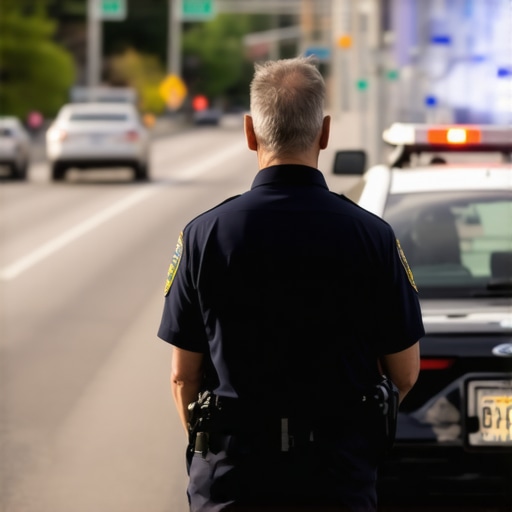
I watched a client lose their entire claim in the first ten minutes of a suppression hearing because they ignored one simple rule about silence. They thought they could talk their way out of a bad lane change. They were wrong. The officer was already writing the internal narrative of probable cause while my client was busy apologizing for a broken taillight that actually functioned perfectly. In the litigation world, every word you speak before you call an attorney is a brick in the wall of your own prison. Most people view a traffic stop as a minor inconvenience, but I see it as a formal seizure of a citizen by the state. This is a high stakes chess match where the board is the asphalt and the pieces are constitutional rights. If you are facing charges, you must understand that the law is not about what happened but what the prosecution can prove within the strict confines of procedure. Coffee in my office is always black because the truth is never creamed or sugared. Your case is likely in trouble because you probably spoke too much, but the defense begins with the technicalities of the initial contact.
The myth of the routine traffic stop
The myth of the routine traffic stop is a legal fiction because traffic stops are high stakes seizures under the Fourth Amendment. To contest an arrest, a DUI attorney must prove the officer lacked reasonable suspicion or exceeded the permissible duration of the detention. Every second of that encounter is a data point. When an officer pulls you over, they are searching for a reason to escalate a civil infraction into a criminal investigation. A DUI lawyer examines the specific moment the officer shifted focus from a speeding ticket to a DUI defense scenario. If the officer kept you on the shoulder for forty minutes waiting for a drug dog without a specific reason, they violated the Rodriguez v. United States standard. The clock is the enemy of the police. They are trained to stretch time to find clues. We use that same clock to invalidate their findings. If the duration of the stop exceeds the time needed to address the initial reason for the stop, the evidence gathered after that point is often fruit of the poisonous tree. This is not a suggestion; it is a constitutional mandate. Procedural mapping reveals that the majority of illegal stops occur when an officer relies on a hunch rather than articulable facts. Case data from the field indicates that many officers cannot distinguish between a tired driver and an impaired one. They see what they want to see. Your dui legal strategy starts with proving their eyes were blinded by bias.
“Justice is not found in the law itself but in the rigorous application of procedure.” – Common Law Maxim
Reasonable suspicion and the Fourth Amendment barrier
Reasonable suspicion requires that an officer possesses specific and articulable facts indicating that criminal activity is afoot. A DUI lawyer will scrutinize the police report to determine if the traffic stop was based on more than a mere hunch or an anonymous tip. While many lawyers tell you to sue immediately, the strategic play is often the delayed demand letter to let the defendant’s insurance clock run out. This allows for a deeper dive into the officer’s disciplinary history and training records. The Fourth Amendment is a wall, but it is a wall with many cracks. We look for those cracks in the wording of the dispatch call. Was the car actually swerving, or was it just touching the fog line? There is a massive legal difference between a lane violation and a failure to maintain a single lane. One is a ticket; the other is a gateway to a life altering arrest. Case law suggests that if the officer made a mistake of law, such as pulling you over for an ornament hanging from your rearview mirror that does not actually obstruct your view, the stop is illegal. We do not care if the officer was acting in good faith. We care if the officer was acting within the law. The dui attorney you hire must be a forensic specialist in these nuances. They must know the local statutes better than the person who wrote them. This is how we win. We do not win by pleading for mercy; we win by proving the state failed its own rules.
The tactical window of the suppression hearing
A motion to suppress is the most powerful weapon in dui defense because it can exclude evidence obtained through an unconstitutional search. This hearing allows a dui lawyer to cross examine the arresting officer under oath before the trial begins. This is the moment of truth. In this window, we are not arguing about your innocence. We are arguing about the officer’s competence. If we can prove the traffic stop was illegal, everything that followed, the breathalyzer, the field sobriety tests, the admissions, disappears. It is as if it never happened. This is why the call an attorney phase is so vital. We need to secure the 911 tapes and the dash cam footage before it is purged or lost in the bureaucracy. Procedural zooming allows us to look at the exact phrasing of the officer’s commands. Did they ask you to step out of the car, or did they order you? A request is a consensual encounter; an order is a seizure. If the officer lacked the basis for that seizure, the case collapses. Many people believe they have to comply with every request, but the law says otherwise. Your dui legal team will use these distinctions to build a defense that the prosecution cannot bypass. We are looking for the one mistake that turns a conviction into a dismissal.
“A lawyer shall not bring or defend a proceeding unless there is a basis in law and fact for doing so that is not frivolous.” – ABA Model Rule 3.1
Pretextual stops and the Whren doctrine trap
A pretextual stop occurs when an officer uses a minor traffic violation to investigate a separate crime for which they lack probable cause. Under the Whren v. United States ruling, these stops are technically legal as long as an actual traffic infraction occurred. However, a skilled DUI attorney knows that the officer must still follow procedural rules regarding the scope and duration of that stop. While the law allows the pretext, it does not allow the expansion of the stop into a fishing expedition without new evidence. We analyze the officer‘s body language and the sequence of questions. If they start asking about where you are coming from and what you had to drink before they even ask for your license and registration, they are overstepping. They are building a case for DUI before they have finished the traffic stop. This is a common tactic used by settlement mills to scare clients into taking a plea deal. We do not take plea deals until we have exhausted every constitutional challenge. We look for the information gain in the officer’s narrative. If their story changes between the scene and the station, we have them. The dui lawyer‘s job is to expose the inconsistency. Every dui defense is a search for the truth hidden behind the officer’s blue ink. The state has the burden of proof, and we make that burden as heavy as possible.
How a DUI lawyer breaks the prosecution narrative
Breaking the prosecution narrative requires a DUI lawyer to utilize forensic evidence and officer testimony to create reasonable doubt about the traffic stop legality. This process involves procedural mapping of the arrest to identify where the state failed to meet its burden of proof. We look at the calibration logs of the breathalyzer. We look at the expiration dates on the tubes used for blood draws. We look at the weather conditions on the night of the stop. If the wind was blowing at twenty miles per hour, your failure on a one leg stand test is not a sign of impairment; it is a sign of physics. The prosecution wants the jury to see a drunk driver. I want the jury to see a flawed investigation conducted by an officer who was in a hurry to end their shift. I have seen cases where the officer’s dash cam showed the client was driving perfectly, yet the officer claimed they were swerving. In those moments, the video is our best witness. It does not lie, and it does not forget. A dui attorney who does not demand the video is not doing their job. A dui legal strategy that ignores the technicalities is a strategy for failure. We are here to ensure that your rights are not just words on a piece of parchment but active protections that the state must respect. If they want to take your license or your liberty, they have to do it perfectly. And they rarely do anything perfectly.
[IMAGE_PLACEHOLDER]