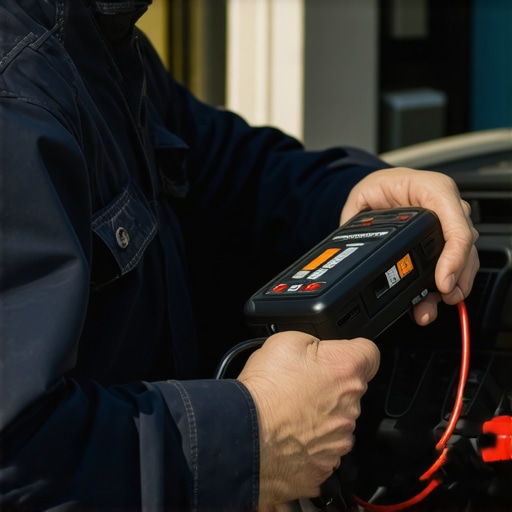
The room smells like strong black coffee and old paper. You are sitting across from me because you think you have served your time. You think that the mechanical leash attached to your steering wheel is a mere formality that can be unclipped with a polite request. You are wrong. Your case for early removal is likely failing before you even walk into the courthouse. I have spent decades watching drivers walk into hearings with a sense of entitlement only to be shredded by a prosecutor who has more data on their breathing patterns than they do. If you want that device out of your car, you need to stop thinking like a victim and start thinking like a technician. The law does not reward ‘good behavior’ in the way you imagine. It rewards the absence of recorded failure. I watched a client lose their entire claim for early removal in the first ten minutes of a deposition because they ignored one simple rule about silence regarding their excuses for a false positive. They tried to explain away a 0.02 reading as mouthwash. The judge did not care about the mouthwash. The judge cared that the client failed to report the calibration error within twenty-four hours. That silence was a confession of guilt in the eyes of the court.
The mechanics of early removal from a legal perspective
To remove an ignition interlock device early, you must file a formal motion with the sentencing court or an administrative petition with the DMV. This requires a 100% clean history of logs, proof of insurance, and often a showing of rehabilitation or extreme hardship. Success depends on the specific language of your original sentence and the discretion of the presiding judge. Case data from the field indicates that the vast majority of early removal petitions are denied because of ‘shadow fails.’ These are events where the device registers alcohol but the vehicle eventually starts. You might think it is a glitch. The state thinks it is a metabolized drink. If you are serious about this, you need a dui lawyer who understands the data logs better than the technician at the service center. The dui attorney you hire must be able to cross-examine a computer printout. Procedural mapping reveals that the timeline for filing is often static. If your sentence was for twelve months, the court rarely looks at a petition before the six-month mark. Even then, the burden of proof is entirely on your shoulders. You are asking for a privilege, not a right. The court views your car as a two-ton kinetic weapon. They are looking for any reason to keep the safety on.
“Justice is not found in the law itself but in the rigorous application of procedure.” – Common Law Maxim
Why the DMV wants you to keep the device installed
Administrative agencies prioritize risk mitigation and revenue over individual convenience. The DMV operates on a system of strict liability where any recorded violation in the interlock logs serves as a self-executing extension of the restricted license period. They do not provide hearings for minor log variances unless a formal appeal is filed within a narrow statutory window. While most lawyers tell you to sue immediately, the strategic play is often the delayed demand letter to let the defendant’s insurance clock run out or to ensure the final three months of logs are pristine. The vendor that installed your device is not your friend. They are a private company making a monthly fee off your misery. They have no incentive to help you remove it early. In fact, many contracts are written with ‘reset’ clauses. One missed retest, even if you are out of the car, can trigger a lockout. A dui defense strategy must account for these private contracts. You are fighting a two-headed hydra: the state’s penal code and the vendor’s service agreement. If you do not have a dui legal expert reading the fine print of the installation contract, you are walking into a trap. I have seen vendors report ‘tampering’ because a mechanic disconnected the battery to change an alternator. Without a lawyer to intervene, that is an automatic six-month extension.
The math of a successful motion to vacate the interlock requirement
A successful motion to vacate requires an evidentiary showing that the original purpose of the interlock has been satisfied and that continued installation poses an undue hardship that outweighs the public safety benefit. This involves presenting certified logs from the provider and a clean driving record from the state database. You must understand the fuel cell technology inside the unit. These devices use an electrochemical process to oxidize alcohol. They are sensitive. They are also prone to drift. If the device has not been calibrated within a three percent variance, your dui attorney can argue that the logs are unreliable. This is where dui legal expertise becomes surgical. We do not just ask for removal; we attack the integrity of the data being used to keep you restrained. You need to show the court that you have a job that requires travel beyond the scope of a restricted license or that the monthly fees are causing a financial collapse that prevents you from paying other court-ordered fines. It is a game of leverage. The judge wants to know that if they let you drive unrestricted, they won’t see your name on a fatality report next week. Evidence of a completed alcohol education program is the bare minimum. You need more. You need a narrative of total compliance.
“The integrity of the judicial process relies on the strict adherence to administrative timelines regardless of personal hardship.” – American Bar Association Journal
The trap of the maintenance log and rolling retests
Rolling retests are designed to ensure the driver remains sober after the initial engine start. A failure during a rolling retest is considered a high-level violation that often leads to an immediate permanent lockout and a notification to the probation department. These events are the primary reason early removal petitions are summarily dismissed without a hearing. Imagine you are driving on the highway. The device beeps. You have six minutes to blow. You miss it because you are navigating a difficult interchange. To the computer, that is a refusal. To the judge, that is a concealment of intoxication. You need a dui lawyer who can subpoena the GPS data from the device to prove where you were and why the test was missed. This is the microscopic reality of dui defense. It is not about