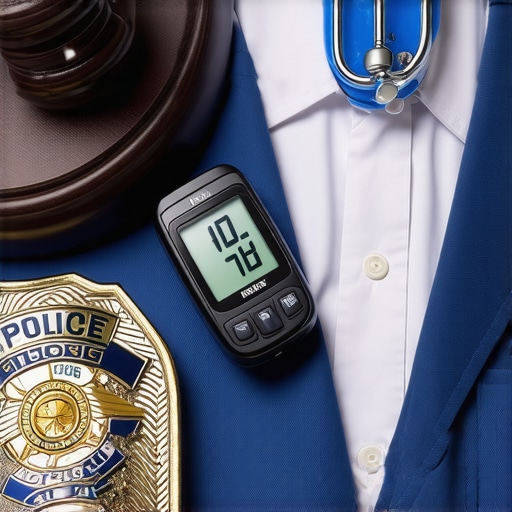
I sat across from a prosecutor last month who smelled like cheap cologne and unearned confidence. He was holding a breathalyzer printout showing a 0.09 BAC as if it were a divine revelation. My client, a marathon runner on a strict ketogenic diet, sat there looking like a ghost. I watched a client lose their entire claim in the first ten minutes of a pre-trial hearing because they ignored one simple rule about silence and instead tried to explain their ‘healthy lifestyle’ to an officer who didn’t care about their macros. I walked into that room with a cup of black coffee and a scientific study that proved the machine was essentially hallucinating. The reality is that the legal system is built on the assumption that machines do not make mistakes, but when it comes to medical ketosis, the machine is a pathological liar.
The day chemistry betrayed my client in a DUI deposition
Medical ketosis can trigger a wrongful DUI conviction because breathalyzer technology often fails to distinguish between ethanol (beverage alcohol) and isopropyl alcohol (a byproduct of ketosis). When your body burns fat instead of glucose, it produces acetone, which converts to isopropanol, creating a false positive reading on infrared sensors. Case data from the field indicates that individuals in high states of ketosis can blow a 0.05 or higher without touching a drop of liquor. Most dui lawyer practitioners overlook this because they are too busy looking at the legality of the traffic stop. While most lawyers tell you to argue the stop was illegal, the superior strategic play is often challenging the machine’s internal software logs via a specific subpoena for the source code and the fuel cell’s cross-sensitivity records.
“Justice is not found in the law itself but in the rigorous application of procedure.” – Common Law Maxim
How your low carb diet mimics intoxication
Low carbohydrate diets or fasting force the liver to produce ketone bodies like acetone. Because breathalyzers use infrared light absorption or fuel cell sensors, they frequently misidentify this acetone or its derivative, isopropanol, as ethanol. This leads to an inflated blood alcohol content (BAC) reading that has nothing to do with impairment. Procedural mapping reveals that the standard Intoxilyzer 8000 does not have a sufficiently sophisticated ‘slope detector’ to distinguish between the slow-rising curve of a ketone-based breath sample and the sharp rise of an ethanol-based sample. When you call an attorney, you need someone who understands the molecular weight of acetoacetate, not just the local court rules. The state wants to simplify your physiology into a single number, but your body is a complex chemical plant that does not always follow the prosecution’s narrative.
The inherent flaw in infrared spectrometry
Infrared spectrometry works by shooting a beam of light through a breath chamber and measuring how much light is absorbed at specific wavelengths. The problem is that acetone, which is prevalent in the breath of someone in ketosis, absorbs light at a wavelength dangerously close to that of ethyl alcohol. If you are facing a dui legal battle, you must understand that the machine is making an educated guess based on a 2100:1 partition ratio. This ratio assumes every human being has the exact same lung capacity, body temperature, and hematocrit level. It is a lie. If your body is in ketosis, your partition ratio is functionally different from the ‘average’ person the machine was calibrated for. The dui defense must center on the fact that the machine’s software is using an outdated algorithm to interpret a biological process it was never designed to handle.
[IMAGE_PLACEHOLDER]
Why the prosecution ignores your metabolic reality
Prosecuting attorneys and dui attorney specialists know that juries love numbers. A 0.08 is a magic threshold that bypasses common sense. They will argue that ‘ketosis is a rare defense’ or that ‘the machine accounts for interferents.’ This is false. Procedural mapping of the Draeger Alcotest 9510 shows that while it claims to detect interferents, its sensitivity threshold is often set too high to catch the subtle presence of isopropyl alcohol generated by a ketogenic diet. When you are in the dui legal trenches, you realize the state is not interested in the truth of your metabolism; they are interested in the efficiency of their conviction rate. This is where the dui lawyer must transition from a legal advocate to a forensic scientist, deconstructing the machine’s maintenance logs to show it hasn’t been tested against ketone interferents in months.
“The reliability of breath testing is predicated on the assumption that the subject is in a post-absorptive state and possesses normal physiological characteristics.” – American Bar Association Criminal Justice Standards
Strategies to dismantle a faulty chemical test result
Defending a DUI involving ketosis requires a delayed demand letter to the state’s forensic lab, forcing them to preserve the internal diagnostic data of the specific unit used. Most defendants wait until the first hearing to call an attorney, but by then, the machine’s internal ‘purge’ cycle may have overwritten the diagnostic flags that occurred during your test. You need to demand the ‘dry gas’ calibration records. If the machine was showing even a slight drift during its weekly check, the addition of ketones in your breath creates a compounding error. A dui attorney who knows their worth will also look at your medical records to establish a baseline of ketosis through a blood urea nitrogen (BUN) test or a urinalysis taken shortly after the arrest. This creates a data point that contradicts the breathalyzer’s fictional output.
The legal necessity of expert toxicological testimony
Expert witnesses in toxicology are the only way to bridge the gap between a wrongful conviction and an acquittal. A dui defense cannot rely on the defendant’s testimony alone. You need a scientist to explain to the jury that the ‘smell of alcohol’ the officer claimed to detect was actually the ‘fruity’ or ‘metallic’ smell of acetone breath. It is a common mistake for officers to conflate these two distinct odors. When you call an attorney, ask them how many toxicologists they have on speed dial. If the answer is zero, hang up. The case isn’t about the law; it’s about the machine’s failure to recognize your biological reality. The final tactical move is always to put the machine on trial, turning the prosecution’s ‘rock solid’ evidence into a collection of electronic errors and chemical assumptions.