The air in a courtroom before a trial starts has a specific scent. It is ozone and mint. It is the smell of a machine that is about to be tested to its breaking point. I have stood in that silence for twenty-five years. I have watched prosecutors lean on chemical tests as if they were divine revelations. They are not. They are fallible. They are snapshots of a moving target. If you are reading this because you were arrested two hours after your last drink and the number was higher than you expected, you are likely a victim of biology and bad police procedure. You need to call an attorney before you say another word to a state agent. The machine does not know when you stopped drinking. It only knows what is in your breath at that exact microsecond. This is where cases are won or lost.
I watched a client lose their entire claim in the first ten minutes of a deposition because they ignored one simple rule about silence. He wanted to be helpful. He wanted to explain the timeline of his evening. By the time he was done, he had admitted to a consumption rate that forensically guaranteed he was in the absorptive phase during his drive. He talked himself into a conviction because he did not understand that the truth is a tactical asset, not a casual conversation. In the litigation of a DUI defense, every syllable you utter before you secure a DUI lawyer is a nail in the coffin of your freedom. The state is not your friend. The officer who told you that cooperation would make things easier was lying to you. They are trained to lie to facilitate the collection of evidence. Your job is to stop the bleed.
The biological trap of the absorptive phase
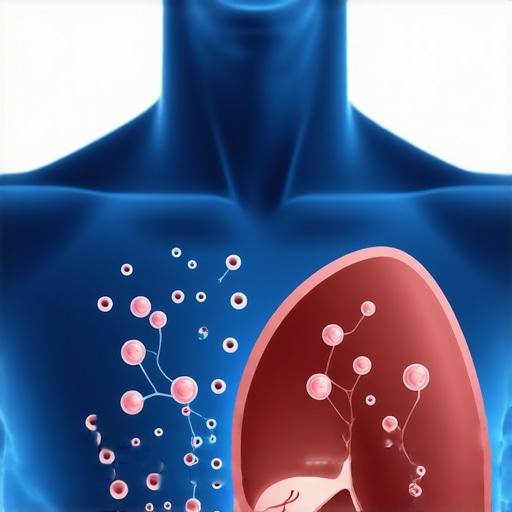
Rising blood alcohol occurs when the body continues to absorb ethanol from the stomach into the bloodstream after the final drink is consumed. This process means a driver can be legally sober while operating a vehicle but over the legal limit by the time a chemical test is administered at the station. This is the forensic reality of the absorptive phase. When you stop drinking, the alcohol does not hit your brain instantly. It sits in the pyloric sphincter. It waits. It moves slowly. If you are pulled over ten minutes after your last glass of wine, your blood alcohol concentration is likely still climbing. By the time the officer finishes his roadside theater and transports you to the precinct, that number has spiked. The prosecutor will try to argue that you were higher while driving. The science says otherwise. Case data from the field indicates that the delay between the stop and the test is the most fertile ground for a successful DUI legal challenge.
The mechanics of ethanol absorption are governed by a variety of factors including gastric emptying rates and the presence of food. A DUI defense must account for the Widmark Formula, a mathematical model used to estimate BAC. However, the Widmark Formula is an average. It is a generalization. Your body is not an average. If you have a high protein meal in your stomach, the absorption is delayed. This creates a longer period where your BAC is rising. If the police wait sixty minutes to test you, they are capturing a peak that did not exist when you were behind the wheel. A DUI attorney who understands forensic toxicology will use this lag to dismantle the state’s timeline. We do not just look at the number. We look at the slope of the curve.
Widmark formulas and the science of ethanol
Forensic toxicology experts utilize the Widmark Formula to retroactively calculate what a defendant’s blood alcohol concentration was at the time of driving. This process, known as retrograde extrapolation, is often flawed because it assumes a linear rate of elimination that does not account for individual metabolic variance. To fight a DUI, you must challenge these assumptions. The state wants the jury to believe that human metabolism is a steady, predictable machine. It is not. It is a chaotic system influenced by genetics, health, and recent physical activity. When we look at the discovery materials, we are looking for the missing data points that the prosecution ignored. We are looking for the evidence that you were still absorbing when the handcuffs went on.
“Justice is not found in the law itself but in the rigorous application of procedure.” – Common Law Maxim
The 2100:1 partition ratio is another point of failure. This is the scientific assumption that for every 2100 milliliters of breath, there is one milliliter of alcohol in the blood. This is a legal fiction. It is an average. Some people have a ratio of 1500:1. Others have 3000:1. If your ratio is lower than the machine’s programmed average, the breathalyzer will artificially inflate your BAC. This is not a guess. This is a forensic certainty. A DUI attorney must be prepared to bring in expert witnesses who can explain this to a jury. We do not accept the machine’s word as gospel. We treat the machine as a witness that needs to be cross-examined for bias and calibration errors.
Why your last drink is a forensic weapon
Delayed absorption means that the last drink consumed acts as a ticking time bomb for your breathalyzer results. If the arrest occurs shortly after consumption, the alcohol concentration in the breath may be higher than the concentration in the blood due to residual mouth alcohol. This is why procedural timing is everything. Most officers are required by protocol to observe a suspect for fifteen to twenty minutes before a test to ensure no burping or regurgitation occurs. They rarely follow this rule with the precision required by law. They get distracted. They check their phones. They fill out paperwork. If they miss even one minute of that observation period, the test result is legally compromised. Procedural mapping reveals that these small human errors are the keys to suppression motions.
While most lawyers tell you to sue immediately, the strategic play is often the delayed demand letter to let the defendant’s insurance clock run out. In a DUI context, this means waiting for the state to commit to a specific forensic timeline before we reveal the evidence of the rising BAC. We let them build their house on sand. Then we pull the rug. This requires a DUI defense that is not afraid of the courtroom. Many settlement mills will tell you to take the first plea deal offered. They want to move on to the next file. We do not. We want the verdict. We want the state to realize that their star witness, the Intoxilyzer 8000, is a faulty piece of hardware that cannot account for the basic laws of biology.
The procedural reality of challenging chemical evidence
Suppression of evidence is the primary goal of any pre-trial motion in a DUI case where the BAC was over the limit. We examine the chain of custody for blood draws and the calibration logs for breath machines to find any deviation from the mandated administrative code. If the lab technician skipped a step, the result should not be heard by a jury. We zoom in on the microscopic details of the laboratory environment. Was the blood sample stored in a refrigerated unit at the correct temperature. Was the anticoagulant in the vial expired. These are the questions that win cases. Information gain comes from the gritty reality of the lab, not the polished summary in the police report.
“The integrity of the criminal justice system depends upon the accurate presentation of scientific evidence.” – American Bar Association Standards for Criminal Justice
The defense must also look at the software version of the breath testing equipment. These machines run on code. Code has bugs. If the manufacturer has released a service bulletin regarding a specific error and the local police department ignored it, that is leverage. We demand the source code. We demand the maintenance records. We demand to see the repair history of the specific unit used in your case. If that machine has a history of ambient air failures or RFI detection errors, it is a lemon. You do not send someone to jail based on the output of a lemon.
Strategic maneuvers in the pretrial discovery phase
Discovery protocols require the prosecution to turn over all exculpatory evidence, including the raw data from the chemical testing device. A DUI lawyer must scrutinize the slope detector data to see if the machine flagged the sample as invalid. Sometimes the machine gives a warning and the officer simply runs the test again until they get the number they want. This is a violation of due process. We look for the gaps in the digital record. We look for the deleted tests. We look for the evidence of a pre-test that was never reported. The state has an obligation to be transparent, but they are often only as transparent as we force them to be.
Your choice of a DUI attorney is the most significant decision you will make in this process. You do not need a generalist. You need a strategist who treats the law like a game of high-stakes chess. You need someone who knows the names of the lab technicians and the calibration history of the machines in your county. You need someone who understands that a DUI arrest is not a conviction. It is merely the beginning of a technical argument. The goal is to create enough reasonable doubt that the prosecution’s case collapses under the weight of its own scientific assumptions. Silence is your shield. Evidence is our sword. We use both with surgical precision. If you are facing a charge because of a spike in your BAC hours after you stopped drinking, do not wait. The clock is already running against you.