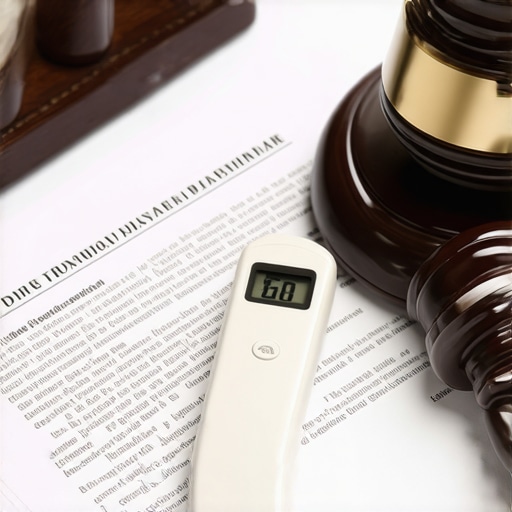
The machine fails more than you think
Breathalyzer readings are frequently suppressed in court because of calibration errors, mouth alcohol contamination, and improper officer training. A DUI lawyer understands that a breath test is merely a proxy, not a direct measurement of blood alcohol content. Successfully executing a DUI defense requires a DUI attorney to attack the scientific validity of the intoxilyzer immediately upon retention.
I sat across from a client last Tuesday. The room smelled like stale black coffee and the clinical scent of fear. He handed me a citation. He blew a .14. He thought his life was over. I watched him prepare to surrender because he believed the digital display on a plastic box was an absolute truth. I told him he was wrong. I once watched a client lose their entire claim in the first ten minutes of a deposition because they ignored one simple rule about silence. This client was about to do the same by admitting guilt to a machine that has a higher margin of error than a weather forecast in a hurricane. You do not win by begging for mercy. You win by deconstructing the hardware. The prosecution wants you to believe the Intoxilyzer 8000 is a flawless arbiter of justice. It is not. It is a mass-produced piece of equipment subject to the same glitches as your smartphone. If the officer did not observe you for a continuous twenty minutes before the blow, the results are garbage. If you have acid reflux, the results are garbage. If the machine was calibrated at the wrong temperature, the results are garbage. You do not need a friend. You need a dui lawyer who views the prosecution’s evidence as a target for demolition. Your dui attorney should be hunting for the ghost in the machine from the moment they call an attorney.
“Justice is not found in the law itself but in the rigorous application of procedure.” – Common Law Maxim
The twenty minute observation rule failure
Police officers must maintain continuous physical observation of a suspect for twenty minutes before administering a breath test to ensure no residual mouth alcohol is present. This deprivation period is a mandatory procedural requirement. Any dui defense strategy must examine the dashcam footage to verify if the arresting officer was distracted or turned away during this window.
Tactical timing is everything. Case data from the field indicates that officers often spend this twenty minute window filling out paperwork or searching the vehicle. This is a fatal mistake for the prosecution. If the officer looks away for even sixty seconds, they cannot testify under oath that you did not burp, hiccup, or regurgitate. These actions bring raw alcohol from the stomach into the oral cavity. The machine then measures this concentrated vapor instead of the deep lung air it is designed to analyze. This leads to a false high. The machine is programmed to assume a 2100 to 1 partition ratio. It assumes that for every unit of alcohol in your breath, there are 2100 units in your blood. This is a mathematical average, not a biological fact. Many people have a partition ratio as low as 1500 to 1. For those individuals, the machine will always overstate their intoxication levels by thirty percent or more. This is the biological lottery that the state does not want the jury to understand. We do not accept averages when a person’s liberty is at stake. Procedural mapping reveals that the scientific foundation of these tests is built on a series of assumptions that often crumble under cross examination. [IMAGE_PLACEHOLDER] Your dui attorney must be prepared to cross examine the state’s toxicologist on the variability of Henry’s Law and the specific physiology of the defendant.
The hidden impact of medical conditions
Medical conditions like Gastroesophageal Reflux Disease or diabetes can produce false positive breathalyzer readings by introducing interferents into the breath stream. A dui lawyer will use medical records to prove that endogenous ethanol or stomach acid contaminated the breath sample. This dui legal maneuver often results in the suppression of evidence before the trial even begins.
The defense must be aggressive. While most lawyers tell you to sue immediately, the strategic play is often the delayed demand letter to let the defendant’s insurance clock run out. In the context of a DUI, the strategic play is the deep dive into your own biology. If you are on a ketogenic diet, your body produces isopropyl alcohol. The machine is supposed to distinguish between ethyl alcohol and isopropyl alcohol using a slope detector. However, these detectors are notoriously unreliable. I have seen cases where a person in ketosis blew a .09 despite having zero drinks. The machine saw the acetone on their breath and flagged it as booze. The same applies to dental work. If you have a bridge or a crown that traps food particles, those particles can ferment. You are essentially walking around with a tiny distillery in your mouth. When you blow into the tube, the machine picks up that fermentation. The officer sees a number. The prosecutor sees a conviction. I see a technicality that can win a case. You must be clinical. You must be cold. You must recognize that the courtroom is not about what happened, it is about what can be proven. If the science is shaky, the case is shaky.
“The prosecution must prove every element of the offense beyond a reasonable doubt, including the scientific reliability of the testing equipment.” – American Bar Association Guidelines
Thermal instability and environmental interference
Breath temperature significantly affects the accuracy of infrared spectroscopy used in breathalyzers, as every degree Celsius above normal increases the BAC reading by nearly seven percent. Environmental factors like radio frequency interference from police radios or cell phones can also distort the electronic signals within the testing device. A dui defense expert will audit the testing site for these procedural vulnerabilities.
The air you breathe out is not a static substance. It is a volatile mixture influenced by your body temperature. If you have a mild fever, your breath test result will be artificially inflated. The machine is calibrated for a standard human breath temperature of 34 degrees Celsius. If your breath is 36 degrees, you are already behind the 8-ball. The machine does not have a thermometer for your lungs. It just does the math and spits out a number that could cost you your license. Then there is the issue of the room itself. Most breath tests are conducted in police stations filled with electronic noise. Police radios, microwave ovens, and even poorly shielded fluorescent lights emit radio frequencies. If the Intoxilyzer is not properly shielded, this RFI can cause the internal processor to miscalculate. The defense should always demand the maintenance logs and the RFI survey for the specific room where the test was administered. If the state cannot produce them, or if the logs show a history of RFI alerts, the reliability of your test is compromised. This is the microscopic reality of litigation. It is about finding the one loose thread and pulling until the entire prosecution case unravels. Do not let the badge and the uniform intimidate you into believing the science is settled. Science is never settled in a courtroom. It is debated. It is contested. It is beaten. Your dui legal team must be ready to call an attorney who specializes in the forensic application of technology. The state has resources, but they are often lazy. They rely on the machine to do the work for them. When the machine fails, they have nothing. That is when we win.