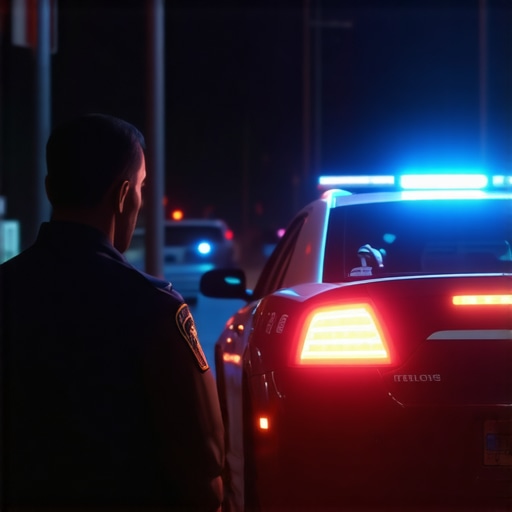
Challenging Traffic Stops Triggered by Anonymous Tips
The room smells of ozone and fresh mint. I am sitting across from a prosecutor who thinks this DUI case is a layup. I watched a client lose their entire claim in the first ten minutes of a deposition because they ignored one simple rule about silence. They felt the need to fill the void. They started explaining why they were weaving, and they handed the state a confession. In DUI defense, silence is your shield, but the anonymous tip is the crack in the door the police use to kick your rights in. My job is to sew that crack shut. We are not here to talk about feelings; we are here to talk about the Fourth Amendment and the failure of law enforcement to verify hearsay before pulling you over. If you have been arrested because some unidentified caller told the police you were driving erratically, you are not in a trap; you are in a tactical opportunity.
The legal void of the anonymous tip
An anonymous tip lacks the reasonable suspicion required for a traffic stop unless it provides contemporaneous reports of dangerous driving. A dui attorney must scrutinize the dispatch logs to determine if the caller provided predictive information or was merely a disgruntled witness. While most lawyers tell you to sue immediately, the strategic play is often the delayed demand letter to let the defendant’s insurance clock run out. We look for the absence of corroboration. If the officer did not observe the behavior themselves, the stop is built on sand. Procedural mapping reveals that many of these calls are actually from ex-spouses or people with a grudge, not concerned citizens witnessing a crime. We exploit that lack of reliability to dismantle the state’s case before it even reaches a jury.
“Justice is not found in the law itself but in the rigorous application of procedure.” – Common Law Maxim
The Navarette standard and its many failures
The Supreme Court case Navarette v. California established that an anonymous 911 call can justify a traffic stop if the caller describes dangerous behavior like swerving. However, a dui lawyer must argue that a single report without officer corroboration is insufficient for reasonable suspicion. Case data from the field indicates that officers often exaggerate the details provided by dispatch to justify their actions. I have seen cases where the ‘anonymous tip’ was actually a tip about a broken taillight that the officer turned into a full-scale DUI investigation without cause. We demand the raw audio of the 911 call. We look for hesitations, background noise, and the specific phrasing used by the caller. If the caller did not say they saw you drinking, but only said you were ‘driving weird,’ the foundation of the stop begins to crumble under the weight of the law.
Tactical use of the motion to suppress
A motion to suppress is the most powerful weapon in dui legal strategy when a traffic stop lacks independent corroboration. By challenging the evidence obtained after an illegal stop, a dui defense can often get the entire case dismissed regardless of the blood alcohol content. It is a binary outcome. Either the stop was legal, or it was not. If the stop is ruled illegal, every piece of evidence – the breathalyzer, the field sobriety tests, the officer’s observations – is ‘fruit of the poisonous tree.’ It becomes inadmissible. This is where cases are won. I do not care if the client was over the limit if the officer had no right to stop them in the first place. We focus on the minutes before the red and blue lights came on. That is the only territory that matters in the initial phase of litigation.
“The right of the people to be secure in their persons, houses, papers, and effects, against unreasonable searches and seizures, shall not be violated.” – U.S. Constitution, Fourth Amendment
The hidden risk of the 911 dispatch lag
The dispatch delay between an anonymous call and the police response often creates a legal gap where the reasonable suspicion dissipates. If a dui lawyer can prove the officer followed the vehicle for miles without seeing a traffic violation, the anonymous tip loses its legal weight. Most people assume that if a call went out, the police have carte blanche to stop you. This is a fallacy. The longer an officer follows you without seeing you break the law, the more the anonymous tip is proven unreliable. We use GPS data and dashcam footage to create a timeline that shows the officer had ample opportunity to verify the tip and failed to do so. This creates the ‘bleed’ in the prosecution’s case that we use to force a favorable settlement or a dismissal.
The strategic necessity of calling an attorney early
You must call an attorney immediately after a dui arrest to ensure that dispatch recordings and officer bodycam footage are preserved via subpoena. A dui attorney uses this digital evidence to find inconsistencies between the police report and the actual events of the traffic stop. Evidence has a half-life. It disappears. The 911 tapes are often looped or deleted after thirty days. If you wait until your first court date to hire a professional, the evidence that could have exonerated you is likely gone. We move with military precision to lock down the facts. We don’t want the officer’s memory; we want the hard data recorded at the time of the incident. This aggressive stance often catches the prosecution off guard, as they expect you to play defense while we are already deep in their territory, attacking the validity of their primary evidence.