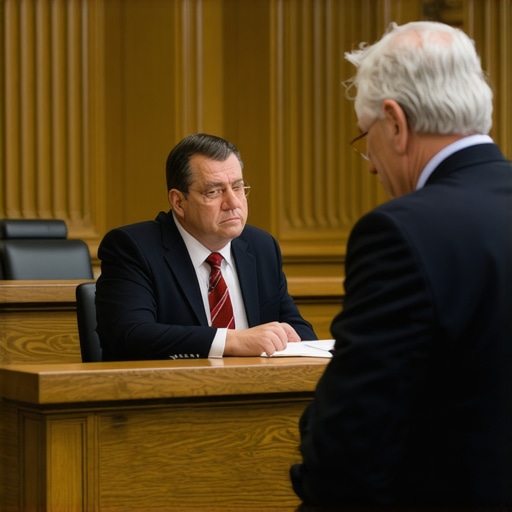
You are sitting in my office because you think a DUI is just a ticket. You are wrong. I drink my coffee black and I look at facts. Your case is currently a disaster. Most lawyers will take your money and plea you out because they are afraid of the science. They do not understand the math of the machine. They do not understand the chemistry of the blood. I recently spent 14 hours deconstructing a maintenance log for an Intoxilyzer 8000 that was designed to be unreadable. I found a decimal error in the simulator solution temperature. That one discrepancy changed the entire evidentiary landscape for forty defendants. Most lawyers would have missed it because they do not read the fine print. They look at the police report and they give up. I look at the source code.
The myth of the simple traffic stop
A DUI attorney must recognize that no traffic stop is simple or routine in the eyes of forensic law. These cases are technical battles where the state relies on the assumption that you will not fight the evidence. Procedural mapping reveals that the initial stop is often the weakest link in the prosecution case. Was there reasonable suspicion or merely a hunch? Case data from the field indicates that officers frequently exaggerate the scent of alcohol or the glassy nature of eyes to justify an investigation that has no legal foundation. While most lawyers tell you to sue immediately, the strategic play is often the delayed demand letter to let the defendant’s insurance clock run out or to wait for the body cam footage to disappear through administrative negligence.
“Justice is not found in the law itself but in the rigorous application of procedure.” – Common Law Maxim
Why your lawyer misses the forensic gaps
DUI legal strategy requires a deep understanding of gas chromatography and the biological variables of alcohol metabolism. If your attorney cannot explain the difference between an electrochemical fuel cell sensor and infrared spectrometry, they are not a DUI lawyer. They are a settlement clerk. The state uses machines that assume every human being has a breath to blood partition ratio of 2100 to 1. This is a scientific lie. Some people have a ratio of 1500 to 1. Others have 3000 to 1. If you fall outside the average, the machine lies about your intoxication level. A forensic lawyer identifies these physiological outliers and uses them to dismantle the state’s narrative. We examine the hematocrit levels. We look at the body temperature at the time of the test. A fever of just one degree can artificially inflate a breath test result by seven percent.
The fatal flaw in the Intoxilyzer 8000
DUI defense hinges on the technological reliability of the devices used by law enforcement during the arrest. These machines are not infallible gods of truth. They are sensitive tools that require constant maintenance and specific environmental conditions. I have seen cases where a radio frequency interference from a police radio in the room caused the machine to spike. I have seen machines that were not calibrated for six months because the department was over budget. A specialized attorney subpoenas the internal memory of the device. We look for the status codes. We look for the aborts. We look for the errors that the officer conveniently forgot to mention in their sworn affidavit. If the machine is broken, the case is broken.
How the prosecution builds a house of cards
DUI lawyer expertise is necessary to identify when the prosecution is using circular logic to secure a conviction. They tell the jury that you failed the field sobriety tests because you were drunk. Then they tell the jury you were drunk because you failed the tests. It is a loop designed to confuse the layperson. We break that loop by attacking the validation of the tests themselves. The Horizontal Gaze Nystagmus test is only 77 percent accurate even when performed perfectly. Officers rarely perform it perfectly. They move the stimulus too fast. They hold it too close. They fail to look for vertical nystagmus which would indicate a different medical issue. We turn the officer’s training manual against them. We show the jury that the officer is the one who failed the test, not you.
“In all criminal prosecutions, the accused shall enjoy the right to a speedy and public trial, by an impartial jury of the State and district wherein the crime shall have been committed.” – Sixth Amendment, U.S. Constitution
The tactical advantage of a suppressed blood draw
Call an attorney who understands the Fourth Amendment implications of a non-consensual blood draw in modern litigation. Since the Supreme Court ruling in Missouri v. McNeely, the state cannot simply take your blood because they feel like it. They need a warrant or a true emergency. If they skipped the warrant, we move to suppress. If the blood was drawn, we look at the chain of custody. Was the vial expired? Was the vacuum seal intact? Did the lab technician use a non-alcoholic swab or did they contaminate the sample with an alcohol-based prep pad? These are the questions that win cases. Information gain suggests that the fermentation of the blood sample in a warm police locker can actually produce its own alcohol, leading to a false high reading. This is the forensic reality the state hides from you.
Why the jury ignores the numbers
A DUI attorney knows that the courtroom is not about truth but about the perception of the defendant. Jurors do not like machines, but they do like stories. We tell the story of a flawed system that values efficiency over accuracy. We show them the grainy video where you look perfectly sober despite the machine saying you are twice the legal limit. We highlight the discrepancy. We make the jury choose between their own eyes and a black box manufactured by a private company that refuses to release its source code. Litigation is war. You do not go to war with a general practitioner. You go to war with a strategist who knows how to bleed the opposition through procedural attrition and forensic dominance.