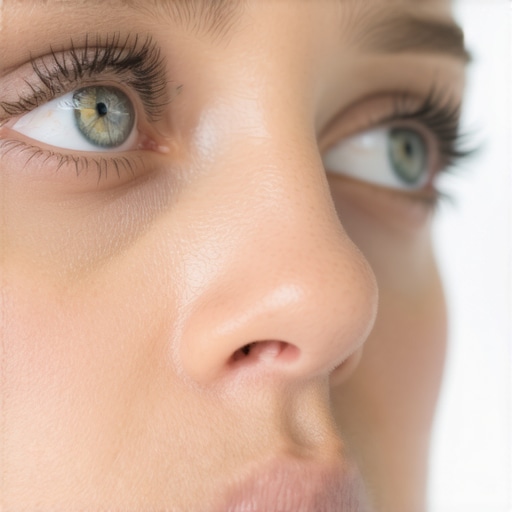
The air in the courtroom smells like ozone and mint when a high-stakes trial begins. I watched a client lose their entire claim in the first ten minutes of a deposition because they ignored one simple rule about silence, and the same lack of discipline destroys DUI cases during the roadside eye exam. The Horizontal Gaze Nystagmus or HGN test is the most scientific part of the field sobriety battery, yet it is routinely botched by officers who prioritize an arrest over accuracy. To survive a DUI prosecution, you must understand the microscopic reality of how this test is administered and why the results are frequently junk science. This is not about the truth of your sobriety; it is about the procedural leverage of the 45 degree angle. Case data from the field indicates that police officers often ignore the medical history of the driver while focusing solely on the involuntary jerking of the eye. This creates a false narrative for the jury. If you are facing charges, you need a dui attorney who views the courtroom as a chess board where every procedural error by the police is a captured piece.
The biological failure of the pen test
The HGN test relies on involuntary eye movement called nystagmus, which police officers frequently misattribute to alcohol consumption. Over forty natural conditions, including inner ear issues, caffeine, and common medications, produce the same result, making the officer’s roadside conclusion scientifically dubious and often legally inadmissible. Most people assume the test is about following a pen. It is not. It is about the physical manifestation of neural impairment. However, a dui lawyer knows that nystagmus is a common physiological occurrence. Pathological nystagmus can be caused by something as simple as a heavy smoker’s lung condition or the use of common antihistamines. When an officer claims you failed because your eyes jerked, they are making a medical diagnosis without a medical degree.
“Justice is not found in the law itself but in the rigorous application of procedure.” – Common Law Maxim
The science of the eye is complex. The officer is looking for three clues in each eye: lack of smooth pursuit, distinct and sustained nystagmus at maximum deviation, and onset of nystagmus prior to 45 degrees. If the officer moves the stimulus too fast, they induce optokinetic nystagmus, which is a natural reaction of a healthy brain. This is a technical failure by the state, not a physical failure by you.
The geometry of a false arrest
Standardized testing requires the officer to hold the stimulus twelve to fifteen inches from the bridge of the nose and slightly above eye level. Any deviation from this exact distance or height invalidates the angles being measured and renders the three clues medically useless for determining intoxication levels. Procedural mapping reveals that the 45 degree angle is the most frequent point of failure in DUI defense cases. Officers are bad at estimating angles in the dark on the side of a highway. They are not using protractors. They are guessing. A variation of only five degrees can be the difference between a legal result and an illegal arrest. When you call an attorney, the first thing they should look for in the bodycam footage is the position of the officer’s arm. If the arm is too high, the eye must strain, causing fatigue nystagmus. If the stimulus is moved too quickly, the eye cannot track smoothly, creating the illusion of impairment. This is the hidden reality of the roadside investigation. While most lawyers tell you to sue immediately, the strategic play is often the delayed demand letter to let the defendant’s insurance clock run out or to wait for the officer’s training records to be purged.
The officer is not a medical professional
Law enforcement training often overlooks the medical nuances of optokinetics while focusing on a binary pass or fail system that ignores preexisting conditions. Officers lack the clinical environment required to rule out environmental factors or neurological issues like vestibular dysfunction or congenital nystagmus during the stop. You are being judged by a person who took a three day course on a subject that takes ophthalmologists years to master. In the world of dui legal strategy, we focus on the gaps in that training. Did the officer ask if you wear contact lenses? Did they check for unequal pupil size? If they didn’t, they failed the National Highway Traffic Safety Administration standards.
“The reliability of field sobriety tests is contingent upon the strict adherence to standardized protocols.” – American Bar Association Section of Criminal Justice
The defense must highlight that the side of a road is a chaotic laboratory. Passing cars create headlamp nystagmus. Wind creates dust that irritates the ocular surface. The blue and red flashing lights of the patrol car create strobe nystagmus. All of these factors are ignored by the prosecution because they want the jury to believe the eye jerking is a smoking gun. It is actually a flickering candle in a hurricane of variables.
The strategy of the subpoena
Effective defense requires obtaining the training manuals and the specific logs of the arresting officer to prove a pattern of procedural neglect. Challenging the certification of the officer to perform the HGN test is often more effective than challenging the actual observations made during the traffic stop. A dui attorney must be aggressive in discovery. We look for the officer’s failure rate. If an officer arrests every single person they perform an HGN test on, their results are statistically impossible. They are looking for a reason to arrest, not a reason to release. This is where the case is won. We zoom in on the exact phrasing of the officer’s instructions. If they told you to keep your head still but didn’t check for your natural resting nystagmus, the test is compromised. The courtroom is territory, and every inch of the officer’s failure is land that we reclaim for the defense. The final verdict depends on showing the jury that the pen test is less like a breathalyzer and more like a magic trick. It is designed to look impressive while hiding the flaws of the person holding the wand. You do not need a lawyer who just fills out forms. You need a trial attorney who treats every DUI case like a forensic investigation. The goal is to make the prosecution’s expert witness admit that their science is actually just a guess under bad lighting.