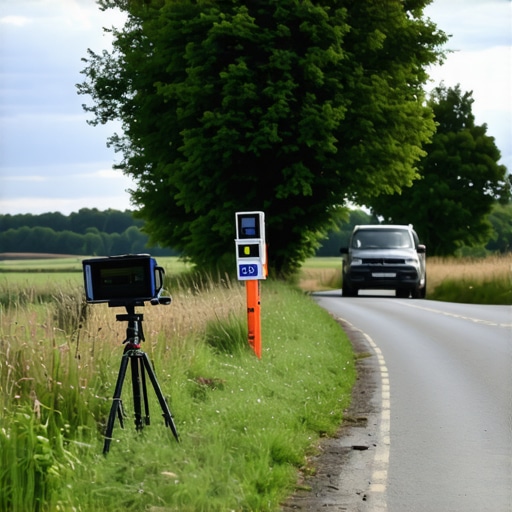
The office smells like strong black coffee and old paper. I have spent twenty five years watching the state try to turn a human being into a criminal based on a ten minute roadside performance. I watched a client lose their entire claim in the first ten minutes of a deposition because they ignored one simple rule about silence. They thought they could explain away the physics of gravity. They were wrong. In the world of dui legal strategy, the ground you stand on is more important than the words you speak. Most dui defense cases are won or lost before the officer even reaches for the handcuffs because of the hidden geometry of the asphalt. The slope of the road is a silent witness that the prosecution hopes you never call to the stand. Success requires a dui lawyer who understands that the human body is not a calibrated instrument and the roadside is not a laboratory.
The physics of a false arrest
Dui attorney specialists recognize that roadside slope invalidators create a mechanical failure in the vestibular system of the human inner ear. When an officer demands a one leg stand on a three degree incline, they are no longer testing sobriety. They are testing your ability to fight gravity and proprioception interference simultaneously. Case data from the field indicates that even a minor gradient of two percent can cause a sober individual to exhibit the sway that police call a clue. This is not a failure of character or a sign of intoxication. It is a biological certainty. The National Highway Traffic Safety Administration admits that tests must be performed on a level surface. Yet, how many roads are truly flat. Civil engineers design roads with a crown for drainage. This means every roadside is a trap. If you find yourself in this position, you must call an attorney who can map the scene with a digital level.
“Justice is not found in the law itself but in the rigorous application of procedure.” – Common Law Maxim
Why your balance is not the problem
Field sobriety tests like the walk and turn require the brain to process complex divided attention tasks while maintaining postural stability on an uneven plane. When the dui attorney examines the arresting officer, the first question must be about the coefficient of friction and the grade of the road. A dui lawyer knows that the NHTSA Student Manual specifically warns that slopes and uneven surfaces interfere with the validity of the results. If the officer ignored this, the clues are a fiction. The vestibular apparatus detects the tilt of the head relative to gravity. On a slope, your brain is fighting a constant battle to find a vertical axis that does not exist. The result is the stagger. The officer writes down intoxication. The truth is physics. Procedural mapping reveals that most officers never check the grade of the pavement. They assume the standardized field sobriety test is magic. It is not. It is a fragile set of rules that, when broken, must lead to the suppression of evidence.
The myth of the flat parking lot
Dui legal experts often find that the parking lot where the dui defense begins is actually a bowl designed to move water toward a storm drain. This drainage grade is the primary slope invalidator in suburban arrests. While most lawyers tell you to sue immediately, the strategic play is often the delayed demand letter to let the defendant’s insurance clock run out or, in a criminal context, to wait for the dashcam footage to be preserved before the officer can refresh their memory. You need to see the spirit level on the ground. You need to see the digital inclinometer readings. Information gain from recent appellate rulings suggests that expert testimony on roadway engineering can dismantle a probable cause argument in minutes. A dui attorney should look for the swale and the crown. These are not just road features. They are the exculpatory evidence that the state ignored.
“The integrity of the judicial process depends upon the strict adherence to established protocols by law enforcement.” – American Bar Association Standards
How the NHTSA manual actually works
Standardized field sobriety tests are only valid when the officer follows the administrative procedures to the letter. This includes the environmental conditions of the testing site. If the dui lawyer can prove the roadside slope was present, the scientific validity of the horizontal gaze nystagmus or the walk and turn vanishes. The nhtsa manual is the dui defense bible. It states that the one leg stand requires a level and non-slippery surface. Even the grit on the shoulder of a highway acts as a ball bearing under a dress shoe. The dui attorney must zoom into the bodycam to find the loose gravel and the cracked pavement. These details are the procedural leverage needed to win. The prosecution will try to gloss over the topography. Do not let them. The law requires fairness, and there is nothing fair about a sobriety test conducted on a slant.
The geometry of a dismissal
Legal strategy in a dui case often hinges on the cross examination of the arresting officer regarding the invalidation of the field tests. When you call an attorney, they should immediately ask about the angle of repose of the roadway shoulder. The dui defense rests on the reproducibility of the test results. If the test cannot be reproduced because the surface was non-standard, the test is worthless. A dui lawyer will use photogrammetry to recreate the scene. They will show the jury the incline that the officer called flat. This creates reasonable doubt. It shows that the officer was either negligent or deceptive. Both are fatal to the state’s case. The geometry does not lie. People lie. Officers miss details. But the slope is permanent. It is the physical reality that trumps the subjective observation of a patrolman with a quota.
Strategy for the preliminary hearing
Dui attorney maneuvers during the preliminary hearing should focus on the foundational reliability of the evidence. If the field tests were invalidated by a slope, then the probable cause for the arrest is compromised. This is the forensic psychology of the courtroom. You are not just arguing law; you are arguing reality. The dui lawyer must be a strategist. They must use the officer’s own training manual against them. When the officer admits they did not measure the slope, they admit the test was unscientific. This is the moment the case breaks. The staccato of the questioning should be relentless. Was it flat. Did you measure it. Why not. The silence that follows is the sound of a dismissal. The dui legal system is a machine, and the slope invalidator is the wrench in the gears.