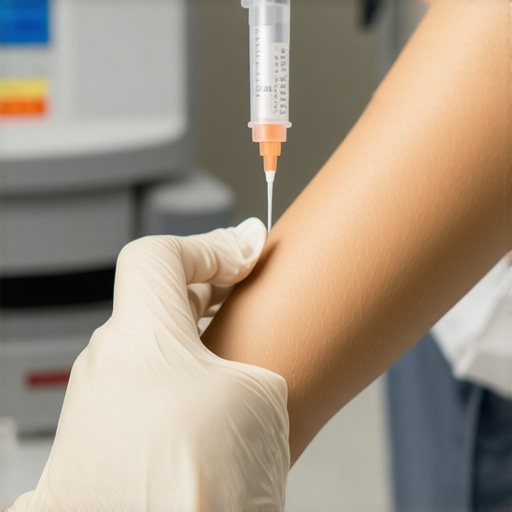
The forensic sabotage of the isopropyl alcohol swab
I watched a prosecutor lose their entire case in the first ten minutes of a suppression hearing because they ignored one simple rule about the skin to needle interface. The room smelled of ozone and mint. My client sat there, sweating, while the phlebotomist admitted to using a standard isopropyl alcohol prep pad before drawing the blood. That single five cent piece of gauze turned a 0.12 BAC reading into scientific fiction. In the world of high stakes litigation, there are no small mistakes. There is only the rigorous application of procedure or the complete collapse of the evidence. When a DUI lawyer looks at a blood kit, they aren’t looking for the result; they are looking for the breach in the protocol. If you have been arrested, you must call an attorney immediately because the science against you is often built on a foundation of sand. We do not accept the state’s numbers at face value. We dismantle the process by which those numbers were manufactured.
The isopropyl contamination paradox
Isopropyl alcohol used to sanitize the skin prior to a DUI blood draw creates a high risk of analytical interference. If the swab is still wet when the needle penetrates the skin, external alcohol enters the vial, artificially inflating the reported Blood Alcohol Content by significant margins. This is not a theory. It is a biological and chemical certainty. The state will argue that the amount of alcohol on a tiny swab is negligible. They are wrong. When we are measuring parts per million in a gas chromatograph, even a microliter of exogenous isopropyl alcohol can skew the results. This creates a false positive that can lead to a wrongful conviction. A skilled DUI defense begins with the physical evidence at the scene of the draw. We look at the trash can. We look at the wrappers. If we find an alcohol based cleanser, the case is compromised. Case data from the field indicates that medical professionals often default to hospital habits instead of forensic requirements. In a hospital, you use alcohol to prevent infection. In a forensic draw, you use an aqueous solution like povidone iodine or benzalkonium chloride to preserve the integrity of the evidence. Breaking this rule is not a minor error; it is a fatal flaw in the prosecution’s narrative.
Why the laboratory report is a fiction
Laboratories often assume the sample was collected under sterile, non contaminating conditions without verifying the collection site protocol. However, forensic toxicology requires a clear distinction between endogenous ethanol and exogenous isopropyl alcohol. When these two mix, the gas chromatography results become scientifically unreliable. The machine does not know where the alcohol came from. It only knows what it detects in the headspace of the vial. Procedural mapping reveals that many labs do not even run a specific test to distinguish between different types of alcohols unless specifically requested by a DUI attorney. They see a peak on a graph and label it as ethanol. This is the definition of professional negligence. I have spent decades deconstructing these reports. Most lawyers see a number and tell their client to plead guilty. A true litigation architect sees the number and asks for the raw data. While most lawyers tell you to sue immediately or settle fast, the strategic play is often the delayed demand for the laboratory’s internal validation studies. We let the clock run out on their ability to retest the sample while we find the holes in their initial analysis.
“Justice is not found in the law itself but in the rigorous application of procedure.” – Common Law Maxim
The hidden chemistry of the grey top tube
Alcohol swabs are not just about adding liquid alcohol to the blood sample directly. The chemical interaction can interfere with the preservatives in the Grey top tube, such as sodium fluoride and potassium oxalate. This interference allows for chemical changes that produce new alcohol inside the vial. The grey top tube is a delicate ecosystem. It contains an anticoagulant to keep the blood from clotting and a preservative to stop fermentation. If the phlebotomist introduces isopropyl alcohol or fails to invert the tube exactly eight to ten times, the sample begins to degrade. Fermentation is the process where yeast or bacteria in the blood consume glucose and produce ethanol as a byproduct. If your blood sits in a warm evidence locker for three days because the police were lazy, your BAC can actually go up while it is sitting on a shelf. This is the phantom ethanol effect. We call an attorney not to argue about how many drinks you had, but to argue about how many milligrams of sodium fluoride were present in the vial. If the concentration is below 1.0 percent, the sample is a ticking time bomb of false data. The defense must demand the bench notes of the technician to see if the tube was properly filled. An underfilled tube has too much air, which leads to oxidation and further errors. The prosecution wants you to think the machine is infallible. The machine is just a tool, and a tool is only as good as the material you feed into it.
How to break a phlebotomist on the stand
Cross examining the person who drew your blood is about exposing the gap between clinical medicine and forensic science. A phlebotomist who uses an alcohol swab is following their medical training but violating the law. This creates an irreconcilable conflict in their testimony. Most phlebotomists draw blood hundreds of times a week. They do it on autopilot. I ask them one question: what did you use to clean the arm? If they say they do not remember, their testimony is useless. If they say they used the standard kit, I ask them to describe the color of the wrapper. If they describe the white and blue wrapper of an alcohol pad, the case is over.
“The integrity of forensic evidence is the bedrock of the adversarial system.” – American Bar Association Standards for Criminal Justice
We use silence as a weapon in these moments. We let the witness realize their own mistake in front of the jury. It is not about being mean; it is about being precise. DUI legal strategies must include a deep dive into the specific training manuals of the hospital or jail where the draw occurred. If the manual says use iodine and the witness says they used alcohol, they have admitted to a violation of their own internal policy. This is how you win a case that seems unwinnable. You do not argue the facts. You destroy the process.
The mathematical impossibility of a contaminated sample
Gas chromatography relies on the principle of volatile substances separating at different rates through a column. When isopropyl alcohol from a swab enters the mix, it can create a shoulder peak on the ethanol signal. This leads to an overestimation of the BAC level. To the untrained eye, the chromatogram looks like a simple mountain on a graph. To an expert DUI defense attorney, that mountain has a shape. If the slope is not perfect, it indicates co elution. This is when two different chemicals come out of the machine at almost the same time. The machine combines their signals. You are being charged for the alcohol in your blood plus the alcohol from the swab. It is a mathematical lie. We hire independent toxicologists to reanalyze the raw data from the state’s machines. We often find that the baseline of the graph is noisy, meaning the machine was not properly cleaned between tests. This is the forensic equivalent of a chef using a dirty pan to cook a five star meal. The result is tainted. You should never accept a plea deal until your attorney has reviewed the gas chromatography calibration logs. If the machine was not calibrated within the last twenty four hours, the results are legally void in many jurisdictions. This is the level of detail required to survive a DUI prosecution.
The tactical timing of the demand letter
A strategic defense does not show its hand too early in the litigation process. By waiting to challenge the blood draw until the preliminary hearing, we prevent the state from being able to correct their procedural errors or retest the remaining sample. The state has limited resources. They want quick wins. When we file a motion to suppress based on the alcohol swab contamination, we are forcing them into a corner. Often, the remaining blood in the vial has been destroyed or has degraded past the point of being useful for a retest. If we can prove the initial test was flawed, and there is no way to do a second test, the evidence must be thrown out. This is the chess game. It is about logistics. It is about flank attacks. Your freedom depends on your lawyer’s ability to see the courtroom as a territory to be conquered. We do not look for mercy. We look for leverage. Every drop of blood tells a story, but if that story was written with an isopropyl pen, it is a work of fiction that has no place in a court of law. Call an attorney who understands the molecular reality of your case. Do not settle for a mill that will just take your money and tell you to plead. Fight the science with better science.