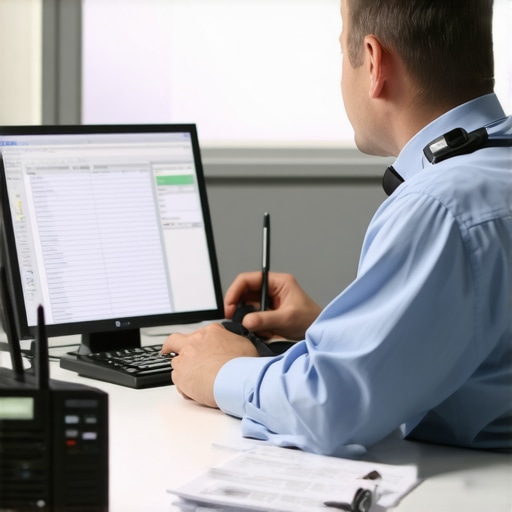
The scent of ozone and crushed mint always precedes a victory in my office. It is the smell of a high-pressure system meeting a cold, calculated defense. Litigation is not a search for some nebulous truth; it is a tactical exercise in exposing procedural failures. I watched a client lose their entire claim in the first ten minutes of a deposition because they ignored one simple rule about silence. They felt the need to fill the void, and in that void, they handed the opposing counsel a rope to hang them with. In the world of DUI defense, the void is often found in the police radio logs. Most lawyers wait for the polished, typed report that the officer spends three hours perfecting at the station. That report is fiction. The reality exists in the raw, unedited chatter between the patrol car and the dispatcher. When you call an attorney, you need someone who knows how to listen to the ghosts in the machine. A DUI attorney who ignores the Computer Aided Dispatch (CAD) data is not an advocate; they are a settlement mill representative. We win by finding the discrepancy between the officer’s memory and the digital heartbeat of the arrest. Every second is timestamped. Every hesitation is recorded. This is how we dismantle the state’s narrative.
The specific frequency of a DUI arrest
A DUI lawyer utilizes police radio logs to identify discrepancies in the officer’s timeline, verify the legal basis for the initial stop, and uncover exculpatory evidence hidden in raw audio files. These logs consist of two distinct parts: the voice recordings and the CAD reports, which provide a millisecond-accurate record of the encounter. By cross-referencing these with the official narrative, a DUI attorney can often prove that the officer lacked reasonable suspicion or lied about the sequence of events during the roadside investigation. The technical reality of a radio log is far more complex than a simple audio file. It involves trunked radio systems where multiple agencies share a single set of frequencies. Your defense must include a subpoena for the Master Logging Recorder, not just the dispatch highlights. The officer might claim you were swerving for three miles, but the dispatch log shows they only followed you for forty-five seconds before activating their overhead lights. That gap is where the case dies for the prosecution. If the officer calls in a ’10-55′ for an intoxicated driver before they have even approached your window, it reveals a predetermined bias that can be used to suppress every subsequent piece of evidence, from the breathalyzer to the field sobriety tests.
Where the official police report lies
The official police report is a retrospective justification for an arrest, while the radio logs are a real-time record of the officer’s actual observations. Discrepancies between these two documents are the most powerful tools in DUI legal defense because they attack the officer’s credibility directly. While most lawyers tell you to sue immediately or beg for a plea deal, the strategic play is often the delayed demand letter or the aggressive suppression motion based on CAD timing. This allows the defense to lock the officer into a sworn statement that contradicts the digital record.
“Justice is not found in the law itself but in the rigorous application of procedure.” – Common Law Maxim
During a DUI defense, we focus on the ‘Officer Observation’ section of the report. The officer might write that your speech was ‘slurred and thick.’ However, the radio traffic from the same moment reveals the officer speaking calmly to dispatch, mentioning that the driver is ‘cooperative and coherent.’ That audio is a silver bullet. We do not look for the big lie; we look for the small, procedural inconsistencies that suggest the officer was ‘painting the scene’ rather than reporting the facts. This is forensic psychology applied to the airwaves. When the jury hears the officer’s voice sounding uncertain on the radio, and then reads the confident, assertive tone of the written report, the government’s case begins to fracture.
The tactical advantage of CAD data
CAD data provides a granular view of the law enforcement response, including the exact moment a siren was activated and the specific GPS coordinates of the patrol unit. This data is essential for a DUI defense because it can prove the officer was not in a position to see the alleged traffic violation. The procedural mapping of the arrest reveals whether the officer followed departmental policy or cut corners to meet a quota. The ‘bleed’ of a case is often found in the logistics. A skilled DUI attorney knows that the CAD report contains ‘incident notes’ that the officer never puts in the formal narrative. These notes might include comments from the dispatcher about a faulty tail light or a different vehicle description entirely. We use these notes to create a shadow timeline. If the officer claims they saw you drift over the fog line at 11:15 PM, but the GPS data shows their cruiser was two blocks away behind a brick building at that exact moment, the probable cause for the stop evaporates. The court must then throw out all evidence obtained after that point. This is the microscopic reality of litigation. It is not about the alcohol; it is about the geometry of the patrol route and the latency of the dispatch software.
Why your attorney must demand the raw audio
Raw audio files contain background noises, tone of voice, and unedited comments that are omitted from the edited versions provided in standard discovery. When you call an attorney, they must immediately file a motion to preserve all digital communications, including private ‘car-to-car’ channels that officers use to speak candidly. These channels are where the truth hides. In a DUI defense, the raw audio might capture the officer’s partner saying, ‘I don’t think he’s drunk, just tired,’ while the primary officer is busy preparing the handcuffs.
“The defense must have access to all evidence that may exculpate the accused or impeach a witness.” – ABA Standards for Criminal Justice
The process of obtaining this audio requires an understanding of the specific hardware used by the precinct. Whether they use Motorola APX series radios or older analog systems, the frequency hopping patterns and the encryption keys can affect the clarity of the recording. We analyze the ‘squelch’ and the ‘carrier drop’ to ensure the audio hasn’t been tampered with. If there is a suspicious gap in the recording at the exact moment the field sobriety tests were supposedly performed, we move for a ‘spoliation of evidence’ instruction. This tells the jury they can assume the missing evidence would have been favorable to the defendant. It is a devastating blow to the prosecution’s momentum.
The gap between the siren and the handcuffs
The timeline between the initial activation of emergency lights and the formal arrest is the most vulnerable period for the prosecution. A DUI attorney scrutinizes this window to ensure the officer did not exceed the permissible scope of a traffic stop. If the detention lasts longer than necessary to investigate the initial reason for the stop, it becomes an unconstitutional seizure. The radio logs provide the exact start and end times for this period. In DUI legal circles, we call this the ‘duration of the stop’ defense. If the radio traffic shows the officer spent fifteen minutes searching the trunk without consent before ever mentioning the smell of alcohol, the entire arrest is poisoned. We look for the ‘dead air.’ If the officer is off the radio for ten minutes, what were they doing? Were they consulting a manual? Were they calling a supervisor because they weren’t sure they had enough evidence? The logs provide the answers that the officer will never give on the stand. We use the ‘staccato’ nature of radio traffic to build a rhythm for the jury. We show them the rush to judgment. We show them the officer who is more interested in the ‘collar’ than the constitution. This is how we win cases that others say are unwinnable.
The cost of ignoring the dispatch record
Ignoring the dispatch record is a fatal error that leads to missed opportunities for impeachment and a failure to identify systemic law enforcement bias. A DUI lawyer who relies solely on the prosecution’s evidence packet is essentially conceding the case before the first motion is filed. The ROI of a thorough investigation into the radio logs is immeasurable. Procedural zooming allows us to see the flaws in the ‘standardized’ field sobriety tests. For example, if the radio log shows the officer requested a transport van before they even finished the walk-and-turn test, it proves the outcome was predetermined. This goes beyond simple DUI defense; it is a critique of the entire investigative process. The tactical timing of a demand for these records is also vital. We often wait until the officer has filed their final supplemental report before serving the subpoena for the CAD logs. This prevents them from ‘correcting’ their report to match the digital data. It is the high-stakes chess of the courtroom. We do not want a fair fight; we want a procedural advantage that makes the prosecution’s position untenable. When the air is thick with the scent of ozone, it means the storm is coming for the state’s case. We are the architects of that storm, and the radio logs are our blueprints.