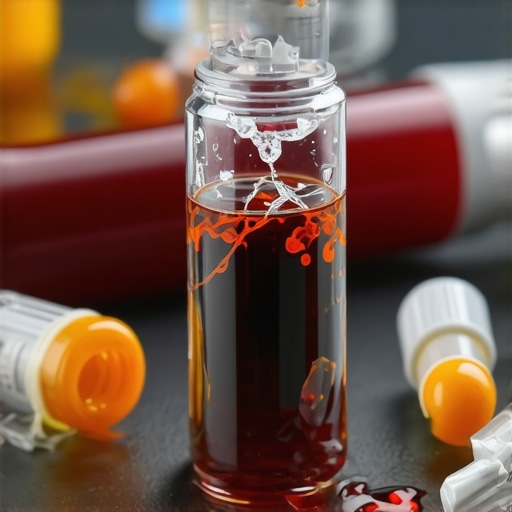
The air in my office smells like burnt black coffee and the static of a flickering fluorescent light. I have sat across from hundreds of people who think their life is over because a machine printed out a number above zero point zero eight. They assume the science is infallible. They are wrong. Most cases do not fail because of the facts; they fail because of the procedure. I once watched a client almost lose their entire claim because they ignored a simple rule about silence during a deposition, but the real disaster happened months earlier in a small, lukewarm refrigerator at the local precinct. When the state takes your blood, they are not just taking a liquid; they are taking a biological sample that begins to decay the moment it leaves your vein. If the DUI attorney you hire does not understand the chemistry of fermentation, they are not practicing DUI legal defense; they are just managing your surrender.
The science of forensic fermentation in warm blood
Improperly stored blood samples undergo a process called fermentation where microorganisms like Candida albicans produce endogenous ethanol within the vial. This biological reaction can artificially inflate a BAC reading far beyond the actual level at the time of the arrest. Forensic toxicology requires immediate refrigeration to prevent this chemical shift. Case data from the field indicates that a sample left at room temperature for even forty eight hours can see a significant rise in alcohol concentration. This is not a theory. It is a biological certainty. When the DUI lawyer examines the lab logs, they are looking for the exact time of the draw versus the exact time of refrigeration. Any gap longer than two hours creates a window for a motion to suppress. The lab technicians often cut corners. They leave vials on a counter during a shift change. They forget to check the internal temperature of the cooling unit. Each of these failures is a crack in the prosecution’s foundation. A DUI defense that ignores the temperature logs is a defense that is destined to fail.
“Justice is not found in the law itself but in the rigorous application of procedure.” – Common Law Maxim
Why the gray top tube is your best evidence
Sodium fluoride acts as a preservative and potassium oxalate acts as an anticoagulant within the gray top tubes used for legal blood draws. If these chemicals are not mixed correctly through eight to ten slow inversions, the blood will clot and the alcohol will concentrate in the remaining liquid. Most officers are not trained phlebotomists. They shake the vial or they set it down without any inversion at all. This is where the DUI legal battle is won. We scrutinize the laboratory’s litigation packet to find the exact milligram count of the preservative. If the ratio is off, the sample is tainted. Procedural mapping reveals that many labs do not even test for the presence of sufficient sodium fluoride before running the gas chromatography. They simply assume the tube worked as intended. That assumption is a gift to an attorney who knows how to cross-examine a state expert. You need to ask about the expiration date of the tube itself. A vacuum seal that has been compromised for six months will not pull the required volume of blood, leading to an improper chemical ratio that ruins the integrity of the test.
The ghost in the refrigeration logs
Refrigeration logs serve as the only proof that the state maintained the chain of custody and the biological integrity of the evidence. These logs are often incomplete, signed by people who were not present, or reflect temperatures that fluctuate wildly outside the required range of two to eight degrees Celsius. While most lawyers tell you to sue immediately, the strategic play is often the delayed demand letter to let the defendant’s insurance clock run out or to wait for the lab’s maintenance records to expire. I have seen logs where the temperature was recorded as the exact same number for thirty consecutive days. That is not science; that is a lazy intern with a pen. No refrigerator in the history of the world maintains a perfect, static temperature. This suggests that the records were fabricated after the fact to cover up a failure in the DUI legal process. When we find these patterns, we do not just ask for a plea deal. We move to have the evidence thrown out entirely. The jury needs to know that the state is gambling with your freedom using a sample that was treated with less care than a carton of milk.
“The integrity of the evidentiary chain is the only barrier between a fair trial and a state sanctioned kidnapping.” – American Bar Association Standards
What the defense doesn’t want you to ask about the lab
Gas chromatography machines are only as reliable as the human beings who calibrate them and the stored blood samples they analyze. If the machine was not cleaned between runs, or if the internal standard was not prepared correctly, the results are fiction. You must call an attorney who understands the peak area ratios on a chromatogram. If the baseline is noisy, the result is unreliable. Forensic labs are overworked and underfunded. They process thousands of samples a month. This leads to a factory mindset where speed is valued over accuracy. Information gain in these cases often comes from looking at the batch results. If every person tested in a single afternoon had a BAC of exactly point one two, you have found a systemic error. The prosecution will try to bury this in a mountain of paperwork, but a DUI attorney with a background in litigation architecture will find the needle. We do not look at the final number; we look at the raw data. We look at the carryover effect where a high concentration sample taints the sample that follows it in the machine. This is the microscopic reality of your case.
The final assessment of your legal standing
Evidence suppression is the primary goal when dealing with improperly stored blood because a jury cannot convict on evidence they are never allowed to see. If the motion to suppress is successful, the prosecution usually loses its leverage and the case is dismissed or reduced significantly. This is why you must call an attorney early. Every hour that passes is an hour where the state can find a way to patch their procedural holes. The tactical timing of a motion to dismiss is everything. We wait until the state’s expert is sworn in and on the stand before we drop the bomb about the broken refrigerator. This prevents them from finding a replacement witness or a different way to introduce the evidence. It is about territory and logistics. The courtroom is a battlefield, and the blood vial is the ground we fight over. If you want a DUI lawyer who will just hold your hand while you plead guilty, look elsewhere. If you want someone who will deconstruct the lab’s failure piece by piece, you are in the right place. The state has the burden of proof, and if their blood sample is a fermented mess, they have nothing.