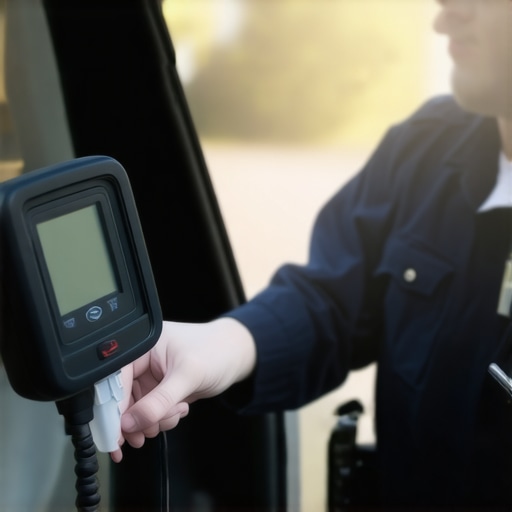
I am drinking my fourth cup of bitter black coffee. The office is cold. Outside, the city is still asleep, but my desk is buried under calibration logs and maintenance records for a device that should not exist. I am a trial lawyer. I do not care about the marketing brochures for ignition interlock companies. I care about the fact that these machines are scientifically fragile. I watched a client lose their entire claim in the first ten minutes of a deposition because they ignored one simple rule about silence. They tried to explain why the machine failed. They rambled. They gave the prosecutor a rope to hang them with. In the world of DUI defense, silence is a shield, but the interlock device is a megaphone for the government. If you are facing a violation, you need a DUI attorney who treats the device as a hostile witness. The truth is that these machines are not labs on a dashboard. They are cheap sensors masquerading as forensic tools. Call an attorney before you assume the machine was right. You are fighting a computer that lacks the capacity for context.
The machine that lies to the court
DUI attorney experts recognize that Ignition Interlock Devices use electrochemical fuel cell technology which is notoriously sensitive to cross-reactivity. These devices are designed to detect ethanol but often misidentify non-alcoholic compounds as proof of intoxication. DUI defense requires a DUI lawyer to challenge these false positives immediately. Case data from the field indicates that the error rate for these devices increases significantly in high-humidity environments. The sensor reacts to the chemical signature of the air. It does not think. It only measures. If the air in your car contains cleaning solvents, the machine sees a drunk driver. If you have been smoking, the machine sees a violation. The legal reality is that the burden of proof often shifts to you once that light turns red. This is a violation of the spirit of the law, yet it happens in every jurisdiction. The machine creates a presumption of guilt. You must dismantle that presumption with technical data. Procedural mapping reveals that most drivers accept the violation notice without a fight. This is a mistake. The clock starts the moment the device registers a failure. You have a window to demand a blood test or a secondary independent check. If you miss that window, the record is set in stone.
Why your breakfast is a felony
Mouth alcohol and residual yeast from common foods like bagels or fruit can trigger a DUI legal crisis. A DUI lawyer must explain how Henry’s Law applies to alveolar air and why interlock devices fail to distinguish between deep lung air and mouth contaminants. While most lawyers tell you to sue immediately, the strategic play is often the delayed demand letter to let the defendant’s insurance clock run out or to gather more forensic evidence of a mechanical flaw. The machine assumes that any alcohol detected is coming from your bloodstream. It ignores the sourdough bread you ate ten minutes ago. It ignores the mouthwash you used. It ignores the natural sugars in your juice. This is the technical gap where cases are won. We look for the 20 minute observation period. If the device did not require a re-test within minutes, the initial failure is legally suspect. Staccato bursts of data. Low sensor voltage. High ambient temperature. These are the variables that a prosecutor will never mention. They want the jury to believe the machine is God. It is not. It is a plastic box with a 50 dollar sensor.
“Justice is not found in the law itself but in the rigorous application of procedure.” – Common Law Maxim
The failure of the calibration log
Calibration logs for interlock devices are the most frequent source of DUI defense victories when analyzed by a call an attorney professional. These logs show the drift of the fuel cell sensor over time and provide the DUI lawyer with evidence of mechanical decay. Procedural mapping reveals that many service centers skip the fine-tuning steps required by state law. They swap the device and move on. They do not check the gas canister used for calibration. They do not check the expiration date on the reference samples. If the reference sample is stale, the calibration is a lie. If the calibration is a lie, every test result that follows is fruit of a poisonous tree. We subpoena the technician. We look at their training records. We look at the logs for the entire month. Often, we find that the machine was failing for every driver that week. Your violation was not a personal failure. It was a fleet-wide technical disaster. The prosecution will try to block this evidence. They will say it is irrelevant. They are wrong. It is the heart of the case. A machine that cannot be verified cannot be used to take away a citizen’s liberty.
Secrets the prosecution hides about temperature sensitivity
Temperature fluctuations inside a vehicle can cause interlock devices to produce erroneous readings which a DUI attorney must exploit. DUI defense strategies often focus on thermal drift in electrochemical sensors, proving to the DUI lawyer that the BAC result was a technological glitch. On a hot summer day, the interior of a car can reach 140 degrees. This heat affects the chemical reaction inside the fuel cell. It speeds it up. It makes the sensor hyper-sensitive. The result is a reading that is artificially high. Conversely, in the dead of winter, the sensor becomes sluggish. It might fail to trigger at all, or it might hold onto a previous breath sample. This is called carry-over. If the person who drove the car before you had a drink, the machine might still have those molecules in its system. You blow, and you get the blame for their beer. This is the reality of the forensic landscape. It is messy. It is unreliable. It is prone to the laws of thermodynamics, which do not care about your court date.
“The integrity of the judicial process rests upon the accuracy of the evidence presented.” – ABA Model Rules
The hidden cost of the administrative hearing
Administrative hearings are the first battleground where a DUI lawyer defends your driving record against interlock failures. A DUI attorney knows that the standard of proof in these DUI legal settings is lower than in criminal court, making expert testimony vital. You are not in front of a jury here. You are in front of an employee of the Department of Motor Vehicles. They are not judges. They are bureaucrats. They have a script. To break that script, you need more than a story. You need a data dump. You need the maintenance records of the specific device. You need the atmospheric data for the day of the failure. You need the medical records if you have a condition like GERD or acid reflux. Acid reflux can push alcohol vapors from your stomach into your throat, bypassing the lungs but tricking the machine. This is a biological false positive. It is a medical fact that the DMV hates to acknowledge. If you do not bring an attorney, the hearing officer will simply check a box and your license will be gone. They do not have the time to care about the nuances of your digestion. They only care about the number on the screen. We make them care. We make the record so thick with technical evidence that a denial would be an abuse of discretion. This is how you win. Not with pleas for mercy, but with the cold, hard weight of forensic science.