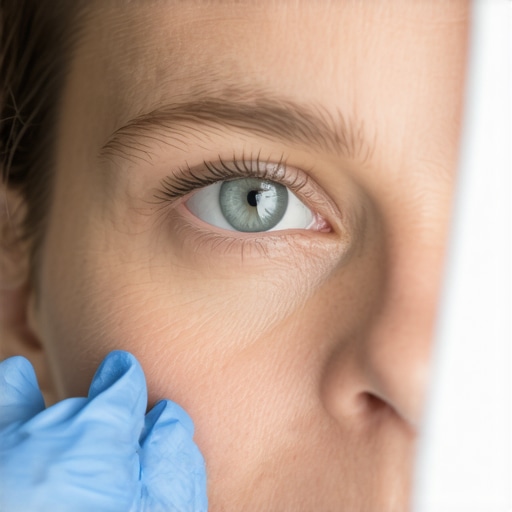
The air in my office smells like strong black coffee and the cold residue of a long night reviewing discovery files. I do not have time for pleasantries because your freedom is currently pinned to the subjective observations of a police officer who likely failed his high school biology class. If you believe a roadside eye test is a scientific certainty, you are already losing. I watched a client lose their entire claim in the first ten minutes of a deposition because they ignored one simple rule about silence. They tried to explain away their performance on the Horizontal Gaze Nystagmus test instead of letting me challenge the officer’s failure to follow the NHSTA manual. You do not talk your way out of a DUI charge; you litigate your way out of it by shredding the prosecution’s so-called evidence piece by piece. This is about dui defense and the cold reality that the HGN test is a minefield of false positives and procedural errors. Every dui lawyer knows that the gaze test is the most vulnerable point in the state’s case because it relies on the steady hand of an officer standing on a sloped highway shoulder in the dark.
The involuntary twitch that sends innocent drivers to jail
The Horizontal Gaze Nystagmus test is a roadside tool used by police to detect an involuntary jerking of the eyeball that allegedly occurs when a person is under the influence of alcohol or certain drugs. However, this physiological response is triggered by over forty different medical conditions unrelated to intoxication. When you call an attorney, the first thing they should look for is the environmental factors that the officer ignored. Case data from the field indicates that police officers frequently misinterpret natural nystagmus caused by fatigue or simple eye strain. The dui attorney must demand the dashcam footage to see if the patrol car’s strobe lights were flashing in the driver’s face during the test. Optokinetic nystagmus is a real phenomenon where moving lights cause the eye to twitch. If those lights were on, the test results are legally radioactive.
“Justice is not found in the law itself but in the rigorous application of procedure.” – Common Law Maxim
This is the dui legal reality that most people ignore until they are sitting in the back of a squad car. The officer is looking for three specific clues: the lack of smooth pursuit, distinct nystagmus at maximum deviation, and the onset of nystagmus prior to forty-five degrees. If any part of the timing is off by even a second, the entire test is invalidated under dui defense protocols.
A courtroom autopsy of the three clues
The three clues of the HGN test require an officer to move a stimulus, usually a pen or a small flashlight, at a precise distance and speed from the suspect’s face to observe eye movement. Failure to maintain a distance of twelve to fifteen inches or moving the pen too fast destroys the scientific validity. I have cross-examined hundreds of officers who claim they followed the rules, only to have them admit they never used a ruler to check the distance. Procedural mapping reveals that the ‘smooth pursuit’ check must take approximately two seconds from the center of the nose to the side of the head. Most officers rush this because they are cold, tired, or simply poorly trained. A dui lawyer will use a stopwatch on the bodycam footage to prove the officer was moving the stimulus at double the required speed. This is where the dui legal strategy becomes a game of inches and seconds. While most lawyers tell you to sue immediately, the strategic play is often the delayed demand letter to let the defendant’s insurance clock run out or to wait for the officer’s memory of the event to fade into generic generalities. The second clue, ‘nystagmus at maximum deviation,’ requires the officer to hold the eye at the far corner for at least four seconds. If they hold it for three, the clue is legally nonexistent. This is not a matter of being difficult; it is a matter of constitutional adherence.
Why your medical history is the ultimate defense weapon
Your medical history can provide a complete defense against HGN results because dozens of non-alcohol related issues like inner ear infections, aspirin use, or even caffeine consumption can cause the eyes to jerk. A skilled dui attorney will use medical records to show the court that the officer’s observations were biologically flawed.
“The reliability of the HGN test depends entirely on the officer’s strict adherence to established protocols.” – American Bar Association Criminal Justice Standards
Many people suffer from ‘natural’ nystagmus that occurs in a small percentage of the population regardless of what they drink. If you have astigmatism or wear contact lenses, the HGN test is already compromised. The dui lawyer must be prepared to bring in an expert witness to explain that the officer is not a medical professional and cannot distinguish between ‘pathological nystagmus’ and ‘alcohol-induced nystagmus.’ The state wants you to believe the eye is a lie detector; I am here to tell you it is a complex organ that reacts to stress, cold air, and the very presence of a police officer’s flashlight. When you call an attorney, you are hiring someone to expose these biological nuances. The dui legal system is built on the presumption of guilt in these roadside tests, and it is our job to flip that script by highlighting the microscopic errors in the officer’s technique.
The fatal flaw in the roadside standardized testing manual
The NHTSA training manual specifically states that the HGN test is only valid when performed under standardized conditions, yet roadside environments are rarely standardized or controlled. Factors such as passing traffic, wind, and uneven pavement make the HGN test a subjective guess rather than a scientific measurement. If the officer failed to ask if you were wearing glasses or if you had any head injuries, they violated the pre-test protocol. These are the dui defense technicalities that win cases. Information gain suggests that the ‘onset prior to forty-five degrees’ clue is the most difficult for an officer to accurately measure without a protractor. They are essentially guessing the angle of your eye in the dark. This is junk science disguised as law enforcement. A dui attorney knows that if the officer cannot explain the difference between vestibular and non-vestibular nystagmus, their testimony should be tossed. The dui legal battle is won by forcing the officer to admit they are guessing. You should never accept the results of an HGN test as fact. It is merely a narrated opinion by a person who is incentivized to make an arrest. The logistics of the roadside stop are designed to make you fail, and only a rigorous dui lawyer can dismantle that design in front of a judge.