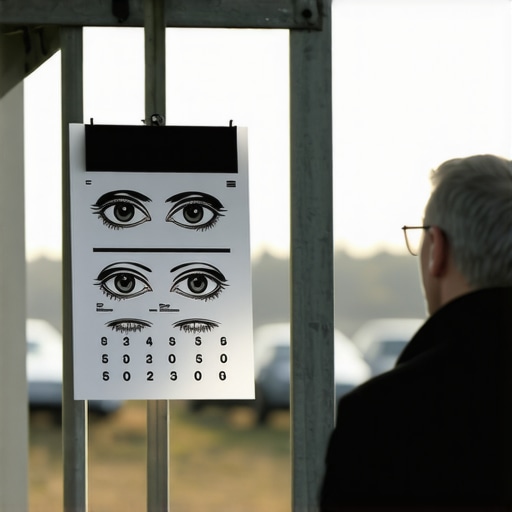
The air in the deposition room always smells like ozone and stale mint. I watched a client lose their entire claim in the first ten minutes of a deposition because they ignored one simple rule about silence. They thought they could outsmart the prosecutor by explaining their way through a failed eye test. They failed to realize that the roadside environment is a laboratory of errors. When you are pulled over at 2 AM, the DUI defense begins with what you do not say. Your DUI attorney knows that the Horizontal Gaze Nystagmus (HGN) test is a scientific masquerade performed by individuals with forty hours of training. It is not medicine. It is a checklist designed for your failure. If you find yourself in this situation, you must call an attorney immediately because the state is already building a narrative against you. The DUI legal framework relies on the assumption that the officer followed every protocol to the millimeter. They almost never do.
The mechanical failure of the horizontal gaze nystagmus test
The Horizontal Gaze Nystagmus (HGN) test is inherently unreliable because roadside conditions lack the clinical control required for neurological assessment. Factors like optokinetic nystagmus caused by passing headlights and improper stimulus speed invalidate the officer’s observations, making the DUI evidence legally inadmissible in many criminal trials. The DUI lawyer will look for these errors. The National Highway Traffic Safety Administration (NHTSA) mandates that the stimulus, usually a penlight or a fingertip, be held twelve to fifteen inches from the bridge of the nose. If the officer holds it too high, they induce a different type of eye movement that has nothing to do with alcohol. If they move the stimulus too fast, the eye cannot track smoothly, creating a false positive for impairment. These are the microscopic details that win cases. A dui defense is not about arguing you were sober. It is about proving the officer was incompetent. I have seen bodycam footage where the officer moves the stimulus in three seconds when the manual requires four. That one second difference is the gap between a conviction and a dismissal. Procedure is the only wall between you and a jail cell.
“Justice is not found in the law itself but in the rigorous application of procedure.” – Common Law Maxim
Medical conditions that mimic intoxication markers
Many medical conditions such as vertigo, inner ear infections, and nystagmus can cause the eye jerking that officers mistake for alcohol impairment. A DUI attorney will subpoena medical records to prove that physiological factors or prescribed medications caused the failed eye test during the traffic stop. Case data from the field indicates that up to four percent of the population has natural nystagmus. That is one in twenty five people who will fail this test while perfectly sober. Fatigue is another massive factor. If you have been awake for eighteen hours, your eyes will show signs of tiredness that an officer will eagerly label as intoxication. They are looking for clues to justify an arrest. They are not looking for reasons to let you go. The dui legal system is geared toward the arrest. While most lawyers tell you to fight the breathalyzer immediately, the strategic play is often attacking the physical tests first. If the eye test is tossed out, the probable cause for the entire arrest often collapses. This is the information gain that the prosecution fears. We look for the medical truth behind the badge.
Officer error during the administration phase
The administration of field sobriety tests requires strict adherence to NHTSA standards to maintain evidentiary integrity. Common officer errors include improper positioning, vague instructions, and environmental interference which allow a dui lawyer to challenge the validity of the arrest in a motion to suppress. Procedural mapping reveals that officers often forget to ask about contact lenses or existing eye conditions before starting the test. They fail to ensure the suspect’s head remains still. If your head moves even a fraction of an inch, the angle of the eye changes. This ruins the forty five degree calculation. The officer is looking for the onset of nystagmus before forty five degrees. Without a protractor, this is a guess. It is a guess made in the dark, on the side of a highway, with wind blowing and sirens flashing. It is absurd to call this science. A dui defense specialist will grill the officer on the exact distance and speed of their hand movements. Most cannot remember. If they cannot remember the procedure, the court cannot trust the result.
“The integrity of the criminal justice system depends on the reliability of the evidence presented against the accused.” – ABA Standards for Criminal Justice
The tactical path to suppressing flawed evidence
The legal strategy for suppressing evidence involves a pre-trial hearing where the dui attorney cross-examines the arresting officer on training protocols. By exposing deviations from the NHTSA manual, the defense team can render the eye test results useless to the prosecution before the trial even begins. You must understand that the courtroom is not about truth. It is about what can be proven through admissible evidence. If the officer failed to hold the stimulus at maximum deviation for a full four seconds, that clue is gone. If they did not repeat the pass twice, the test is incomplete. We use these failures as leverage. In many cases, the strategic play is a delayed demand for the officer’s training certification. Often, these certifications have expired, or the officer has not attended a refresher course in years. This makes their testimony on the stand look amateurish and unreliable. When you call an attorney, you are hiring someone to find the holes in the state’s net. The dui legal process is a game of millimeters. We do not accept the officer’s word. We verify the officer’s work against the gold standard of the law. If it does not match, it does not count.