The chemistry of a wrongful conviction
I watched a client lose their entire claim in the first ten minutes of a deposition because they ignored one simple rule about silence. They believed they could talk their way out of a high blood alcohol reading by explaining their fitness routine. By the time they finished their rambling monologue about macronutrients and metabolic states, they had inadvertently admitted to facts that the prosecutor used to establish impairment. This is the reality of the legal system. It does not reward your honesty or your healthy lifestyle. It rewards procedure and evidence. When you are standing on the side of a road blowing into a plastic tube, the machine is not looking for the glass of scotch you didn’t drink. It is looking for methyl groups. If you are on a strict low carb or ketogenic diet, your body is producing isopropyl alcohol as a byproduct of fat metabolism. The machine often cannot tell the difference. This is why you must understand the mechanical and biological flaws of the breath test before you even think about talking to the police. The smell of burnt coffee in my office at 3 AM is usually the result of deconstructing these exact forensic failures. You are not just fighting a police report; you are fighting a flawed scientific premise.
The phantom alcohol in your lungs
Isopropyl alcohol produced during ketosis can trigger a false positive on infrared spectroscopy breath machines. These devices measure the absorption of light at specific wavelengths to identify ethanol. However, acetone and isopropyl alcohol, both present in the breath of individuals in ketosis, absorb light at similar frequencies. This leads to an artificially inflated BAC reading that does not reflect actual impairment or alcohol consumption. Case data from the field indicates that most breathalyzers used by local law enforcement lack the sophisticated software filters necessary to distinguish these molecules. You are being charged based on a chemical mistake. When you enter a courtroom, the judge sees a number on a page. They do not see the physiological reality of your liver function or your dietary choices. This is where the dui defense begins. We do not argue that the machine is broken; we argue that the machine is fundamentally incapable of performing the task assigned to it under your specific biological conditions.
“Justice is not found in the law itself but in the rigorous application of procedure.” – Common Law Maxim
What the patrol officer never tells you about ketosis
Police officers are trained to interpret the smell of ketosis as the odor of an alcoholic beverage. The fruity or chemical scent of breath in a state of ketosis is frequently misidentified as “sweet” alcohol, providing the officer with the probable cause needed to escalate the stop. They will not ask if you are on a diet. They will ask how many drinks you had. Procedural mapping reveals that once an officer smells that scent, their confirmation bias takes over. Every stumble or squint becomes evidence of intoxication. This is why you must call an attorney immediately. The dui attorney is the only person who will look at the booking logs to see if you were offered a blood test, which is significantly more accurate than the breath test. While most lawyers tell you to sue immediately, the strategic play is often the delayed demand letter to let the defendant’s insurance clock run out while we secure the maintenance records of the specific breathalyzer unit used in your case.
The technical failure of infrared spectroscopy
Infrared breath testing relies on the Beer Lambert Law to calculate alcohol concentration based on light absorption. If the device is not calibrated to filter out interferents like acetone, it will aggregate all detected molecules into a single, high alcohol reading. This is not a guess; it is a known limitation of the technology. A dui lawyer must be prepared to cross examine the state’s expert on the 3.4 micron range of the infrared spectrum. This is where the overlap between ethanol and ketones occurs. If the state cannot prove their machine filtered out these interferents, the evidence should be suppressed. I have seen countless cases where the prosecution relies on the “scientific” aura of the machine to intimidate defendants into a plea deal. They want you to believe the machine is infallible. It is not. It is a mass produced piece of hardware with significant limitations. The dui legal framework allows for these challenges, but only if your counsel understands the underlying molecular physics. The legal system is a game of leverage, and the machine’s inability to distinguish molecules is your primary lever.
“The right to a fair trial includes the right to challenge the scientific reliability of evidence presented by the state.” – American Bar Association Standards for Criminal Justice
Your tactical response to the machine
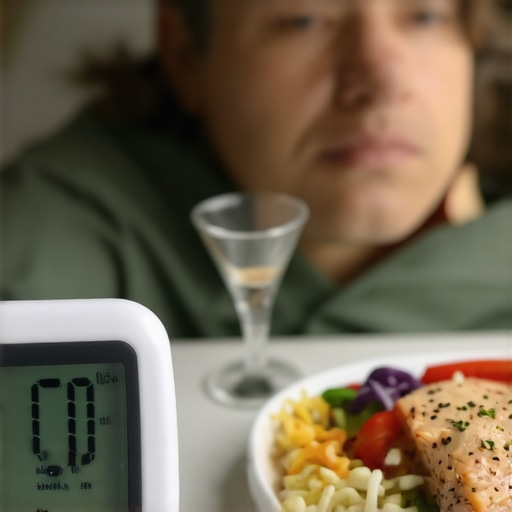
Silence is your most effective tool during a roadside investigation. Do not attempt to explain your diet, your exercise habits, or your medical history to the officer. Any statement you make can and will be used to build a narrative of impairment. The goal of the dui defense is to limit the evidence available to the state. If you have already taken the test, the focus shifts to the timeline of your last meal and the specific type of machine used. Some older models are notorious for failing to account for the “mouth alcohol” effect which is exacerbated by the reflux common in high protein diets. We analyze the slope detector data from the machine to see if it flagged any irregularities. If the machine’s internal logs show a steady increase in absorption rather than a sharp peak, it suggests a slow bleed of ketones rather than the presence of liquid alcohol. This granular level of detail is the difference between a dismissed case and a permanent record. The courtroom is a territory of logistics and data. We do not win by being right; we win by proving the state is technically wrong. [IMAGE_PLACEHOLDER]
The final verdict on metabolic evidence
Proving ketosis in court requires expert testimony and medical documentation. It is not enough to simply claim you were on a diet. We must establish a clear chain of evidence including blood work, food logs, and testimonies from nutritional experts. This data point is often contrarian because while most lawyers focus on the stop itself, the strategic play is often to attack the science of the test before the trial even begins. The legal reality is that the burden of proof rests on the state, but the burden of explanation often falls on the defense. We must make the jury understand that their own bodies could produce a “guilty” result on these machines under the right conditions. This turns the machine from an objective witness into a suspicious tool of the state. Your life does not have to be ruined by a chemical misunderstanding. The law provides a path for those who are willing to fight the procedure with the same intensity that the state uses to enforce it. If you find yourself caught in the keto trap, the only way out is through the microscopic examination of the evidence.