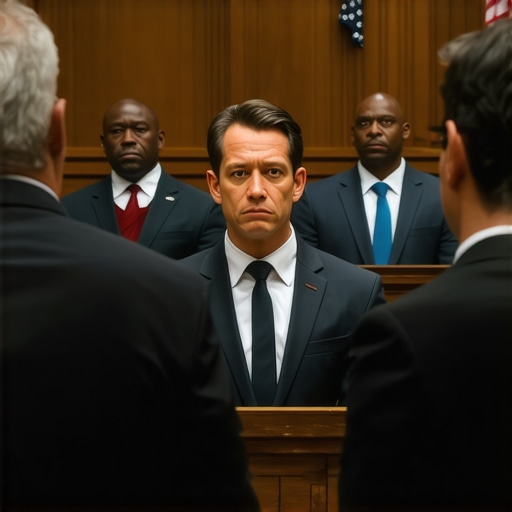
I sat across from a man who had everything to lose. He had spent six hours in a cold cell and smelled of stale sweat and regret. I took a slow sip of my black coffee and told him the truth. His case was already half-lost because he opened his mouth before he opened his wallet for a proper defense. I watched a defendant lose their entire defense in the first five minutes of a roadside stop because they ignored the simple rule about silence. They thought they could explain their way out of a pair of handcuffs. The law does not reward explanations. It rewards silence and procedural precision. Prosecutors rely on your panic. They need you to feel the weight of the state before you even see the evidence. They want you to sign the plea before you realize their machine hasn’t been calibrated since the previous administration. This is how the machine works. It is not about justice. It is about clearing a docket and maintaining a conviction rate that looks good on a campaign flyer.
The illusion of the perfect state case
A prosecutor will present a DUI arrest as an open and shut matter. They use police reports and preliminary breath tests to create a sense of inevitability. This psychological leverage is designed to bypass your constitutional rights and force a guilty plea before discovery begins. Case data from the field indicates that the vast majority of cases are resolved via plea because defendants are made to feel that resistance is futile. The state wants you to believe their evidence is a mountain. Usually, it is a pile of sand held together by procedural errors. A dui lawyer knows that the initial charges are just the opening bid in a very long game of poker. They will tell you that you are facing the maximum sentence. They will mention mandatory jail time. They will discuss the immediate suspension of your license. These are tools of intimidation. While most lawyers tell you to sue immediately, the strategic play is often the delayed demand letter or the slow walk through pre-trial motions to let the defendant’s insurance clock run out or to find the gaps in the officer’s testimony.
The chemical test is a rigged game
The breathalyzer test is a piece of technology that assumes every human body is an identical machine. It relies on a partition ratio that is scientifically controversial. DUI defense often hinges on the fact that these machines do not measure blood alcohol content directly; they measure vapor and perform a math equation. If you have a high body temperature, the machine overestimates your intoxication. If you have acid reflux, the machine overestimates your intoxication. If the officer failed to watch you for twenty continuous minutes before the test, the results are legally suspect. Prosecutors do not want you to know this. They want you to see the number on the printout and surrender. Procedural mapping reveals that many machines are maintained with less care than a high school cafeteria oven. We look at the calibration logs. We look at the maintenance records. We look at the software version. If any of those are out of spec, that mountain of evidence begins to crumble. This is the microscopic reality of dui legal strategy. You do not fight the law; you fight the machine and the human error behind it.
“Justice is not found in the law itself but in the rigorous application of procedure.” – Common Law Maxim
Why prosecutors fear the discovery process
The discovery process is the period where the state must turn over all its cards. DUI attorney experts use this phase to hunt for Brady material, which is evidence that might prove your innocence. Prosecutors hate this. It takes time. it costs money. It requires them to actually prove their case. They prefer a guilty plea at the arraignment. They will offer a slightly reduced sentence if you agree to plead early. This is a trap. Once you plead, you waive your right to see the dashcam footage. You waive your right to see the body cam video. You waive your right to challenge the chain of custody for your blood sample. I have seen cases where the blood vial sat in a hot patrol car for four hours before being refrigerated. That sample is junk. It ferments. It creates its own alcohol. But if you take the plea on day one, you will never know that the state’s evidence was rotten. You must call an attorney who is willing to dig through the digital files and the paper trails. Silence is your shield, but discovery is your sword.
The psychological price of a fast plea
A plea agreement is a contract where you trade your rights for a known outcome. The prosecutor sells this as a benefit to you. They frame it as taking responsibility. In reality, they are selling you a product you might not need to buy. DUI legal professionals see this every day. The state counts on your fear of the unknown. They know that the thought of a trial is terrifying to a normal person. They use that terror to secure a conviction. The dui attorney acts as a buffer between you and that pressure. The state might say this is your only chance for a deal. That is almost always a lie. Deals often get better as the trial date approaches and the prosecutor realizes their witnesses are unavailable or their evidence is weak. The ROI of litigation for the state is low. They want high-volume convictions. When you force them to work, the leverage shifts in your favor. Do not be the easy win they are looking for.
“The prosecutor has more control over life, liberty, and reputation than any other person in America.” – Robert H. Jackson
How the system punishes the unprepared
The legal system is designed to move people through like a conveyor belt. If you do not have a dui lawyer to jam the gears, you will be crushed. DUI defense is not about being a nice person or having a clean record. It is about statutory interpretation and procedural hurdles. For example, if the officer did not have reasonable suspicion to pull you over, everything that happened after that point is irrelevant. The field sobriety tests do not matter. The breath test does not matter. The incriminating statements do not matter. But a judge will not tell you that. The prosecutor certainly will not tell you that. Only a dui attorney who has read the recent Supreme Court rulings on search and seizure will know how to file the motion to suppress. Information gain in these cases comes from the details. Was the officer’s certification current? Was the patrol car’s radar calibrated? These are the questions that win cases. If you do not ask them, the state wins by default. Justice is a luxury product in this country; you have to fight for every inch of it. Stop talking to the police. Stop trying to be helpful. Call a lawyer and let the professionals handle the warfare.