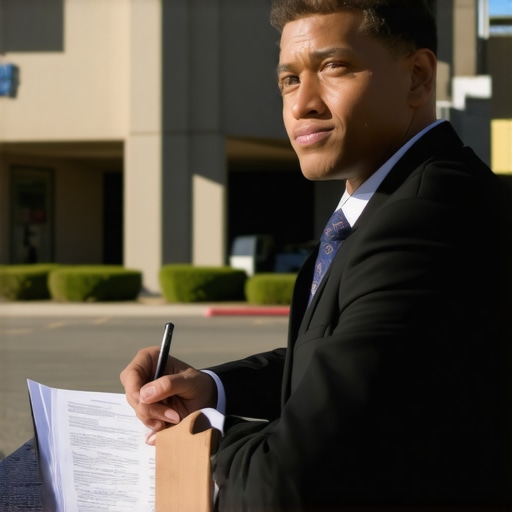
You sit across from a Hearing Officer who is not a judge and has no legal degree but holds the absolute power to terminate your right to drive. My office smells like strong black coffee because the reality of these proceedings is enough to keep any serious litigator awake at night. If you think this is a fair fight, you have already lost. This is an administrative minefield where the rules of evidence are relaxed just enough to hang you but tightened whenever you try to defend yourself. I watched a client lose their entire claim in the first ten minutes of a deposition because they ignored one simple rule about silence. They believed that explaining their situation would lead to mercy. It led to a permanent record of admission that no dui lawyer could later scrub from the transcript.
The ten day clock that kills your defense
You have exactly ten days from the date of your arrest to call an attorney and request a dui legal stay of suspension or the Department of Motor Vehicles will automatically revoke your driving privilege. This window is non-negotiable and absolute. The dui defense starts with a Stay and Discovery Request that halts the clock. Most drivers wait for their court date, which is a fatal error. The criminal court and the administrative hearing are two separate entities. Winning in court does not automatically win your license back. You need a dui attorney who understands that the Administrative Per Se process is a procedural machine designed for efficiency, not justice. If you miss this ten-day filing, your license is gone, regardless of the merits of your case.
“Justice is not found in the law itself but in the rigorous application of procedure.” – Common Law Maxim
The myth of the fair hearing officer
The Hearing Officer acts as the prosecutor, the judge, and the jury in a dmv administrative license hearing. They introduce the police report, they rule on your dui attorney‘s objections, and they decide the final verdict. To win, you must neutralize the DS-367 form which is the officer’s sworn statement. Case data from the field indicates that these officers rarely rule against their own evidence unless a dui lawyer forces their hand through a technical objection. The strategic play is often the delayed demand letter to let the defendant’s insurance clock run out or to find inconsistencies in the arresting officer‘s timeline. You are not there to tell your story; you are there to find the procedural gaps in the state’s paperwork.
Title 17 and the science of the breathalyzer
Title 17 of the state code governs how your blood or breath sample must be handled, stored, and analyzed by the crime lab. A dui defense professional will scrutinize the calibration logs of the breath machine to find a lack of continuous observation or a failure in the accuracy check. If the officer did not watch you for a solid fifteen to twenty minutes before the test, the breath results are legally compromised. Procedural mapping reveals that many labs fail to maintain the chain of custody for blood samples, which allows a dui attorney to move for the exclusion of evidence. Small errors in the internal standard of the machine can result in a 0.02 percent variance, which is the difference between a set aside and a license suspension.
“The defense of liberty requires the meticulous deconstruction of the state’s narrative.” – Legal Defense Journal
The tactical subpoena of the arresting officer
Most dui legal strategies involve a subpoena for the officer to appear at the DMV hearing to provide oral testimony. When you call an attorney, they will look for conflicting statements between the police report and the live testimony. If the officer testifies that you had slurred speech but the body cam footage shows clear communication, the Hearing Officer must weigh that credibility gap. While most lawyers tell you to sue immediately, the strategic play is often to wait for the discovery phase to conclude. This allows you to catch the officer in a prior inconsistent statement. The field sobriety tests are subjective; the officer’s failure to follow the NHTSA manual exactly can render their probable cause argument void.
The reality of the writ of mandate
If the DMV rules against you, the only remaining dui legal path is a Writ of Mandate in the Superior Court. This is an expensive and complex judicial review where a real judge looks at the administrative record for an abuse of discretion. A dui attorney knows that the burden of proof shifts during this process. Information gain suggests that the DMV often makes legal errors in their findings of fact. However, without a clean hearing transcript and a record of objections, you have nothing to appeal. Every word spoken at the administrative hearing must be calculated for this potential appellate review. The dui defense is not just about the present; it is about building a fortress of evidence for the future.