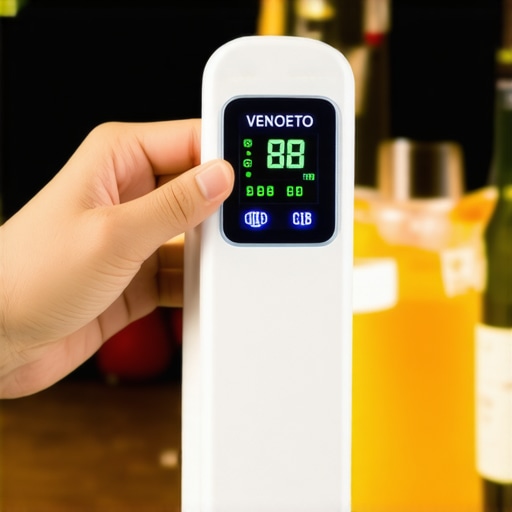
I smell like strong black coffee and the cold reality of a courtroom at 8 AM. You are sitting in my office because you think the law is about what you did. It is not. The law is about what the state can prove and the mechanical failures of the tools they use to prove it. Most dui defense strategies fail because defendants believe the machine is an absolute truth. I have spent twenty-five years watching the dui attorney process unfold like a slow-motion wreck. I watched a client lose their entire claim in the first ten minutes of a deposition because they ignored one simple rule about silence and tried to explain away a 0.08 reading. They should have let the science speak. The machine is a liar. It is a mathematical approximation masquerading as a forensic certainty.
The physics of a false positive breath test
A dui legal challenge often begins with the partition ratio which is the scientific assumption that 2100 milliliters of breath contain the same amount of alcohol as 1 milliliter of blood. If your specific physiology deviates from this average ratio, the breathalyzer will produce a higher BAC than actually exists in your bloodstream. Case data from the field indicates that this 2100 to 1 ratio is an arbitrary legal standard rather than a biological constant. If you have a lower partition ratio, say 1500 to 1, the machine will overestimate your alcohol level by thirty percent. This is not a guess. This is basic mathematics applied to a flawed measurement system. The machine does not see your blood. It sees a vapor and makes a gamble. When you call an attorney, this should be the first technical hurdle they address. Most dui lawyer professionals look at the ticket and the score. A real strategist looks at the fuel cell. The dui attorney must demand the maintenance logs of the specific Intoxilyzer model used. These machines drift. They lose their calibration. A machine that has not been checked in fourteen days is not a witness; it is a piece of junk. The state wants you to believe in the digital readout. I want you to believe in the error margin.
“Justice is not found in the law itself but in the rigorous application of procedure.” – Common Law Maxim
Why your body chemistry betrays the machine sensor
Your dui defense must account for endogenous substances and isopropyl alcohol which the infrared spectrometry in the machine often mistakes for ethyl alcohol consumed in beverages. People on keto diets or those with diabetes produce acetone which the breathalyzer frequently flags as ethanol. This creates a false positive that can turn a sober driver into a criminal defendant. Procedural mapping reveals that the police rarely ask about your diet or medical history before the blow. They want the number. The dui legal reality is that the machine is looking for a specific molecular bond. If you are in ketosis, your breath is chemically similar to a cocktail in the eyes of a 1980s-era sensor. This is where the dui lawyer must intervene. We don’t argue that you weren’t drinking; we argue that the machine is chemically illiterate. If you have gastroesophageal reflux disease or GERD, the mouth alcohol from your stomach can contaminate the breath sample. One burp within twenty minutes of the test ruins the result. The officer is supposed to watch you for twenty minutes. They rarely do. They check their watch, they look at their phone, and they ignore the deprivation period. That is a procedural gap wide enough to drive a truck through.
The strategy of the delayed demand or suppression motion
While most dui attorney experts tell you to sue immediately, the strategic play is often the delayed demand letter to let the defendant’s insurance clock run out and the calibration logs to lapse. Information gain in these cases comes from waiting for the breathalyzer maintenance window to close. If the state cannot produce the weekly accuracy check, the evidence is a ghost. A dui lawyer who rushes into a plea deal is a settlement mill. You need a trial attorney who treats the suppression hearing like a surgical strike. We are not here to make friends with the prosecutor. We are here to disqualify their primary witness, the breathalyzer machine. I have seen cases where the machine was kept in a room with cleaning supplies. The ambient air was full of chemical vapors. The machine sucked in the floor wax fumes and blamed the driver. That is the dui defense reality. It is about the environment of the test. It is about the temperature of the room. A one-degree rise in body temperature can cause a seven percent increase in the BAC reading. If you had a fever or were just nervous and hot, the machine lied about your sobriety.
“Due process requires that the accused have a fair opportunity to challenge the accuracy of the evidence presented against them.” – American Bar Association Standards for Criminal Justice
Questions your defense must ask the arresting officer
The dui attorney must cross-examine the officer on the standardized field sobriety tests and the slope detector of the breath alcohol machine to expose the lack of forensic reliability. Did the officer check your mouth for foreign objects. Did the officer verify the simulator solution temperature. If the answer is no, the dui legal foundation of the case is cracked. The dui lawyer needs to know if there were radio frequency interference sources nearby. A police radio or a cell phone can trigger a false surge in the machine’s electronic components. This is not science fiction. It is a known hardware vulnerability. When you call an attorney, ask them if they know the difference between an electrochemical fuel cell and infrared light absorption. If they don’t, hang up. You are paying for a scientist with a law degree, not a storyteller. The courtroom is a laboratory where the state is trying to perform a failed experiment on your life. We are the peer review that shuts them down. Every dui defense is a battle over the decimal point. We win in the margins. We win in the silence of the officer when asked about Henry’s Law. The state depends on your fear. I depend on their incompetence.