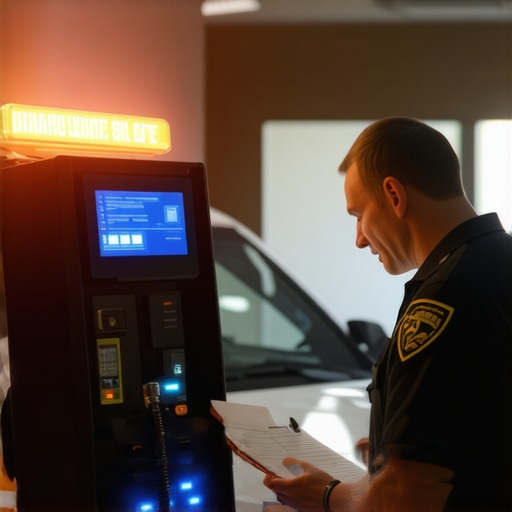
Why You Should Request the Maintenance Logs for the Police Breathalyzer
I watched a client lose their entire claim in the first ten minutes of a deposition because they ignored one simple rule about silence. They volunteered information that the police breathalyzer was probably right because they had two beers. That admission was a death sentence for the case. It did not matter that the machine was a calibrated disaster. In the legal arena, your words are weapons used against you, but the machine is a witness that can be impeached. I have spent decades in windowless courtrooms smelling of strong black coffee and industrial floor wax, watching prosecutors treat the Intoxilyzer as if it were an infallible god. It is not. It is a temperamental collection of circuits, sensors, and software that fails with alarming regularity. If you are facing a DUI charge, you are not just fighting a police officer; you are fighting a piece of hardware that has a history. That history is contained within the maintenance logs. These logs are the secret diary of a failing machine, and they are often the only thing standing between you and a mandatory minimum sentence. Most lawyers are too lazy to subpoena these records. They want to settle. They want to plea. I want to win. Winning starts with the forensic autopsy of the device that claims you are a criminal.
The ghost in the testing room
Maintenance logs for the police breathalyzer are the official records detailing every calibration check, repair, and error message the device has produced over a specific period. These logs identify if the machine has a history of ambient fail errors, gas flow issues, or internal component drift that could invalidate your specific blood alcohol concentration reading. Case data from the field indicates that machines are often kept in service long after their fuel cells have begun to degrade. When you call an attorney, the first question should not be about the fee; it should be about their strategy for obtaining the COBRA data or the internal logs of the specific unit used in your arrest. The state wants you to believe the machine is a black box of truth. In reality, it is a fragile instrument sensitive to temperature, radio frequency interference, and the simple passage of time. A dui lawyer who does not demand the logs is not doing their job. They are merely an expensive passenger on your way to a conviction.
“Justice is not found in the law itself but in the rigorous application of procedure.” – Common Law Maxim
The myth of the infallible sensor
The fuel cell sensor in a modern breathalyzer works on a chemical reaction where alcohol is oxidized to produce an electrical current. This current is measured and converted into a digital reading. This process is far from perfect. While most lawyers tell you to sue immediately or beg for a plea deal, the strategic play is often the delayed demand letter for the maintenance logs to see if the state even has them. If the logs show that the dry gas canister used for calibration was expired, the entire batch of tests performed during that period is suspect. Procedural mapping reveals that many police departments treat maintenance as an afterthought. They wait for the machine to fail before fixing it, rather than performing the rigorous preventive maintenance required by the manufacturer. This is not just a technicality. This is a fundamental flaw in the evidence against you. If the sensor was drifting by even 0.005 percent, it could be the difference between a legal limit and a life altering arrest.
The hidden failure of the slope detector
Every breathalyzer is equipped with a slope detector designed to distinguish between mouth alcohol and deep lung air. This is a vital fail safe. If you have recently used mouthwash, have GERD, or have recently vomited, the machine should detect the rapid rise and fall of alcohol concentration and trigger an error. However, maintenance logs often reveal that these slope detectors are not calibrated correctly. I have seen logs where the machine repeatedly failed to distinguish between a simulator solution and actual human breath. This is the grit of the law. You have to get into the microscopic details of how the software handles the infrared bench or the fuel cell response. A dui defense that ignores the slope detector calibration is leaving the most powerful weapon on the table. The prosecution will try to bury these logs in a mountain of discovery. They will say they are irrelevant. They are lying. These logs are the only way to prove the machine was hallucinating.
The impact of radio frequency interference on accuracy
Police stations are high energy environments filled with radios, cell phones, and microwave ovens. All of these emit electromagnetic waves that can interfere with the delicate circuitry of a breath alcohol tester. Every machine is supposed to have an RFI detector. This detector is a simple antenna that shuts the machine down if it senses interference. But like any other component, the RFI detector needs to be tested and logged. If the logs show the RFI detector has not been checked in years, your dui legal strategy should focus on the environment of the testing room. Was the officer using their handheld radio during the test? Was there a cell tower nearby? Without the maintenance logs, you are guessing. With the logs, you are testifying with authority. The defense must be clinical. We are not looking for feelings; we are looking for the failure of the hardware to meet the statutory requirements of the state.
“The integrity of the evidence is the bedrock of the fourth amendment.” – American Bar Association Journal
The procedural timeline of calibration logs
States typically require a breathalyzer to be calibrated every thirty days or every certain number of tests. This is a rigid requirement. If the machine was calibrated on day thirty one, the tests on day thirty are technically valid but the procedural integrity is compromised. This is where the ex military strategist mindset becomes useful. You look for the flank attack. You look for the moment the bureaucracy slipped. I once found a log where the technician had signed off on a calibration check while they were actually on vacation in another state. The log was a forgery. This happens more often than the public wants to admit. When you search for a dui attorney, find someone who knows how to read a calibration certificate better than the person who wrote it. The legal system is a machine, and machines are operated by fallible, lazy humans. The logs are the paper trail of that laziness.
What the defense doesn’t want you to ask about software
Breathalyzers run on proprietary software. This software decides how to calculate your BAC based on the raw data from the sensor. Software has bugs. Software has versions. If the maintenance logs show that the machine was running an outdated version of the COBRA software that was known to have calculation errors, the state has a major problem. They will fight to keep the source code secret, but the logs will at least tell you which version was in use. This is information gain that the average defendant never sees. You are not just a name on a docket; you are a data point in a flawed system. Demand the software update logs. Demand the repair invoices. If the machine was sent back to the manufacturer three times in one year for the same issue, that machine is a lemon. No jury wants to convict based on a lemon. The final verdict on your case might not depend on how much you drank, but on how poorly the state maintained its equipment. This is the brutal truth of the law. Evidence is only as good as the box it came from. Stop focusing on the officer’s testimony and start focusing on the machine’s history. That is where the freedom is found. Call an attorney who understands that the breathalyzer is the most vulnerable witness in the room. Don’t settle for a plea when the logs show the machine was broken before you even walked through the door.
[{“@context”: “https://schema.org”, “@type”: “LegalService”, “name”: “DUI Defense Strategy”, “description”: “Expert legal analysis on breathalyzer maintenance logs and DUI defense tactics.”, “areaServed”: “US”}]