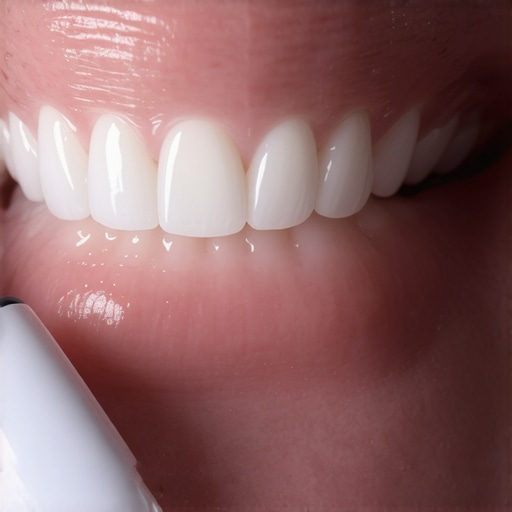
The forensic reality of mouth alcohol trapped in bridges
Mouth alcohol contamination occurs when residual ethanol lingers in the crevices of dental work like crowns or implants, leading to falsely high BAC results. A skilled DUI attorney knows that breathalyzer sensors cannot distinguish between deep lung air and trapped vapors from periodontal pockets during a DUI defense case.
I watched a client lose their entire claim in the first ten minutes of a deposition because they ignored one simple rule about silence. They felt the need to fill the void, so they started speculating about their own physiology. That mistake is exactly how people talk themselves into a DUI conviction. They assume the machine is perfect. It is not. It is a box of sensors that can be fooled by a piece of porcelain in your mouth. If you have extensive dental work, you are walking around with a biological trap that can hold liquid alcohol long after your blood has cleared it. This is the brutal truth of the legal system. It relies on the assumption of mechanical infallibility. My job is to prove that the machine is a liar. When you blow into a tube, the device is looking for alveolar air from the bottom of your lungs. However, if you have a bridge, a crown, or even a deep cavity, the alcohol remains there. It evaporates into the breath stream at a much higher concentration than what is actually in your blood. This is not a theory. It is forensic chemistry.
“The integrity of forensic evidence is the bedrock upon which the presumption of innocence rests.” – American Bar Association Standards for Criminal Justice
Why your dental hardware is a liability during a traffic stop
Dental hardware such as permanent retainers and porcelain veneers can harbor alcohol molecules that interfere with breath testing accuracy. When you call an attorney, we examine the partition ratio between your breath and blood to challenge the DUI legal standing of the prosecution’s evidence regarding mouth alcohol.
The mechanics of a breath test rely on Henry’s Law. This law states that in a closed system, the concentration of a volatile substance in the air is proportional to its concentration in the liquid. Your body is not a closed system. Your mouth is an open cavern filled with obstacles. If you have food particles trapped under a bridge, those particles can soak up wine or beer like a sponge. As you blow, the air passing over that sponge picks up the concentrated vapor. The machine then multiplies that reading by 2,100. This is the standard partition ratio. If the machine detects a tiny amount of alcohol in your mouth, it assumes that amount represents a massive amount in your blood. It is a mathematical leap of faith that often leads to a wrongful arrest. The prosecution wants you to think the science is settled. It is anything but settled. Forensic scientists have known about the mouth alcohol effect for decades, yet the police continue to use machines that cannot reliably filter out the noise created by a simple dental crown.
The hidden failure of the mandatory observation period
The observation period is a procedural requirement where an officer must watch a DUI suspect for twenty minutes to prevent mouth alcohol from skewing BAC results. Any DUI lawyer understands that procedural errors during this window provide the necessary procedural leverage to move for a motion to suppress evidence.
Case data from the field indicates that officers rarely follow the observation protocol with the required rigor. They check their phones. They fill out paperwork. They talk to their partners. To satisfy the law, the officer must ensure you do not burp, hiccup, or regurgitate. Why? Because any of those actions brings raw alcohol back into the oral cavity. If you have dental work, the problem is magnified. Alcohol can seep out from under a loose filling or a bridge without you even knowing it. This is a micro-regurgitation. The officer will not see it. You will not feel it. But the machine will detect it. While most lawyers tell you to challenge the initial stop, the strategic play is often a delayed demand for the machine maintenance logs from the ninety days prior to your arrest. We look for a pattern of slope detector failures. The slope detector is the software meant to catch mouth alcohol. If it has been failing on other subjects, it likely failed on you too.
“Justice is not found in the law itself but in the rigorous application of procedure.” – Common Law Maxim
The engineering flaw in common breathalyzer technology
Breathalyzer technology like the Intoxilyzer 8000 uses infrared spectroscopy to measure ethanol, but it frequently fails to differentiate between mouth alcohol and alveolar breath. A strong DUI defense involves auditing the analytical logs to identify erroneous BAC spikes caused by dental trapped liquids or periodontal disease.
The machine is looking for a specific curve in the breath sample. It expects the alcohol concentration to rise and then level off. This is the plateau. If the concentration spikes and then drops, the software is supposed to flag it as mouth alcohol. However, dental work creates a sustained release. The alcohol does not spike and drop. It leaks slowly. This tricks the computer into thinking it is seeing a clean sample from the lungs. It is a catastrophic engineering oversight. We have seen cases where a person with a 0.02 true BAC blew a 0.09 because of a trapped pocket of mouthwash under a bridge. The legal limit is a razor-thin line. A difference of 0.01 can be the difference between a dismissed case and a life-altering conviction. You are not fighting a machine. You are fighting a series of assumptions programmed into a machine by people who never met you and do not care about your dental history.
Tactics to dismantle the state’s forensic evidence
Dismantling forensic evidence requires a DUI defense attorney to cross-examine the arresting officer on deprivation periods and machine calibration. By focusing on physiological anomalies like dental traps, we create reasonable doubt regarding the scientific validity of the prosecution’s BAC evidence during a trial.
The trial is not about the truth. It is about perception and the burden of proof. I do not have to prove you were sober. I only have to prove that the machine’s number is unreliable. We bring in dental experts to testify about the volume of liquid that can be held in a periodontal pocket. We show the jury the physical reality of a dental bridge. We explain the chemistry of evaporation. Most defendants are terrified of the courtroom. They should be. It is a place where the unprepared are slaughtered. But for a strategist, the courtroom is where the state’s shortcuts are exposed. The state relies on the jury’s laziness. They want the jury to see a number on a piece of paper and stop thinking. We force them to look at the plumbing of your mouth. We force them to look at the clock. If the officer turned his back for thirty seconds to grab a pair of gloves, the entire test is legally toxic. Procedural mapping reveals that the vast majority of tests are performed with at least one significant technical violation. We find that violation and we use it as a wedge to break the case apart.