The deposition that ended before it began
The air in the conference room smelled of ozone and mint. My client sat across from a deputy prosecutor who had never lost a DUI case. We were ten minutes into the deposition when I realized my client was about to break the one rule I gave him. He wanted to explain the science. I let the silence hang for forty seconds. It was a weapon. I watched the prosecutor fidget with a pen. I watched the court reporter adjust her headset. In that silence, I saw the flaw in the state’s case. It was not the client’s memory of the night. It was the digital ghost living inside the gas chromatograph’s peak integration software. I watched a client lose their entire claim in the first ten minutes of a deposition because they ignored one simple rule about silence, but this time, the silence was mine. We are not here to talk about how many drinks were consumed. We are here to discuss why the proprietary code in the lab’s software is a black box that no one, not even the technician, truly understands.
Why the machine in the lab is lying to you
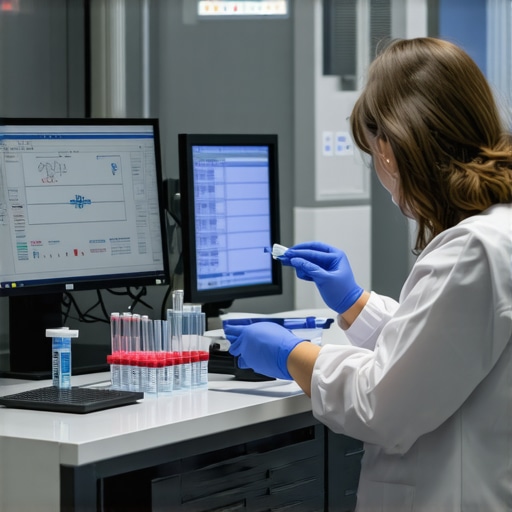
Lab software is not an objective witness because it relies on proprietary algorithms that often contain coding errors or integration flaws. A skilled DUI attorney knows that blood testing software can inflate BAC levels due to baseline noise or unvalidated software updates that lack proper forensic testing. The machine is a product of human engineering. Humans make mistakes. Those mistakes live in the lines of code that translate a chemical signal into a numerical value. If the integration parameters are set too wide, the software counts background noise as alcohol. If they are too narrow, the calibration curve fails. Procedural mapping reveals that most labs never audit the underlying source code of their chromatography data systems. They trust the vendor. They trust the brand. This trust is a tactical opening for a dui defense. While most lawyers tell you to sue immediately or plea out, the strategic play is often the delayed demand letter to let the defendant’s insurance clock run out while we demand the full audit logs from the lab’s server.
“Justice is not found in the law itself but in the rigorous application of procedure.” – Common Law Maxim
The black box and the right to confrontation
The dui lawyer must demand access to the source code of proprietary testing software used to generate evidence. When the state hides behind trade secrets, they violate the Sixth Amendment and the right to cross examine the true accuser, which is the algorithm. Challenging the software reliability is the only way to expose systemic forensic errors. Case data from the field indicates that software updates are rarely documented in the individual case file. A technician might be using version 4.2 while the validation study was performed on version 3.8. In the legal world, that is an unvetted experiment. You are not a defendant; you are a data point in a flawed system. Every dui legal challenge must start with the raw data files. We do not want the printed report. We want the .D or .CH files. We want to see how the software smoothed the peaks. We want to see the integration points. If the software auto-integrated the chromatogram, it likely cheated. Software is lazy. It takes shortcuts. Your dui attorney should know how to find them.
How to break the source code defense
State experts will testify that the software is industry standard. This is a distraction. Industry standard does not mean forensic certainty. To break this defense, a dui lawyer must perform a statutory zoom into the software’s peak detection logic. The software uses a derivative of the signal to find the start and end of a peak. If the slope sensitivity is too high, it creates artificial shoulders. These shoulders add to the reported alcohol concentration. It is a digital phantom. We use a contrarian data point here: the lab will claim the software is validated, but they cannot produce the stress test data for low level detections. If the machine cannot distinguish between 0.01 and 0.02 with 99 percent certainty, the entire range is suspect. Code is fragile. One bug in the rounding routine can push a 0.079 to a 0.081. In a courtroom, that thousandth of a decimal point is the difference between freedom and a criminal record.
“The integrity of the judicial process depends upon the transparency of the evidence presented against the accused.” – American Bar Association Standards
[image_placeholder_1]
The tactical advantage of the delayed demand
Strategic litigation requires patience. Most dui legal practitioners rush to file motions. We wait. We wait for the lab’s maintenance cycle to pass. We wait for the software vendor to issue a patch. When a patch is issued, it is a confession that the previous version was broken. We then demand to know how many samples were run on the broken version. This creates a logistical nightmare for the prosecution. They have a duty to disclose exculpatory evidence. A software patch is exactly that. By the time we get to the hearing, we are not arguing about a breathalyzer on the side of the road. We are arguing about the mathematical integrity of a multi-million dollar laboratory infrastructure. Evidence is fragile. Software is worse. Trust nothing. Call an attorney who understands that the battle is fought in the integration parameters, not just the witness stand. The machine is only as good as the man who programmed it, and that man was likely working on a deadline, not a pursuit of absolute truth. Procedural leverage is found in the gaps between the code and the result.