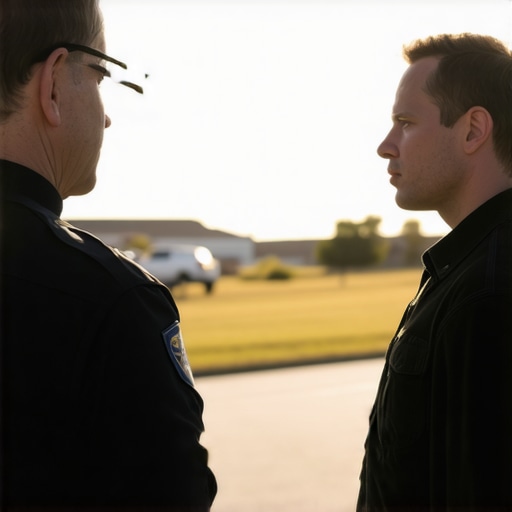
I watched a client lose their entire claim in the first ten minutes of a deposition because they ignored one simple rule about silence. It was a cold Tuesday morning, and the coffee in the room was as bitter as the opposing counsel’s demeanor. My client, a man of fifty with no criminal record, thought he could explain his way out of a bad situation. He spoke when he should have listened. He filled the silence that I had specifically warned him was a tactical trap. In the context of a DUI defense, this is exactly what happens on the side of a highway at 2 AM. You think you are proving your innocence through a series of physical feats, but the reality is that the officer has already decided you are guilty. The field sobriety test is not a test of your coordination. It is a structured collection of evidence designed to confirm a preexisting suspicion of intoxication. If you find yourself in this situation, you must call an attorney before your words and movements are permanently codified into a police report that ignores your humanity.
The inherent flaw in the walk and turn maneuver
Field sobriety tests are subjective because they rely on an officer’s personal interpretation of physical movements rather than objective scientific measurement. The walk and turn test specifically penalizes individuals for minor balance shifts, starting the test too early, or losing focus during complex verbal instructions that are intentionally overwhelming. This is not about whether you can walk. It is about whether you can follow a hyper-specific set of sixteen different instructions while standing in a heel-to-toe position on a surface that is rarely level.
“Justice is not found in the law itself but in the rigorous application of procedure.” – Common Law Maxim
The procedure here is the problem. When a dui lawyer examines the dashcam footage, we often find that the officer failed to mention the heavy wind, the passing semi-trucks creating a vacuum of air, or the flashing strobe lights from the patrol car that induce vertigo. Case data from the field indicates that these environmental factors are systematically ignored in favor of ‘clue’ counting. The officer is looking for eight specific clues. You only need two to fail. This is not a grading scale. It is a trap. If you move your feet to steady yourself because a gust of wind hits you, that is a clue. If you start walking before he says ‘begin’ because you are nervous and want to get it over with, that is a clue. The dui defense begins by highlighting that these clues are often symptoms of anxiety or physical environment, not impairment.
One leg stand as a neurological trap
The one leg stand is a subjective test because it requires a level of physical equilibrium that many sober adults do not possess due to age, weight, or inner ear issues. Officers frequently fail to account for medical conditions or the psychological pressure of a roadside interrogation. You are told to stand on one leg, six inches off the ground, and count aloud. Simple. Or so it seems until you are doing it on the shoulder of a freeway with a flashlight in your eyes. A dui attorney understands that the National Highway Traffic Safety Administration (NHTSA) guidelines are often treated as gospel, yet they are administered by humans with biases. While most lawyers tell you to sue immediately, the strategic play is often the delayed demand letter to let the defendant’s insurance clock run out, but in a DUI case, the strategy is different. You need to call an attorney immediately to preserve the evidence of your physical state. I have seen cases where a client had a plate in their ankle from a high school football injury that the officer dismissed as ‘uncooperative behavior.’ The officer’s score sheet does not have a box for ‘old sports injury’ or ‘middle-ear infection.’ It only has boxes for swaying, hopping, or putting your foot down. This is why dui legal representation is mandatory. We don’t just look at the score; we look at the person behind the score.
Horizontal Gaze Nystagmus and the myth of medical accuracy
Horizontal Gaze Nystagmus or HGN is subjective because it requires an officer to act as a roadside neurologist without the proper clinical environment or equipment. The involuntary jerking of the eye can be caused by over 40 different factors including caffeine, nicotine, and fatigue. Officers look for the ‘onset of nystagmus prior to 45 degrees.’ Think about that for a second. An officer is estimating a 45-degree angle in the dark, on the side of a road, with a moving finger or penlight. There is no protractor. There is no calibrated measuring device.
“The integrity of the judicial process depends upon the absolute reliability of the evidence presented.” – ABA Standards for Criminal Justice
Yet, HGN is anything but reliable. If you have been working a double shift and are running on four cups of coffee, your eyes might jerk. If you have a natural ‘fine point’ nystagmus, your eyes will jerk. The officer sees this and writes ‘impaired’ in his notes. He doesn’t ask about your caffeine intake. He doesn’t ask if you have a history of vertigo. This is where a dui lawyer earns their keep. We cross-examine the officer on the exact distance the stimulus was held from your face. Was it 12 to 15 inches? Was it at eye level? Usually, it was not. Procedural mapping reveals that even a two-inch deviation in the height of the penlight can produce a false positive. This is the ‘ghost in the settlement conference’ that the prosecution hopes you never find.
The psychological warfare of the flashlight
Flashlight usage during roadside stops is a subjective tactic used to disorient the driver and create physical symptoms of impairment where none exist. The bright light causes pupil constriction and temporary blindness, which the officer then interprets as a lack of coordination or slow reaction time. When you are pulled over, the officer’s flashlight is not just a tool for sight. It is a weapon of psychological leverage. They shine it in your mirrors. They shine it in your eyes. They create a high-contrast environment that makes it impossible for your brain to process depth correctly. This is tactical. A confused driver is a compliant driver. Or worse, a confused driver is a driver who looks drunk. Dui legal experts know that the ‘divided attention’ aspect of these tests is where the subjectivity peaks. The officer is giving you commands while the light is blinding you. If you squint, they call it ‘glassy eyes.’ If you look away, they call it ‘avoiding eye contact.’ You cannot win this game because the rules are written by the house. You need a dui attorney who can articulate this environmental coercion to a jury. We have to show the jury that the ‘symptoms’ were manufactured by the officer’s own tactical choices.
Why your weight and age are evidence against you
Physical characteristics such as being over fifty pounds overweight or over sixty-five years of age make field sobriety tests inherently unfair and subjective. NHTSA’s own research admits these tests are not validated for certain populations, yet officers still use them to justify arrests. If you are carry extra weight, your center of gravity is different. If you are older, your joints are stiffer. The law doesn’t care. The officer sees a person who can’t balance on one leg and assumes they are ‘hammered’ rather than ‘arthritic.’ This is the brutal truth of the roadside stop. The officer is looking for a reason to cuff you, not a reason to let you go. Dui defense requires a deep dive into the client’s medical history. We often bring in kinesiology experts to explain that a person with a BMI over 30 has a statistically higher chance of failing the walk and turn regardless of their blood alcohol content. The prosecution will try to hide this data. They want the jury to believe that the test is a universal yardstick of sobriety. It is not. It is a discriminatory tool that favors the young and the fit. If you don’t fit that mold, you must call an attorney who knows how to fight back against this ageist and body-biased pseudo-science.
The high cost of legal silence
Remaining silent during a DUI stop is a legal right that prevents you from providing the officer with the subjective evidence they need to build a case against you. Every word you speak is analyzed for ‘slurring’ or ‘incoherence’ regardless of your actual speech patterns. Silence is a weapon. Use it. People think that if they are polite and explain their situation, the officer will be reasonable. This is a fantasy. The officer is recording you. If you have a slight accent, it’s ‘slurred speech.’ If you are stuttering because you are terrified, it’s ‘confusion.’ If you admit to having one glass of wine with dinner four hours ago, it’s an ‘admission of consumption.’ A dui lawyer will tell you that the best thing you can do is provide your license and registration and then stop talking. Dui legal strategy is built on what the prosecution *cannot* prove. If you give them ten minutes of rambling conversation, you are giving them a mountain of subjective evidence that is very hard to climb over in court. I have seen cases won or lost based entirely on the first thirty seconds of interaction. Don’t be the person who talks themselves into a jail cell. Call an attorney and let the professional do the talking for you.
Why a DUI attorney dismantles the score sheet
A DUI attorney dismantles the officer’s score sheet by proving that the criteria for ‘failure’ are based on flawed observations and a lack of standardized environmental controls. We use the officer’s own training manuals to show where they deviated from the required protocols. Most people think the battle is over once the handcuffs go on. In reality, that is just the beginning of the chess match. We take the officer’s report and cross-reference it with the weather reports, the road conditions, and the dashcam audio. If the officer didn’t ask if you have any physical disabilities before starting the test, that’s a procedural breach. If they didn’t check the ground for debris or slope, that’s a procedural breach. We don’t just argue that you were sober. We argue that the test itself was invalid. Dui defense is a game of inches. We look for the one mistake, the one missed instruction, the one subjective ‘clue’ that doesn’t match the video. When you hire a dui attorney, you are hiring a forensic auditor of the police department’s work. We find the holes in their story until the entire case collapses under the weight of its own subjectivity. The goal is not just to settle. The goal is to win. If the prosecution knows you have an attorney who will take the case to verdict and expose their ‘science’ as fiction, they are much more likely to drop the charges. This is the ROI of high-stakes litigation.