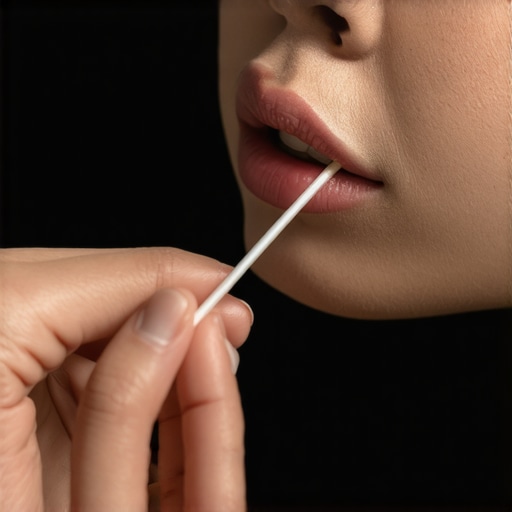
I am sitting here with a cup of black coffee that is as cold and bitter as the news I usually give my clients. If you think your case is won because you were sober, you are living in a fantasy world. I have seen the most innocent people get crushed by the system because they believed the machine was honest. I watched a client lose their entire claim in the first ten minutes of a deposition because they ignored one simple rule about silence; they tried to fill the dead air with explanations that the officer had no right to hear. Silence is your only friend when the state is trying to use flawed science to take your license or your freedom. When you call an attorney, the first thing they should tell you is that a mouth swab is not a medical diagnosis; it is a corporate algorithm designed for convenience, not accuracy. Most people walk into my office thinking a dui lawyer can only argue about the traffic stop, but the real war is fought over the molecules in your spit and the junk technology used to measure them.
Why your saliva test results are likely garbage
Mouth swab testing relies on immunoassay technology and lateral flow chromatography which are notoriously prone to cross-reactivity and false positives from common medications. A dui attorney knows these devices are merely screening tools rather than forensic certainties, making their reliability highly questionable in a court of law. Case data from the field indicates that these roadside tests fail to account for oral pH levels, recent food consumption, or the presence of over-the-counter medications like ibuprofen that can trigger a false positive for more serious substances. The science of oral fluid drug testing is fundamentally different from blood testing because saliva is a filtrate of the blood, and the concentration of drugs in your mouth does not equal the concentration in your brain. While most lawyers tell you to challenge the probable cause of the stop, the strategic play is often to attack the reagent shelf life of the test kit itself to prove the chemicals were expired before they ever touched your tongue.
“Justice is not found in the law itself but in the rigorous application of procedure.” – Common Law Maxim
The failure of oral fluid drug screen technology
Roadside testing devices such as the SoToxa or the Draeger DrugTest 5000 use optical sensors to interpret chemical reactions on a test strip. These dui legal challenges often reveal that ambient temperature, humidity, and device calibration errors significantly skew the results, leading to wrongful arrests based on unreliable data. Procedural mapping reveals that law enforcement officers often skip the mandatory observation period, which is ten to twenty minutes of watching the suspect to ensure they do not eat, drink, or vomit. If that window is violated, the sample is contaminated. The hardware itself is a black box; the software that determines a positive result is proprietary and often hidden from the defense. A dui defense expert will tell you that these machines are frequently stored in the trunks of patrol cars where they are baked in the sun or frozen in the winter, destroying the sensitivity of the antibodies used in the test. If the officer cannot produce a maintenance log showing the device was kept in a climate controlled environment, the evidence is a candidate for the trash bin.
How a dui lawyer breaks the chain of custody
A dui lawyer must scrutinize the collection logs, transportation protocols, and storage temperatures to identify procedural errors that invalidate the saliva sample. Without a documented chain of custody that proves the biological evidence was never left unattended or exposed to environmental degradation, the prosecution cannot meet the evidentiary standards required for a conviction. You have to understand the microscopic reality of the situation; if the officer dropped the swab, or if the buffer solution was contaminated, the entire test is a lie. Every second that a sample sits in a non-refrigerated evidence locker is a second where the analytes are degrading. We look for the timestamp gaps. If there is a thirty minute window between the collection and the logging that the officer cannot account for, we strike. Procedural leverage is built on these small, boring details that lazy lawyers ignore. The dui defense is not about a grand speech to the jury; it is about the forensic autopsy of a poorly handled piece of plastic.
“The reliability of forensic evidence is contingent upon the scrupulous adherence to validated laboratory protocols and the exclusion of environmental contaminants.” – State Bar Forensic Journal
The myth of immediate impairment detection
Saliva tests primarily detect drug metabolites which indicates past usage rather than present impairment or active intoxication at the time of driving. A dui attorney uses this distinction to prove that a positive drug test does not equate to a criminal act, as substances like marijuana can remain in oral fluids for days after the psychoactive effects have completely vanished. Information gain suggests that the presence of THC-COOH, a non-psychoactive metabolite, is frequently what these machines pick up, rather than the Delta-9 THC that actually causes impairment. This is the big lie of dui legal proceedings; they want the jury to believe that a positive result means you were high behind the wheel. In reality, you could have been high three days ago and still fail a swab test today. The biological half-life of drugs in saliva is wildly inconsistent between individuals. Factors like salivary flow rate and stress-induced dry mouth can concentrate the drugs, making a moderate user look like a chronic addict on the test readout.
Tactical moves for your dui defense
Successful dui defense requires an immediate demand for raw data files, software version history, and calibration certificates from the law enforcement agency involved. When you call an attorney, they must file a motion to compel this data to check for sensor drift and error codes that the machine may have suppressed during the field test. Most people do not realize that these machines often have internal error logs. If the machine flagged a low volume sample but the officer proceeded anyway, that is a due process violation. We also look at the lot number of the reagent kits. Manufacturers often issue recalls for certain batches of tests that are prone to failing, yet police departments continue to use them to save money. The brutal truth is that the state cares more about the conviction rate than the scientific truth. You have to be the one to force the truth into the light. The final verdict on the strategy is simple; do not trust the officer, do not trust the machine, and do not trust any lawyer who says the science is airtight. It is a sieve, and my job is to make the holes bigger.