How to Prove the Police Violated Your Miranda Rights and Dismiss Your Case
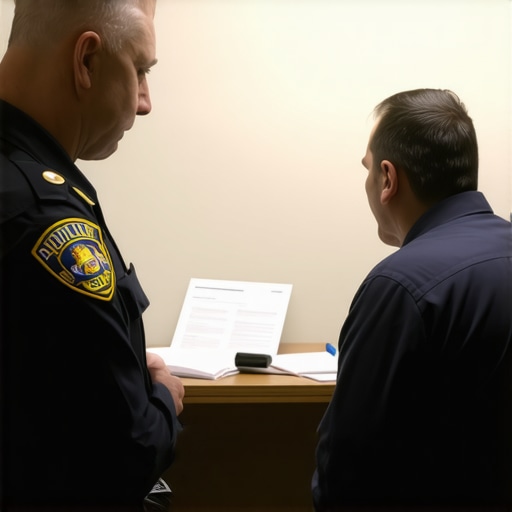
I smell the stale coffee in my mug and the scent of ozone from the printer. Your case is likely in trouble. You talked too much. Most people do. I watched a client lose their entire claim in the first ten minutes of a deposition because they ignored one simple rule about silence. They thought being helpful would win over the officer. It bought them a one way ticket to a license suspension. This is the brutal truth of the legal system. It does not care about your intent. It only cares about the record. When you are pulled over for a suspected DUI, the officer is not your friend. They are a data collector for the prosecution. Every word you utter is a brick in the wall of your own prison cell. But even the police make mistakes. When they forget the rules of the game, we find the leverage. [IMAGE_PLACEHOLDER]
The silence that saves your driver’s license
Miranda rights provide a shield for DUI suspects against self-incrimination. A dui lawyer must prove that custodial interrogation occurred without a valid waiver. If the police failed to read these legal warnings, the court may suppress your incriminating statements. This is a technical defense. It requires a forensic look at the timeline. Most drivers believe the rights must be read the moment the lights flash. This is false. The obligation only triggers when you are in custody and under interrogation. I have seen hundreds of cases where the officer waited until the most damaging admissions were already on tape. This is why you say nothing. Not a word about where you were. Not a word about what you drank. Silence is the only tool that works 100 percent of the time.
“Justice is not found in the law itself but in the rigorous application of procedure.” – Common Law Maxim
The definition of custody in a roadside stop
Legal custody exists when a reasonable person feels they are not free to leave the arresting officer. In a dui legal context, this often happens before the formal arrest. Your dui attorney will analyze police bodycam to determine the exact moment your freedom of movement was restricted. Case data from the field indicates that judges look for specific physical indicators. Are you in the back of a squad car? Are you in handcuffs? Is the officer’s hand on their weapon? These details matter. The smell of hot asphalt and the distant hum of the freeway don’t change the fact that a six by six foot space around a patrol car can become a de facto jail cell. If the officer treats you like a prisoner, they must read you the rights of a prisoner. If they do not, we have our first crack in their case.
The interrogation tactics that break cases
Police interrogation includes any words or actions likely to elicit an incriminating response. A dui defense strategy identifies when an officer moved from routine traffic stop questions to investigative questioning. Proving this shift without Miranda warnings is how a lawyer wins a motion to suppress. Procedural mapping reveals that officers often use the “functional equivalent” of questioning. They might make a comment about how dangerous drunk driving is, hoping you will apologize. An apology is a confession. I once saw a case dismissed because the officer talked to his partner about the evidence within earshot of the suspect, baiting a response. This was a violation. It was subtle, but it was enough to kill the evidence.
The path to a motion to suppress
A motion to suppress is the formal legal filing used to exclude evidence. Your dui attorney argues that the police violated the Fifth Amendment. If the judge agrees, the prosecution loses the ability to use your confessions at trial. This is a high stakes battle. It is not about whether you were driving. It is about whether the state followed the rules. While most lawyers tell you to plead out for a lesser charge immediately, the strategic play is the aggressive suppression hearing to kill the state’s evidence before it reaches a jury. We look at the ink color on the waiver form. We look at the timestamp on the video. We look for the exact second the officer’s tone changed from helpful to accusatory.
“The Miranda warning is not a mere formality but a fundamental safeguard against the inherent pressures of the interrogation environment.” – Miranda v. Arizona, 384 U.S. 436 (1966)
The evidence in the police bodycam footage
Bodycam footage provides an objective record of the arrest timeline. A dui lawyer looks for the gap between the handcuffs being applied and the Miranda warning being read. Any statements made in that gap are indirectly inadmissible in a dui case. The camera does not lie, but it can be obscured. I have spent 14 hours deconstructing a single hour of footage to find the moment an officer muted their mic. Why did they mute it? What were they saying? Often, they are coaching the suspect or discussing the lack of evidence. When the audio cuts out, the credibility of the arrest drops. We use this to create doubt. We use this to win.
The myth of the automatic dismissal
A Miranda violation does not lead to an automatic dismissal. Instead, it leads to the suppression of evidence. A skilled dui attorney uses this procedural leverage to force the prosecutor to offer a lesser charge or drop the case due to lack of evidence. Do not listen to the jailhouse lawyers who say your case is over if they forgot to read the card. It is just the beginning of a long, cold war of motions. If the state has other evidence, like a blood test or a witness, they can still proceed. Our job is to strip them of every weapon until they have nothing left to present to a jury. We bleed their case out until it dies on the vine.
The contrarian truth about immediate pleas
While most lawyers tell you to plead out immediately, the strategic play is often an aggressive suppression hearing. This forces the arresting officer to testify under oath about their procedure. Often, the officer contradicts their own police report, creating reasonable doubt. This is the ROI of litigation. You are paying for the fight, not the paperwork. In a courtroom, the officer’s memory is the weakest link. They process dozens of arrests a week. They forget the details. They mix up the names. When they are on the stand, under the pressure of cross examination, the truth about their procedural failures comes to light. That is when we strike.
The role of the American Bar Association standards
The American Bar Association sets guidelines for the effective assistance of counsel. A dui attorney must investigate all procedural errors, including Miranda rights violations. Failing to challenge an illegal confession can be grounds for ineffective assistance in a post-conviction relief motion. This is the microscopic reality of the law. Every detail, from the phrasing of the deposition objection to the timing of the motion to dismiss, must be calculated. We do not leave your freedom to chance. We do not accept the state’s version of events as the gospel truth. We verify everything. We trust nothing.
The final verdict on procedural integrity
Winning a dui case through Miranda rights requires a meticulous procedural mapping of the arrest. It is not about the truth of the crime. It is about the legality of the government’s conduct. Protecting your civil liberties is the primary defense. When the police overstep, the law provides a remedy. But that remedy is not a gift. You have to take it. You have to hire someone who knows where the bodies are buried in the police manual. You have to be willing to sit in the silence of a courtroom and wait for the state’s case to crumble. That is how you survive a DUI charge. Call an attorney who knows how to fight.