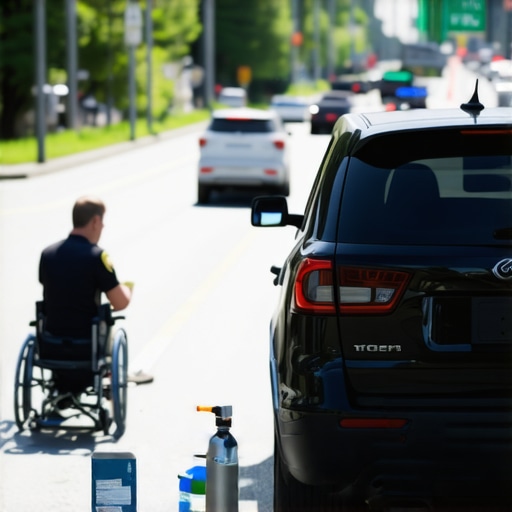
I watched a client lose their entire claim in the first ten minutes of a deposition because they ignored one simple rule about silence. It was a cold Tuesday, and the room smelled like stale coffee and desperation. My client, a diabetic who had suffered a severe hypoglycemic episode behind the wheel, thought that explaining his medical history to the prosecutor would lead to an immediate dismissal. He was wrong. He kept talking, trying to fill the silence, and eventually admitted he had not checked his glucose levels before driving. That single admission turned a medical emergency into a case of criminal negligence. The law is not a social worker. The courtroom is a theater of procedure, and if you do not follow the script, you will be crushed by the machinery of the state. You think your medical alert bracelet is a get out of jail free card. It is not. It is merely another piece of evidence that a skilled prosecutor will twist to prove you knew you were too impaired to operate a motor vehicle. You need to understand that the moment the blue lights flash, the officer is not there to help you. They are there to build a file.
The myth of the medical defense
A medical condition during a traffic stop is not an automatic immunity. Officers are trained to interpret physical impairment as DUI evidence regardless of the source. Your blood sugar levels or neurological tremors will be documented as probable cause for an arrest unless handled with immediate legal counsel. When you are pulled over, the officer is performing a mental checklist. They are looking for bloodshot eyes, slurred speech, and fumbling movements. These are the exact symptoms of a stroke, a diabetic low, or an inner ear infection. The officer will not stop to ask if you need an ambulance. They will ask you to step out of the vehicle. If you cannot stand straight because of a back injury, they will write down that you were swaying. If your speech is thick because of a neurological disorder, they will write down that your breath smelled of alcohol even if it did not. This is why you must call an attorney before you start offering excuses. The legal system operates on the assumption that the officer’s observations are objective truths until a dui lawyer proves otherwise in a court of law.
“Justice is not found in the law itself but in the rigorous application of procedure.” – Common Law Maxim
The trap of the roadside eye test
The Horizontal Gaze Nystagmus test is a forensic tool designed to detect alcohol consumption but it is frequently triggered by medical issues like multiple sclerosis or inner ear infections. An officer will rarely acknowledge these variables at the roadside, making DUI defense strategies essential for litigation. Let us look at the microscopic reality of the HGN test. The officer holds a stimulus, usually a pen or a small flashlight, twelve to fifteen inches from your nose. They are looking for three specific clues: the lack of smooth pursuit, distinct and sustained nystagmus at maximum deviation, and the onset of nystagmus prior to forty-five degrees. If you have a natural nystagmus or a brain injury, your eyes will jerk. To the officer, this is a binary result. You pass or you fail. There is no middle ground for medical nuance. They are following the NHTSA (National Highway Traffic Safety Administration) manual, which is a rigid set of rules that does not account for your specific biology. When you call an attorney, we look at the body cam footage to see if the officer even held the stimulus at the correct height or for the required duration. Most of the time, they do not. They are in a hurry to get you in handcuffs.
The silence that saves your license
Silence is your most powerful legal weapon during a police encounter. Every word you speak is recorded evidence that a dui attorney must later explain away in front of a jury. Invoking your right to remain silent is the only way to prevent self-incrimination when your body is failing you. Most people think that if they just explain the situation, the officer will understand. This is a fatal mistake. The officer is recording everything. If you say, I feel dizzy because I have not eaten, the prosecutor will argue you were driving while fatigued or impaired by a lack of self-care. If you say, My legs are shaking because of my Parkinson’s, they will use that to justify why you failed the walk and turn test. The strategic play is to state clearly: I am having a medical emergency, I need a doctor, and I will not answer questions without my lawyer. Then, you stop talking. Do not argue. Do not plead. The silence will feel heavy, but it is the only thing protecting your future. A dui lawyer can work with silence. We cannot work with a confession of physical weakness that the state calls intoxication.
The hidden danger of the chemical test
Chemical testing such as breathalyzers or blood draws can produce false positives for DUI based on metabolic processes. Diabetics in ketoacidosis produce isopropyl alcohol on their breath, which infrared spectroscopy machines often misidentify as ethyl alcohol. This is where dui legal expertise becomes mandatory to challenge toxicology reports. The machine is a tool, not a god. It works on the principle of Henry’s Law, assuming a fixed ratio between the alcohol in your breath and the alcohol in your blood. But if you have GERD (Gastroesophageal Reflux Disease), the acid in your throat can bring raw alcohol or stomach gases into your mouth, spiking the reading. If you are on a ketogenic diet, your body is literally producing a substance that the breathalyzer is designed to detect as booze. You are being arrested for a chemical reaction that has nothing to do with drinking. This is why dui defense requires more than just a lawyer; it requires a strategist who understands the science of the machine and the failure points of the laboratory. We must subpoena the maintenance logs of the specific machine used. If that machine has not been calibrated within the last ten days, the evidence is garbage.
“The right to counsel is the right to a shield against the overreach of the state.” – American Bar Association Journal
The high cost of physical compliance
Physical compliance with field sobriety tests is often voluntary but officers rarely clarify this legal distinction. If you have physical disabilities, attempting these tests creates false evidence of impairment that a dui attorney must then fight to suppress. Imagine trying to walk a straight line, heel to toe, on the side of a busy highway at 11 PM with strobe lights flashing in your face and cars whipping by at seventy miles per hour. Now imagine doing that with a fused vertebrae or an inner ear imbalance. You will fail. You are being asked to perform a physical feat that most sober, healthy people would struggle with, under conditions designed to make you anxious. The contrarian data point here is that while most lawyers tell you to be polite, the strategic move is to refuse the physical tests entirely. You will still be arrested. The officer has already decided to arrest you. But if you refuse the tests, there is no video of you stumbling for the jury to see. There is no scoring sheet where the officer marked eight out of eight clues of impairment. You have robbed the state of their most visual evidence. You have forced them to rely on their subjective opinion, which is much easier for a dui lawyer to dismantle on the stand.
The strategic window after the handcuffs click
The post-arrest period is the most critical phase for evidence preservation in a medical DUI case. Obtaining a private blood draw immediately after release can provide the exculpatory evidence needed to prove sober blood chemistry. You cannot wait for the state to do the right thing. They will hold your blood sample for months in a warm evidence locker, letting it ferment and degrade. You need your own data. The moment you are released, you go to a private lab or an emergency room. You get a full metabolic panel. You document your glucose, your ketones, and your blood alcohol content at a certified facility. This creates a parallel record that we can use to impeach the state’s findings. This is how you win. You do not win by being the nicest person at the traffic stop. You win by being the most prepared litigant in the courtroom. DUI legal battles are won in the margins. They are won by the dui attorney who knows that the officer’s training is a veneer of professionalism over a foundation of guesswork. Stop trusting the system to recognize your illness. Start using the law to protect your life.