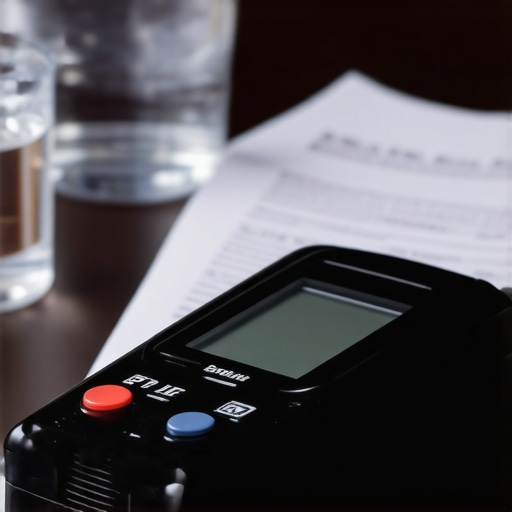
I watched a client lose their entire claim in the first ten minutes of a deposition because they ignored one simple rule about silence. They felt the need to fill the void. In a DUI case, that void is the time between your last drink and the moment the officer pulls you over. Most people think a high number on a breathalyzer is the end of the road. It isn’t. It is the beginning of the forensic math. You might be sitting in a cell with a 0.09 reading, yet you were actually a 0.07 when you were behind the wheel. This is the reality of the rising blood alcohol defense. It is not a loophole. It is human biology and physics. I drink my coffee black and I take my legal strategy cold. If you don’t understand the rate of absorption, you are just another statistic for the prosecutor’s office.
The science of the rising blood alcohol defense
The rising blood alcohol defense works because your BAC levels continue to climb after your last drink as the pyloric valve releases alcohol into the small intestine. If the chemical test occurs an hour after the traffic stop, the result reflects a peak that did not exist during driving. Case data from the field indicates that the average person takes thirty to ninety minutes to fully absorb alcohol into the bloodstream. If you were pulled over shortly after finishing a drink at a restaurant, that alcohol was still sitting in your stomach. It was not in your brain. It was not impairing your motor skills. By the time you reach the station and blow into the machine, the absorption is complete. The machine captures your peak, not your state of being at the time of the stop.
“Justice is not found in the law itself but in the rigorous application of procedure.” – Common Law Maxim
Why your breathalyzer result is a lie
The breathalyzer result is a snapshot of a moving target because infrared spectroscopy cannot distinguish between residual mouth alcohol and deep lung air. The machine assumes a partition ratio of 2100 to 1, which is a generalized average that does not account for individual metabolic rates. Procedural mapping reveals that the fifteen minute observation period required by most states is often ignored or performed poorly by tired officers. If you burped, hiccuped, or had acid reflux within that window, the results are scientifically invalid. A dui attorney knows that the machine is a calculator, not a judge. It operates on assumptions that can be dismantled with the right forensic evidence. Most dui legal experts will tell you the machine is infallible. They are wrong. It is a sensitive instrument calibrated by humans who make mistakes.
Tactical advantages of a delayed chemical test
While most dui defense lawyers tell you to fear a high test result, the strategic play is often highlighting the delay in testing to prove your BAC was lower while you were actually behind the wheel. The longer the gap between the stop and the test, the more room there is for the rising blood alcohol argument. If the state waits two hours to draw blood, they are essentially guessing what your levels were two hours prior. This requires retrograde extrapolation, a process so filled with variables that it often fails to meet the burden of proof in a dui lawyer‘s hands. Factors such as when you last ate, the type of alcohol consumed, and your body weight all change the slope of the curve. Without knowing the exact point where you stopped drinking, the prosecution is throwing darts in the dark.
The ghost in the settlement conference
The prosecutor knows that a rising blood alcohol argument creates reasonable doubt, which is why they often push for a quick plea before your dui attorney can hire a toxicologist. They want you to believe the number on the paper is absolute. It is a ghost. It is a representation of your body at its most saturated point, not at its most functional point. Forensic toxicology is a weapon. When we map out the timeline of your evening, we often find that the state’s case is built on a physiological impossibility. If you were driving at 10:00 PM and tested at 11:30 PM, the 0.08 you see today was likely a 0.05 when you were actually in the driver’s seat. Call an attorney who understands that the clock is just as important as the chemistry.
“The integrity of the judicial system relies on the precision of the evidence presented against the accused.” – ABA Standards for Criminal Justice
Mistakes made during the roadside investigation
The standardized field sobriety tests are designed for you to fail regardless of your sobriety because they measure divided attention rather than impairment. An officer sees a sway or a missed step and attributes it to alcohol, but they rarely ask about the absorption phase of the drinks you just had. Procedural mapping reveals that officers are trained to build a narrative of guilt from the first second of contact. They ignore the fact that you followed all traffic laws and only focus on the smell of alcohol. But smelling like a drink is not a crime. Being over the limit is. If the rising BAC defense is applicable, your performance on those tests might actually be perfect, yet the subsequent breath test shows a high number. This disconnect is where cases are won.