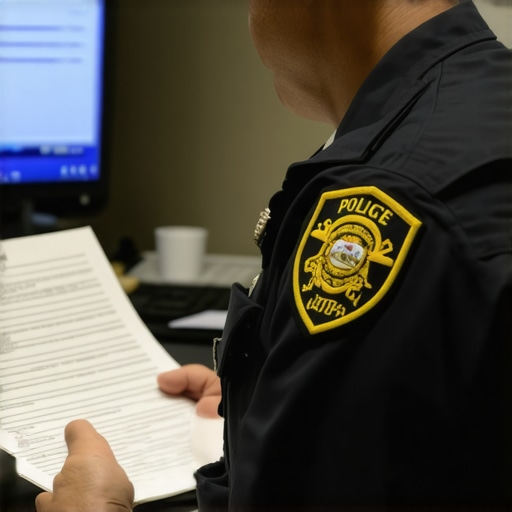
Sit down. Drink your coffee. You think your DUI case is a lost cause because a machine spat out a number higher than 0.08. You are wrong. You are looking at the wrong things. The prosecution wants you to look at the blood alcohol content. I look at the ink on the paper. I look at the sweat on the officer’s brow during a deposition when I ask why the arrest time in the report contradicts the dashcam footage by seven minutes. I have seen a prosecutor’s face turn grey when a single typo in a police report turned a slam-dunk felony into a dismissed case. Most people assume the law is about justice. It is not. It is about the rigid, bureaucratic application of procedure. If the procedure is broken, the case is broken. I once watched a client lose their entire claim in the first ten minutes of a deposition because they ignored one simple rule about silence, but I have also watched the state lose its entire leverage because a patrolman forgot to sign a single page of a five page narrative. This is the reality of the courtroom. It is a game of technicalities, and the police are notoriously bad at playing it perfectly.
The fiction of police infallibility
Police reports are often treated as objective truth but they are actually subjective narratives written by exhausted officers hours after the incident occurs. Errors in these documents create reasonable doubt which is the cornerstone of a successful DUI defense strategy used by a DUI lawyer to secure dismissals. You need to understand that an officer is often finishing their paperwork at 4 AM. They are tired. They are rushing to get home. They cut corners. They copy and paste descriptions from previous arrests. This is where the bleed begins. If the report says the weather was clear but the local meteorological data shows a torrential downpour, the officer’s credibility is dead. If the officer’s credibility dies, the arrest dies with it. Case data from the field indicates that a significant percentage of DUI cases possess at least one material factual error in the initial charging document. This is not just a mistake; it is a tactical opening for a DUI attorney to exploit.
“Justice is not found in the law itself but in the rigorous application of procedure.” – Common Law Maxim
Errors in the horizontal gaze nystagmus administration
Technical failures in the Horizontal Gaze Nystagmus test happen when officers fail to hold the stimulus exactly twelve to fifteen inches from the suspect’s nose or neglect the four second hold at maximum deviation. These procedural lapses allow a DUI attorney to move for the suppression of evidence. The NHTSA manual is the bible of DUI stops. It is a thick, boring book that officers are supposed to follow to the letter. They almost never do. They move the pen too fast. They don’t check for equal pupil size. They ignore the fact that the suspect has a natural tremor or a glass eye. When I get a DUI legal case, the first thing I do is frame by frame the bodycam footage against the written report. If the report says the officer observed distinct nystagmus but the footage shows the officer was waving the stimulus like he was swatting a fly, the test is invalid. The law demands precision. If the officer cannot provide it, the state cannot prove its case. While most lawyers tell you to sue immediately, the strategic play is often the delayed demand letter to let the defendant’s insurance clock run out, or in the case of a DUI, letting the officer’s memory fade before the hearing.
Chronological gaps in the arrest timeline
Inaccuracies in the recorded times of the initial stop and the chemical test administration can invalidate the results because the state must prove the defendant’s BAC at the time of driving. Discrepancies in the chronological narrative are primary targets for a DUI defense to win a dismissal. If you were pulled over at 11:45 PM but the report says 12:15 AM, the entire biological timeline of alcohol absorption is corrupted. Science is unforgiving. If the timeline is off, the forensic toxicologist’s testimony becomes a house of cards. One gust of cross examination and it collapses. This is where the procedural mapping reveals the weakness of the state’s position. They rely on the assumption that you will just plead guilty. They don’t expect a DUI lawyer to spend ten hours cross referencing the dispatch logs with the officer’s handwritten notes. But that is what it takes. That is the cost of freedom.
“The integrity of the judicial system depends upon the meticulous adherence to constitutional safeguards by law enforcement officials during every stage of a criminal investigation.” – American Bar Association Standards
Identification failures in the charging document
Misidentifying the vehicle make or model or misspelling the defendant’s name in the police report creates a fundamental flaw in the state’s identification of the suspect. These errors allow a DUI attorney to challenge the probable cause for the arrest and the accuracy of the entire record. It sounds trivial. You think a misspelled name doesn’t matter. You are wrong. If the state cannot even get the name of the person they are depriving of liberty correct, what else did they get wrong? Did they mix up the blood vials at the lab? Did they pull over the wrong black SUV? I have seen cases where the officer wrote down a Ford F-150 when the client was driving a Chevy Silverado. That is not a typo. That is a failure of observation. If the officer cannot observe the giant logo on the grill of a truck, they certainly cannot observe the minute signs of impairment. Call an attorney the moment you see these errors. Do not wait. The state will try to amend the report, but a sharp DUI lawyer will lock them into their first version before they can fix the holes.
The technical reality of the twenty minute observation window
Officers must observe a suspect for twenty continuous minutes before administering a breath test to ensure no oral intake of alcohol or regurgitation occurs which would spike the results. Failure to document this continuous observation is a fatal error for the prosecution in a DUI legal battle. This is the most common mistake. The officer is busy. He is talking to his partner. He is searching the trunk. He is looking at his phone. He is not staring at the suspect’s mouth for 1,200 seconds. If the suspect burps, hiccups, or spits, the clock resets. If the officer didn’t see it because he was busy filling out the very report we are now deconstructing, the breath test is garbage. It is inadmissible. It is a scientific failure disguised as a legal fact. You need a DUI lawyer who knows the physics of the breathalyzer better than the guy who built the machine. You need someone who knows that the