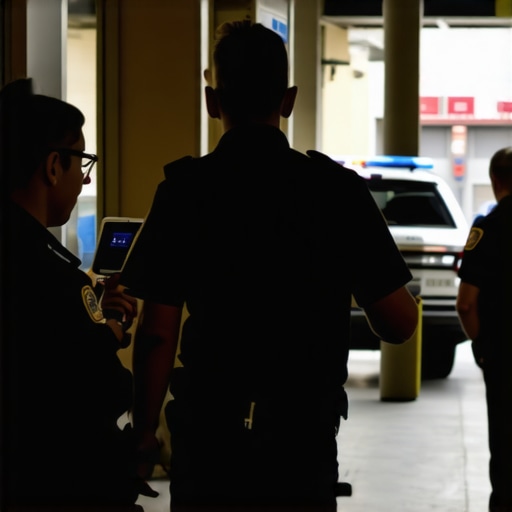
You sit in a room that smells like floor wax and old paperwork, the scent of strong black coffee lingering on the breath of the officer across from you. You think silence is your shield. It is not. I watched a client lose their entire driving privilege for a decade in the first ten minutes of a station house interaction because they ignored one simple rule about the difference between a roadside test and the official chemical demand. He thought he was being clever by being difficult. Instead, he handed the prosecution a narrative of guilt on a silver platter. This is the reality of the station house. It is a controlled environment designed to extract data or, barring that, to document your non-cooperation as a weapon against you. The law is a cold, indifferent machine, and once you enter that room with the Intoxilyzer, the gears are already turning against you. You are likely dehydrated, stressed, and operating under the delusion that your Fifth Amendment rights apply to your breath. They do not. A dui lawyer will tell you that the station house breath test is a physical act, not a testimonial one, and the refusal has immediate, cascading consequences that no amount of smooth talking can undo.
The immediate fallout of saying no to the machine
Refusing the breathalyzer at the station immediately triggers an administrative license suspension under implied consent laws. A dui attorney understands that this refusal is not merely a choice but a legal waiver that permits the Department of Motor Vehicles to revoke your driving privileges without a criminal conviction. When you tell the officer you will not blow into the evidentiary device, you are not exercising a right; you are violating a civil contract you signed when you received your license. The officer will likely hand you a piece of paper, often yellow or pink, which serves as your temporary permit and your notice of suspension. This document is the start of a very short clock. In many jurisdictions, you have only seven to ten days to request a hearing to contest this suspension. If you miss that window, your license is gone. There is no judge to plead with at that point. The system is automated. Case data from the field indicates that the vast majority of drivers who refuse the test do not realize the administrative suspension is often longer than the suspension they would face for a first-time conviction with a high blood alcohol concentration. The dui defense strategy must then pivot to a two-front war: one in the administrative office and one in the criminal courtroom. Procedural mapping reveals that the prosecution will use your refusal to argue that you knew you were intoxicated and were attempting to hide the evidence.
“Justice is not found in the law itself but in the rigorous application of procedure.” – Common Law Maxim
Why implied consent laws are a trap for the unwary
Implied consent laws establish that by operating a motor vehicle, you have already consented to chemical testing of your breath, blood, or urine. Your dui lawyer will emphasize that this legal obligation exists independently of your Miranda rights, meaning you do not have the right to an attorney before deciding. This is the part that catches everyone off guard. You ask for your lawyer, and the officer records it as a refusal. In the eyes of the law, you don’t get to consult an expert before deciding to fulfill the promise you made to the state when you took your driver’s license photo. The trap is the timing. The officer reads you an implied consent warning, a block of text filled with legalese that basically says: blow or lose your license. If you hesitate, if you ask questions, if you try to negotiate, the officer simply checks the box for “refusal by conduct.” While most lawyers tell you to sue immediately, the strategic play is often the delayed demand letter in civil cases, but in DUI defense, the only play is an immediate demand for the calibration logs of the machine you just refused. Even if you didn’t blow, the state of the machine matters because it speaks to the reasonableness of the officer’s demand. The dui attorney must examine if the officer even had the legal authority to make the request in the first place.
The technical failure of the breath testing equipment
Breath testing equipment like the Intoxilyzer 8000 or 9000 series relies on infrared spectrometry to measure ethanol molecules in your deep lung air. Any dui lawyer knows that these machines are prone to technical errors, radio frequency interference, and calibration drift, which can lead to false positives. The machine is essentially a very expensive calculator that makes an assumption: that the ratio of alcohol in your breath to alcohol in your blood is exactly 2100 to 1. This is known as Henry’s Law, but humans are not standardized lab equipment. Your body temperature, your hematocrit levels, and even your breathing pattern can throw this ratio off. If you have a fever, the machine will overstate your alcohol level. If you have gastroesophageal reflux disease (GERD), the machine might pick up mouth alcohol rather than lung alcohol. This is why the 15 or 20-minute observation period is so important. The officer is supposed to watch you to ensure you don’t burp, hiccup, or vomit, which would contaminate the sample. In practice, the officer is usually filling out paperwork or checking their phone while you sit there. This lack of oversight is where a dui defense finds its teeth. We look for the gaps in the observation log. We look for the radio frequency interference caused by the officer’s own body camera or the station house’s heavy electronics. The machine is not a god; it is a fallible tool maintained by people who are often overworked and under-trained.
“Effective assistance of counsel requires a thorough understanding of the technicalities of chemical testing.” – American Bar Association Standards
What the defense doesn’t want you to ask about the observation period
The observation period is a mandatory procedural requirement where the testing officer must continuously observe the subject for a specific duration, usually twenty minutes. A dui attorney will use any procedural lapse during this time to suppress the evidence or challenge the refusal’s validity in court. If the officer turned their back to grab a form, the observation is broken. If you were left in the room alone for sixty seconds, the observation is broken. This is not a technicality; it is the foundation of the scientific validity of the test. Without a clean observation period, the test results are junk science. In a refusal case, the observation period still matters because it often reveals the officer’s bias. Was the officer actually prepared to give the test, or were they just rushing to get the refusal so they could finish their shift? I have seen cases where the officer started the timer and then walked out of the room to get a cup of coffee. That is a violation of protocol that can be used to challenge the officer’s credibility. The brutal truth is that most officers view the station house breath test as a formality, and formalities are where they get sloppy. They expect you to be cowed by the badge and the machine. When you aren’t, they often skip steps in their frustration. That frustration is where your dui legal team finds the leverage to break the case wide open.
How a refusal changes your criminal defense strategy
Criminal defense strategy in a DUI case shifts significantly when a breathalyzer refusal is involved, as the prosecution lacks a blood alcohol concentration (BAC) reading. The dui lawyer must instead focus on discrediting the officer’s observations of impairment, such as slurred speech, bloodshot eyes, or unsteady gait. Without the number (the .08 or higher), the state has to prove you were actually impaired, not just that you were over a legal limit. This is a much harder standard for them to meet. They will bring in the body camera footage. They will bring in the field sobriety test results. But each of those is subjective. A good dui attorney can explain away bloodshot eyes as fatigue or allergies. We can explain away a failed walk-and-turn test as the result of poor lighting, uneven pavement, or the sheer nervousness of being interrogated by an armed officer. The refusal itself is the big hurdle. The prosecutor will tell the jury, “If he wasn’t drunk, why didn’t he just blow?” Our job is to provide the alternative narrative: “He didn’t blow because he didn’t trust a machine that hasn’t been calibrated in six months, and he didn’t trust an officer who was already treating him like a criminal.” It is a battle of perceptions. You are no longer fighting a math problem; you are fighting a story. And stories are much easier to dismantle than hard data.
Why you need a dui lawyer before the booking is finished
Calling a dui lawyer immediately upon arrest is essential to protect your rights and ensure that any station house statements are not used against you. A dui attorney can provide immediate legal advice on whether to consent to a blood test if a warrant is issued after a breath refusal. The moments after the refusal are the most dangerous. The police will try to keep you talking. They will act friendly, offering you water or a phone call, all while the recording is still running. They are looking for the “slur.” They are looking for the admission. “I only had two beers” is the most common sentence that sinks a DUI case. A lawyer stops the bleeding. A lawyer ensures that the booking process follows the letter of the law. More importantly, a lawyer can start the process of securing the video evidence before it is “accidentally” deleted. Station house cameras have limited storage. If you wait three weeks to hire a dui defense expert, that footage of you standing perfectly still and speaking clearly while the officer claims you were falling over might be gone forever. You need someone to fire off the spoliation letters immediately. This is not about being difficult; it is about preservation. The system is designed to preserve evidence that hurts you; you need a professional to preserve the evidence that helps you.
The myth of the portable breath test versus the station house chemical test
Portable breath tests (PBTs) used at the roadside are generally inadmissible as evidence of guilt and are only used to establish probable cause for an arrest. In contrast, the station house chemical test is the evidentiary test that carries legal weight and refusal penalties. Many people confuse the two. They think because they blew into the little handheld device on the side of the highway, they have fulfilled their obligation. They haven’t. The PBT is a toy compared to the station machine. If you refuse the PBT, there are usually no license consequences. But if you refuse the big machine at the station, the hammer falls. This confusion is often exploited by officers who don’t clarify the difference. They let you think you’ve already cooperated, then hit you with the real demand when you’re tired and frustrated at the station. Understanding this distinction is the core of dui legal literacy. The station house machine is a sophisticated piece of analytical chemistry equipment (supposedly), while the PBT is a fuel-cell sensor that can be tripped by cigarette smoke or a recent burp. Always know which machine you are facing. The dui attorney will treat these two devices very differently in a motion to suppress. The PBT is an investigative tool; the station machine is a witness for the prosecution.
What happens when the warrant for blood arrives
Search warrants for blood are increasingly common after a breathalyzer refusal, as law enforcement seeks to obtain scientific evidence of intoxication through a blood draw. A dui lawyer will tell you that once a judge signs a warrant, you no longer have the legal right to refuse, and physical force can be used to obtain the sample. This is the endgame of the refusal. The officer calls a magistrate, gets a digital signature, and suddenly you are being strapped to a chair while a technician or a nurse approaches you with a needle. This blood sample is far more accurate than breath, and it is much harder to fight in court. However, it is not invincible. Was the blood drawn by a qualified professional? Was the site cleaned with a non-alcoholic swab? If they used an alcohol-based wipe to clean your arm before sticking the needle in, the whole sample is contaminated. Was the blood stored in a tube with the correct amount of anticoagulant and preservative? If the blood ferments in the tube because it wasn’t refrigerated or because the chemicals were expired, it will produce its own alcohol, leading to a false high reading. This is the microscopic reality of dui defense. We follow the blood from the arm to the lab to the storage locker. We look for the chain of custody breaks. We look for the lab technician with a history of errors. Even a warrant doesn’t make the evidence perfect. It just makes the fight more technical.