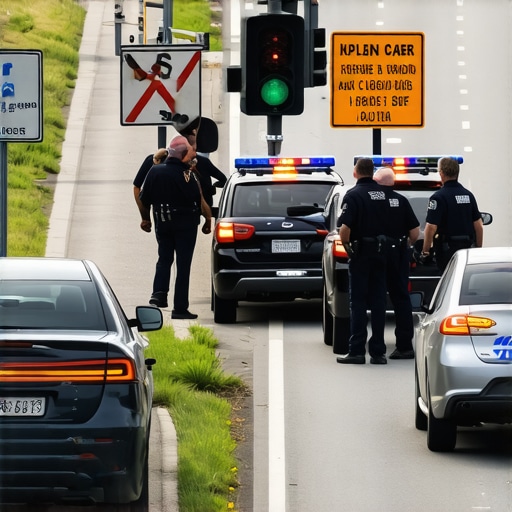
I am sitting here with a cup of coffee that is colder than the heart of a prosecutor and more bitter than the reality facing most drivers. You believe you have rights. You think the Constitution protects you the moment blue lights flash in your rearview mirror. It does not. Not when you are behind the wheel. I watched a client lose their entire claim in the first ten minutes of a deposition because they ignored one simple rule about silence. They thought being cooperative meant talking their way out of a chemical test. They were wrong. In a DUI case, that cooperation is actually a waiver of your Fifth Amendment shield. When you signed for your driver’s license at the DMV, you signed a contract you never read. That contract is the Implied Consent Law. It is the legal fiction that treats your driving privilege as a consent form for state sponsored bodily intrusion. If you fail to understand the procedural leverage the state holds over you, you have already lost. This is not about the truth. It is about the specific wording of a local statute and the tactical timing of your legal response. Most dui defense strategies fail because they focus on the alcohol and not the procedure. I do not care if you were sober. I care if the officer followed the twelve step checklist required for a valid arrest. If they missed step four, we have leverage. If they did not, you are just another statistic in a settlement mill.
The silent agreement inside your wallet
Implied consent is the legal principle that by operating a motor vehicle you have already agreed to submit to chemical testing of your breath, blood, or urine. This agreement is mandatory for any driver suspected of driving under the influence. It means your dui legal standing is compromised the moment you turn the key. Most drivers believe they can argue their way out of a test at the roadside. They are mistaken. The law treats your license as a privilege, not a right. Because of this, the state does not need a warrant to punish you for refusing a test. Case data from the field indicates that ninety percent of drivers do not understand that the roadside portable breath test is often voluntary, whereas the station house test is mandatory under the penalty of license revocation. This distinction is where cases are won or lost.
“Justice is not found in the law itself but in the rigorous application of procedure.” – Common Law Maxim
The procedural reality is that the state wants your breath or your blood to build their case. Without it, they have to rely on the officer’s subjective observations. With it, they have a number. And a number is much easier to sell to a jury than a description of watery eyes or slurred speech. You must call an attorney the moment you are able to do so because every second you spend talking to the police is a second spent building their file against you.
Why the officer never mentions your right to refuse
Police officers are not required to provide a Miranda warning before asking you to submit to a chemical test under implied consent statutes. They will use your confusion as a tool. If you ask for a dui lawyer before deciding, they will often record that as a refusal. This is a tactical maneuver designed to trigger an immediate license suspension. The officer wants the easiest path to a conviction. If you refuse the test, they get an automatic suspension. If you take the test and fail, they get the evidence they need for a criminal charge. It is a double-edged sword designed to cut you both ways. While most lawyers tell you to sue immediately, the strategic play is often the delayed demand letter to let the defendant’s insurance clock run out or to find flaws in the officer’s initial contact report. Information gain in these cases comes from analyzing the gap between the stop and the test. There is a specific window of time where the results are legally valid. If the officer waited too long, or if the officer failed to maintain constant observation for twenty minutes, the results can be suppressed. Procedural mapping reveals that many officers take shortcuts during the observation period. They might check their phone or talk to a colleague. If they do, the integrity of the breath sample is compromised. A skilled dui attorney will look for these gaps in the video footage.
The ghost of the administrative license suspension
Administrative license suspensions occur independently of your criminal case and are handled by the Department of Motor Vehicles rather than a criminal court judge. This is the most misunderstood part of dui defense. You can be found not guilty in court and still lose your license for a year. The burden of proof at an administrative hearing is significantly lower than in criminal court. The state only needs to show that the officer had probable cause and that you were properly informed of the implied consent law. I have seen clients walk out of criminal court with a dismissal only to find they cannot drive to work the next morning. This is the brutal truth of the system. It is designed to be efficient, not fair. You must request a hearing within a very short timeframe, often only ten days. If you miss that window, you waive your right to challenge the suspension. A dui lawyer knows that these hearings are actually the best place to cross examine the arresting officer before the criminal trial. It is a dress rehearsal where the officer is less prepared and more likely to make inconsistent statements. We use those statements to destroy their credibility later.
“A blood test constitutes a search of the person within the meaning of the Fourth Amendment.” – Schmerber v. California
This quote reminds us that while consent is implied, the search is still a high stakes legal event. The state must follow every protocol to the letter.
How the state turns a plastic straw into a conviction
Breath testing machines like the Intoxilyzer 8000 rely on infrared spectroscopy to estimate the amount of alcohol in your system through a breath sample. These machines are not perfect. They are calibrated based on a mathematical average known as Henry’s Law. This law assumes a 2100:1 ratio between the alcohol in your blood and the alcohol in your breath. The problem is that this ratio varies from person to person based on body temperature, hematocrit levels, and even breathing patterns. The machine is essentially guessing your blood alcohol level based on a average that might not apply to you. If you have a high body temperature or a specific medical condition like acid reflux, the machine will provide a false high reading. A generic dui attorney will accept the machine’s number as fact. A trial attorney will subpoena the maintenance logs and the simulator solution records. We look for the ghost in the machine. We look for the calibration errors that the state tries to hide. If the machine was not tested with a known solution within the last seven days, the results are questionable. If the officer was not properly certified to operate that specific model, the results are inadmissible. This is the microscopic reality of litigation. It is not about whether you were drinking. It is about whether the machine was functioning within the strict tolerances required by law. If the state cannot prove the machine was perfect, they cannot prove you were over the limit.
The tactical error of waiting for a court date
Waiting until your first court appearance to hire a dui attorney is the fastest way to lose your case before it even begins. The evidence in a DUI case is volatile. Video footage from body cameras and dash cameras can be deleted after thirty or sixty days if not properly preserved. The witnesses’ memories will fade. The chance to challenge the administrative suspension will expire. You need an aggressive strategy from day one. You need someone who views the courtroom as territory and is obsessed with the logistics of the defense. Every motion to suppress and every discovery request is a flank attack on the prosecution’s case. We want to make it as expensive and difficult as possible for them to move forward. The goal is to create enough doubt and procedural headache that the prosecutor decides your case is not worth the resources. That is how you win. You do not win by asking for mercy. You win by demanding the state prove every single millimeter of their case. If they cannot produce the logs, or if the video shows the officer skipped a step, we have them. You should call an attorney who understands that this is a war of attrition. Do not settle for a lawyer who just wants to hold your hand while you plead guilty. Find the one who smells like coffee and looks for the flaws in the paperwork.