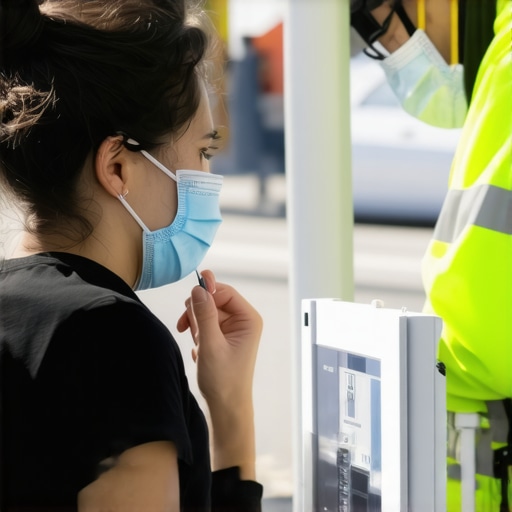
How to Challenge the Accuracy of a Roadside Mouth Swab Test
I watched a client lose their entire claim in the first ten minutes of a deposition because they ignored one simple rule about silence. They believed they could talk their way out of a laboratory result. They thought the officer was their friend. I sat there, the smell of strong black coffee filling the room, and watched them hand the prosecution the keys to their prison cell. This is the reality of the legal system. It is a machine that runs on your mistakes. If you have been subjected to a roadside mouth swab, you are already in the machine. Your only hope is a dui lawyer who knows how to break the gears. Most people think these tests are infallible. They are not. They are cheap, portable tools prone to massive error rates. If you want to survive a dui defense, you have to stop thinking about what happened and start thinking about what the state can prove. The law is not about your intent; it is about the procedure. If the procedure fails, the case fails.
The failure of the oral fluid screen
Oral fluid screens are prone to false positives because they measure metabolites rather than active impairment. A dui attorney can challenge these results by highlighting calibration errors, environmental contamination, and the test’s high margin of error compared to gas chromatography-mass spectrometry analysis performed in forensic laboratories. Procedural mapping reveals that these devices, such as the Dräger DrugCheck 5000 or the Abbott SoToxa, are sensitive to temperature and humidity. If the officer left the device in a hot squad car, the internal sensors can degrade. The science is fickle. THC, for instance, can stay in the oral cavity for hours after consumption without being active in the bloodstream. You are being arrested for a chemical ghost. Case data from the field indicates that officers often bypass the required ten to twenty minute observation period. If you drank water, smoked a cigarette, or even chewed gum within fifteen minutes of the swab, the chemical baseline is destroyed. Your dui legal team must demand the officer’s training logs to see if they even know how to maintain the device. Most do not. They treat it like a thermometer, not a complex diagnostic tool.
Why a mouth swab is not a blood test
The roadside mouth swab is a preliminary screening tool and does not carry the forensic weight of a blood draw or a breathalyzer. A dui lawyer will argue that saliva concentrations of drugs fluctuate based on pH levels, hydration, and recent oral intake, making them unreliable indicators of toxicological impairment in a criminal trial. You have to understand the difference between presence and impairment. A swab can show you had a joint three days ago. It cannot show you were high while driving. This is the contrarian data point the prosecution wants to hide. While most lawyers tell you to sue immediately, the strategic play is often the delayed demand letter to let the defendant’s insurance clock run out or to wait for the lab’s confirmatory test to contradict the roadside screen. If the roadside test says positive and the lab test says negative, the officer’s probable cause for the arrest starts to look like a guess. That guess is what we call a civil rights violation. We don’t care if you were sober; we care if the officer followed the manual. The manual is the only thing that matters in the courtroom.
“Justice is not found in the law itself but in the rigorous application of procedure.” – Common Law Maxim
The chemistry of false positives
False positives in roadside drug testing occur due to cross-reactivity with over-the-counter medications, prescriptions, and dietary supplements. A dui defense specialist uses toxicological reports to prove that common substances like ibuprofen, proton pump inhibitors, or hemp seeds can trigger a positive THC or opiate result on a mouth swab test. Look at the ELISA technology used in these kits. It is an enzyme-linked immunosorbent assay. It is looking for a specific shape of a molecule. If you take a legal medication that has a similar molecular shape, the test will flag it. It is a blunt instrument. It is like trying to identify a person by the shape of their shadow. It is not accurate enough for a criminal conviction. I have seen cases where a simple antihistamine led to an arrest. The officer sees a blue line on a plastic stick and assumes you are a criminal. They don’t care about the science; they care about the arrest quota. Your dui attorney must be the one to educate the jury on the failures of molecular binding. If the jury doesn’t trust the science, they won’t trust the arrest.
Procedural errors during roadside administration
Procedural errors during dui investigations involve the officer’s failure to maintain a sterile environment or follow the manufacturer’s instructions for swab collection. An attorney will scrutinize the dashcam footage to see if the sampling collector was handled with gloves or if it was exposed to outside contaminants before being placed in the subject’s mouth. If the officer is talking to you while holding the swab, their own breath can contaminate the sample. If it is raining, the moisture can dilute the buffer solution. The logistics of a roadside stop are chaotic. A courtroom is clinical. We take that chaos and use it to invalidate the evidence.
“The defense of a DUI charge requires an exacting scrutiny of the methods used by the government to extract biological data from the citizen.” – ABA Criminal Justice Standards
Your right to refuse the preliminary test
Refusing a mouth swab is often a legal right depending on your jurisdiction’s implied consent laws, which may only apply to evidentiary breath or blood tests. A dui lawyer can explain that preliminary alcohol screenings and oral fluid tests are frequently voluntary, and refusing them may prevent the prosecution from obtaining unreliable evidence used to establish probable cause. You need to know the law in your state. In many places, the mouth swab is just another field sobriety test, like standing on one leg. You are under no obligation to help the police build a case against you. They will tell you it is required. They will lie. That is their job. Your job is to stay silent and call an attorney. The moment you put that swab in your mouth, you are consenting to a search of your biology. Why would you give the state a gift like that? If you refuse, they might still arrest you, but they won’t have the chemical boogeyman to use against you in the preliminary hearing. This is about managing the bleed. You reduce the evidence available to the state, and you increase your leverage for a plea or a dismissal.
Strategic timing for your defense motion
A motion to suppress the mouth swab evidence must be filed strategically after discovery has revealed maintenance logs and officer training records. Your dui defense attorney will use this procedural leverage to argue that the initial stop or the administration of the test violated Fourth Amendment protections against unreasonable search and seizure. We wait. We don’t show our hand. We let the prosecution think they have a solid case based on a plastic stick. Then, we hit them with the fact that the device hasn’t been calibrated in six months. We show that the officer failed their last certification. We point out that the sample was stored in a locker that isn’t temperature controlled. By the time the prosecutor realizes the evidence is junk, they have already spent their budget on the case. That is when we negotiate. That is when we win. The courtroom is a battlefield of logistics. If you control the evidence, you control the territory.
How a lawyer breaks the chain of custody
The chain of custody for a mouth swab sample is the documented trail of every person who handled, stored, and tested the biological specimen. A dui attorney looks for missing signatures, unaccounted time gaps, or improper labeling that can lead to the exclusion of the evidence because the integrity of the sample can no longer be guaranteed. If the sample sat in an officer’s mailbox for three days, it is useless. If the lab technician didn’t sign the intake form, it is useless. These are the small, gritty details that win cases. People want a grand speech in front of a jury. I want a missing signature on a piece of paper. One is theater; the other is a dismissal. You need someone who is obsessed with the dust on the baseboards of the law. You need someone who will look at the 14 hours of boring paperwork to find the one clause that changes everything.
Moving beyond the initial arrest report
The arrest report is merely the officer’s narrative and does not constitute objective truth in a criminal dui case. An experienced dui lawyer will conduct an independent investigation, interviewing witnesses and hiring independent toxicologists to prove that the mouth swab result was a statistical anomaly or a technical failure. Do not accept the state’s version of reality. They want you to feel defeated. They want you to take the first plea deal they offer. Don’t do it. The system relies on your compliance. When you fight the science, when you challenge the procedure, and when you call an attorney who isn’t afraid of a trial, the system starts to break down. You are not a file number. You are a person whose future is being threatened by a cheap piece of plastic and a poorly trained officer. Fight back with the only weapon that works: the rigorous, brutal application of the law.