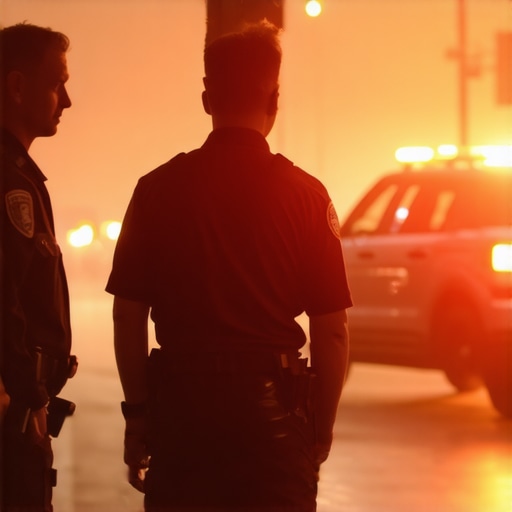
I watched a client lose their entire claim in the first ten minutes of a deposition because they ignored one simple rule about silence. They thought they were helping. They thought the officer was their friend. By the time they realized the trap, the record was sealed and the case was dead. I smell strong black coffee and the scent of a failing case. You are likely here because you believe the system worked against you. It did. The law is not a shield for the uninformed. It is a sword for the prepared. Your DUI case is not about whether you were drinking; it is about whether the government followed the rules. Most of the time, they do not. Here is the brutal truth regarding your constitutional protections.
The initial traffic stop lacked reasonable suspicion
Reasonable suspicion must exist before an officer can pull you over for a traffic violation. This means the officer needs specific and articulable facts that a crime or traffic infraction occurred. A vague hunch is not enough. If the stop was based on a whim or a demographic profile, every piece of evidence gathered afterward – from the smell of alcohol to the breathalyzer result – is legally poisoned fruit that a dui lawyer can move to suppress in court.
Police reports often claim you were weaving within your lane. Case data from the field indicates that weaving within a lane is often perfectly legal and does not constitute reasonable suspicion for a stop. Procedural mapping reveals that officers frequently retroactively justify a stop by claiming a minor equipment failure, like a flickering license plate light, which they never actually intended to cite. This is a common tactic to bypass your Fourth Amendment rights. You must call an attorney to analyze the dashcam footage immediately. Often, the video reveals a different story than the officer’s written report. Law is cold. Facts are colder. If the stop is illegal, the case dies.
Standardized field sobriety tests as subjective theater
Field sobriety tests are designed for failure when administered outside of NHTSA guidelines. These tests are not scientific metrics. They are divided attention tasks that most sober people fail under pressure. Officers frequently ignore medical conditions like inner ear infections, back pain, or even the type of shoes you are wearing. If the officer failed to ask about your physical health before the test, your dui defense begins right there. The three tests – the Horizontal Gaze Nystagmus, the Walk and Turn, and the One Leg Stand – are only valid if performed exactly as prescribed in the training manual.
Consider the Horizontal Gaze Nystagmus (HGN) test. The officer looks for a twitching of the eye. They are supposed to hold the stimulus twelve to fifteen inches from your face. They often hold it too high or move it too fast. This creates false positives. Litigation architecture requires a deep dive into the officer’s training record. I have seen cases where the officer had not been re-certified in five years. They are guessing with your life. Information gain: While most lawyers tell you to sue immediately, the strategic play is often the delayed demand letter to let the defendant’s insurance clock run out or, in a criminal context, to wait for the maintenance logs to show the machine is failing. Evidence does not age well for the prosecution. Small errors in the instruction phase of the Walk and Turn – such as the officer failing to demonstrate the turn – can invalidate the entire test result.
“Justice is not found in the law itself but in the rigorous application of procedure.” – Common Law Maxim
The Fourth Amendment wall against vehicle searches
Unauthorized vehicle searches violate the Fourth Amendment protections against unreasonable government intrusion. An arrest for a DUI does not automatically grant the police the right to tear your car apart. They need your consent, a warrant, or a specific reason to believe evidence of the crime is inside the vehicle. If they searched your trunk without a warrant or your permission, they have overstepped their authority. This is a fundamental right that is frequently ignored in the heat of a roadside arrest.
Many people think they have to say yes when an officer asks to look around. You do not. The officer is looking for an open container or any other incriminating evidence to bolster their narrative. If you refused consent and they searched anyway, you need to call an attorney. The litigation of these searches often comes down to the “inventory search” exception. This is a loophole where police claim they were just cataloging your items for safekeeping. A skilled dui attorney knows how to dismantle this excuse by showing the officer was actually conducting an investigative search without a warrant. The logic is simple. No warrant, no consent, no search. Anything they find during an illegal search should be excluded from trial.
Miranda warnings and the custody trigger
Miranda rights only trigger during custodial interrogation but the right to remain silent exists throughout the stop. You do not have to wait for the officer to read you your rights to stop talking. Every word you say is a nail in your coffin. The officer is not your friend. They are building a case. If they began questioning you while you were in handcuffs but before they read your Miranda rights, those statements are inadmissible. This is the moment where many cases are won or lost in the pretrial phase.
The pressure of a DUI stop is intense. The flashing lights and the cold air are designed to make you talk. Do not. I tell my clients that silence is a weapon. Use it. Many people try to explain that they only had two drinks with dinner. In the eyes of the law, that is a confession of alcohol consumption. You have just given them the probable cause they needed. The dui legal framework is built on your own admissions. If you were interrogated while in custody without being informed of your right to an attorney, the state has committed a procedural suicide. We will use that. We will fight the admission of every syllable.
Calibration errors in forensic chemical testing
Breathalyzer results are often inadmissible due to poor calibration records and maintenance logs. These machines are not infallible gods of truth. They are sensitive scientific instruments that require constant maintenance. If the machine was not calibrated within the statutory window, or if the officer did not observe you for a full twenty minutes before the test to ensure no “mouth alcohol” was present, the result is garbage. Your dui attorney must demand the internal logs of the specific machine used.
Contrary to popular belief, certain medical conditions like GERD (Acid Reflux) can cause a false high reading on a breathalyzer. The machine cannot tell the difference between alcohol in your deep lung air and alcohol vapors coming up from your stomach. While most people think the Breathalyzer is the end of the case, the actual fight is often in the maintenance logs of the machine which the state rarely provides without a fight. If the machine has a history of “ambient fail” errors, it should not have been used. This is forensic psychology and mechanical physics colliding. We look for the ghost in the machine. We look for the one maintenance entry that proves the machine was broken. That is how you win. That is how you protect your future.
“A search is not made legal by what it turns up. It is good or bad when it starts and does not change on its success.” – United States v. Di Re, 332 U.S. 581 (1948)
The road to a dismissal is paved with procedural errors. You need someone who knows how to find them. The state has resources, but they are lazy. They rely on you being scared and pleading guilty. Do not give them that satisfaction. Every stop has a flaw. Every officer has a weakness in their training. We will find it. We will exploit it. The final assessment is simple. Your rights are only as strong as your willingness to defend them. Call a dui lawyer now and stop being a victim of the process.