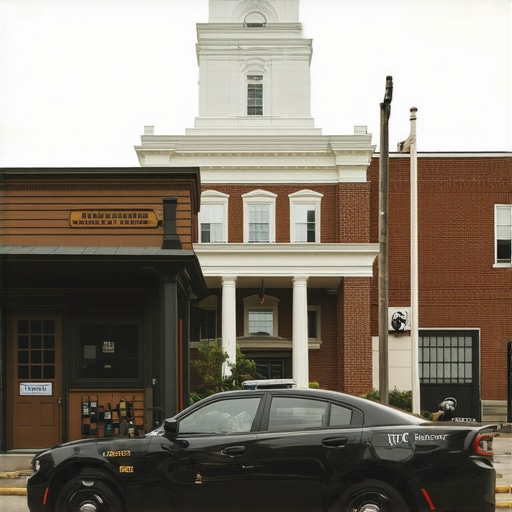
The local trap for the unwary driver
Local DUI laws differ from state statutes through municipal ordinances that impose stricter mandatory minimums and specialized evidentiary rules for breath testing calibration. While the state provides a baseline of legality, individual jurisdictions often utilize home-rule authority to create procedural hurdles that make defending a case significantly more complex for an unprepared attorney.
I watched a client lose their entire claim in the first ten minutes of a deposition because they ignored one simple rule about silence. We were sitting in a room that smelled like old paper and stale coffee, and the opposing counsel just stopped talking. My client felt the physical weight of that silence. Instead of waiting, they started explaining. They explained why they were at the bar. They explained why they felt fine to drive. They gave away the only leverage we had because they could not handle ten seconds of quiet. In the courtroom, silence is a tactical resource. In a DUI case, the moment you start talking to the arresting officer or the prosecutor without a clear objective, you are handing them the rope they need. Legal defense is not about being right. It is about the failure of the state to prove you are wrong using the very narrow set of tools the law allows them to use.
Why your city is more dangerous than the capital
City level DUI enforcement relies on local police departments having specific funding for sobriety checkpoints and unique municipal court procedures that move faster than county dockets. These local courts often have their own rules regarding the admissibility of field sobriety tests, frequently allowing officers more leeway than a state supreme court might prefer.
You must understand that the law is not a uniform blanket. It is a quilt of contradictions. In many jurisdictions, the local dui lawyer knows that the municipal judge has a specific distaste for certain defense motions. While the state law says you have a right to a speedy trial, the local ‘rocket docket’ might force your dui attorney to prepare a complex defense in half the time usually allotted. This is where the tactical zooming becomes a survival skill. You have to look at the exact timing of the breathalyzer recalibration logs. If the DataMaster DMT was not checked within the specific window required by the state health department, but the local judge ignores that discrepancy, you are in a fight that requires more than just a basic understanding of the code. You need a dui defense that targets the procedural rot at the local level.
“Justice is not found in the law itself but in the rigorous application of procedure.” – Common Law Maxim
The state legislature might pass a law, but the local precinct decides how to execute it. Case data from the field indicates that officers in smaller townships often lack the rigorous training for the horizontal gaze nystagmus test. They look for the ‘jerk’ in the eye, but they do it too fast, or they hold the stimulus too close. These are not small errors. They are the difference between a conviction and an acquittal. When you call an attorney, you are not just looking for a mouthpiece. You are looking for a forensic auditor who can find the one second of footage on a body camera where the officer’s procedural failure becomes your legal escape hatch.
The chemical test logbook is your only weapon
Breathalyzer accuracy depends on a strict chain of custody and frequent calibration using a certified simulator solution that must be replaced at specific intervals. If the local police department fails to document the lot number of the solution or the exact temperature during the test, the entire evidentiary foundation of the state’s case becomes vulnerable to a motion to suppress.
While most lawyers tell you to sue immediately or rush to a plea deal, the strategic play is often the delayed demand for discovery. You want to let the defendant’s insurance clock run out while you wait for the maintenance logs of the specific machine used in your arrest. These machines are finicky. They are prone to environmental interference. If the room where the test was administered was recently cleaned with certain chemicals, the ambient vapors can skew the results. This is the microscopic reality of dui legal work. It is about the temperature of the simulator solution and the specific electronic footprint of the machine’s internal diagnostic check. A senior dui attorney knows that a 0.08 reading is not a fact; it is a measurement with a margin of error that the state hates to admit.
How the administrative hearing destroys the criminal defense
The administrative license revocation hearing is a separate legal track that often happens before the criminal trial, providing a preview of the officer’s testimony under oath. This hearing is where the dui defense can lock the officer into a specific narrative before they have a chance to review the video evidence with a prosecutor.
Most people ignore the administrative side because they think the criminal case is the only thing that matters. That is a fatal mistake. The administrative hearing is a tactical scouting mission. It is where you find out if the officer actually remembers the night or if they are just reading from a template. I have seen cases fall apart because an officer testified to one thing at the license hearing and another at the trial. That inconsistency is the ‘bleed’ we look for. It is the ROI of litigation. If you can prove the officer is unreliable on the stand before the jury even sees them, the prosecutor’s leverage evaporates. You need to understand the logistics of the stop. Where was the officer standing? What was the lighting? Was there traffic noise that made the instructions impossible to hear? These are the details that win cases.
“The right to counsel is the right to the effective assistance of counsel.” – McMann v. Richardson, 397 U.S. 759
Procedural mapping reveals that the defense is often won in the discovery phase. You are looking for the gap between what the police report says and what the digital evidence shows. If the officer claims you were swerving but the dashcam shows you were maintaining your lane, that is a constitutional violation of the Fourth Amendment. There was no reasonable suspicion for the stop. Without the stop, there is no breath test. Without the breath test, there is no case. This is why you must call an attorney the moment you are released. The clock is ticking on the preservation of that digital evidence. Most police departments overwrite their server data every thirty to sixty days. If you wait, the evidence that could have exonerated you is gone forever, replaced by the officer’s subjective and often biased memory of the events.
Why waiting to sue is the only move left
Strategic litigation often involves delaying the formal demand to ensure that all medical and forensic evidence is fully developed and the prosecution’s witnesses have lost their initial enthusiasm for the case. This delay can force the state to offer a more favorable plea or even dismiss the charges if their primary evidence faces a successful technical challenge.
It is not about the truth. It is about perception and the technical ability of the state to meet its burden of proof. Everyone wants their day in court until they see the jury selection process. Juries are unpredictable. They are influenced by the smell of the courtroom, the way the defendant is dressed, and the tone of the judge’s voice. A brutal truth in this business is that a jury does not care about the law as much as they care about the story. If the story is that a local citizen was harassed by a poorly trained officer using a broken machine, you win. If the story is that a dangerous driver is trying to get off on a technicality, you lose. Your dui lawyer must be an architect who builds the first story and demolishes the second. We use the law like a scalpel to remove the state’s evidence piece by piece until there is nothing left for the jury to look at. That is how you survive a DUI charge in a state that is stacked against you.