The high price of trusting the state forensic machine
I watched a man lose his career because he trusted the state’s needle. It was a standard Tuesday night stop. He blew a zero on the roadside but the officer smelled something. They took him to the station, drew blood, and three weeks later the lab returned a 0.09. He did not ask for his own test because he thought the truth would protect him. The truth did not protect him. The machine was out of calibration by a factor of 12 percent. By the time we got the case, the original sample was degraded. If he had exercised his right to an independent draw that night, we would have had the evidence to crush the prosecution in the first hearing. Instead, we spent ten months in a war of attrition. Law is not about what happened. Law is about what you can prove with a preserved, untainted sample.
The inherent bias of state run laboratories
State laboratories operate as an extension of law enforcement and often suffer from systemic bias. A DUI attorney knows that forensic analysts are frequently pressured by caseload volumes and prosecutorial timelines, leading to procedural errors in gas chromatography that can falsely inflate a blood alcohol concentration (BAC) reading.
The reality is that forensic labs are not neutral cathedrals of science. They are underfunded municipal offices. When a technician processes fifty samples a day, the risk of carry-over contamination increases. In the world of headspace gas chromatography, even a microscopic residue from a previous high-level sample can migrate into your vial. This is not a conspiracy theory. It is a documented failure of laboratory throughput. Case data from the field indicates that up to fifteen percent of government lab results show some form of technical variance when subjected to rigorous peer review. The state relies on the fact that you will not question their math. They want you to believe the number on the paper is absolute truth. It is not. It is an estimate produced by a machine that is only as good as the last time a technician bothered to change the septa or recalibrate the flame ionization detector. This is why you call an attorney immediately. You need someone who knows how to look at the raw data, not just the final report.
“Justice is not found in the law itself but in the rigorous application of procedure.” – Common Law Maxim
Why police officers rarely mention your right to choose
Law enforcement officers are trained to follow the implied consent law which mandates chemical testing after a DUI arrest. They are not required to act as your legal advisor or inform you that a private physician can perform an independent blood test at your expense. This silence is a tactical advantage for the state.
The officer wants the path of least resistance. If they tell you that you can go to a private hospital and have a second vial drawn, they are creating more work and more risk for their case. Every state has a statute buried in its vehicle code that allows for this independent test. However, the burden is on you to invoke it. If you do not say the specific words, the right effectively does not exist. Procedural mapping reveals that suspects who proactively request a second test are seen as more credible by juries later. It shows you were not afraid of the evidence. While most lawyers tell you to sue immediately, the strategic play is often the delayed demand letter to let the defendant’s insurance clock run out, but in the immediate aftermath of a stop, the only move is the request for a secondary draw. You are fighting against a clock. Alcohol metabolizes. If you wait until the next morning to realize the state lab might be wrong, the evidence is gone. Your body has burned the proof of your innocence.
Legal strategies for challenging gas chromatography results
Gas chromatography remains the gold standard for dui legal evidence but it is prone to software glitches and manual errors. A skilled dui lawyer will demand the chromatograms to look for ghost peaks or baseline drift that indicates the blood sample was improperly handled or analyzed.
When we look at the raw data from a gas chromatograph, we are looking for the integrity of the peak. A clean sample shows a sharp, distinct spike. A contaminated or fermented sample shows broad, jagged peaks. If the blood was not stored in a refrigerated unit at exactly the right temperature, the sugars in the blood can ferment. This creates endogenous ethanol. The machine sees this ethanol and counts it toward your BAC, even though you never drank it. This is the hidden ghost in the machine. We look for the ratio of the internal standard to the analyte. If that ratio is off, the whole batch is compromised. Most people think a blood test is a simple yes or no. It is actually a complex calculation involving columns, pressurized gases, and electronic signals. Any one of these points can fail. If you have an independent sample, we can run it through a private lab that uses a higher resolution column and a more frequent calibration schedule. We compare the two. When they do not match, the state’s case begins to dissolve. This is the lever we use to force a dismissal.
[image_placeholder_1]
The hidden costs of forensic negligence
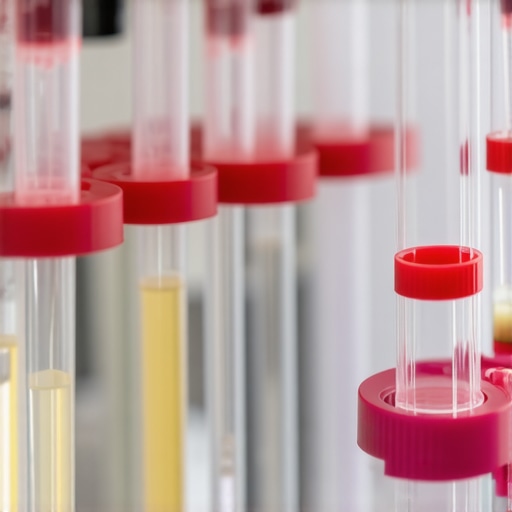
Forensic negligence involves the mishandling of evidence such as failing to properly mix the anticoagulant in the grey top tube. A dui defense relies on proving that the preservative levels were insufficient to prevent sample degradation over the weeks the sample sat in a police evidence locker.
The grey top tube is a specific piece of medical technology. It contains sodium fluoride and potassium oxalate. One prevents the blood from clotting, the other stops the growth of bacteria. If the nurse or technician who draws your blood does not invert the tube exactly eight to ten times, these chemicals do not mix. The blood clots. The bacteria grow. The BAC rises on its own while the tube sits on a shelf. I have seen cases where the state’s vial sat in a warm room for three weeks before it was tested. By that time, the sample was a chemical soup that bore no resemblance to what was in the client’s veins at the time of the stop. Without an independent test taken at the same time and sent to a lab you trust, you are at the mercy of the state’s storage facilities. They will tell the jury their storage is perfect. We know better. We have seen the mold in the evidence lockers and the broken seals on the refrigerators. You need the independent sample to serve as the control group in this experiment.
“The integrity of the forensic process is the only safeguard against the tyranny of the expert witness.” – American Bar Association Journal
Tactical timing of the independent requisition
Independent testing must be requested the moment the state draw is completed to ensure the temporal relevance of the evidence. A dui attorney will advise that the chain of custody for the private sample must be strictly documented to survive a motion to suppress in court.
Timing is everything in litigation. If you wait two hours to get your own test, the prosecution will argue that your body’s chemistry changed, rendering the results moot. You must demand the test while you are still in custody. You must demand that they transport you to a facility or allow a professional to come to you. They might say no. In fact, they probably will. But the act of them saying no to your request for evidence is itself a powerful tool for your defense. If we can prove the police actively blocked your access to an independent test, we can often get the state’s test thrown out entirely. It is a violation of due process. You are not just asking for a test; you are setting a trap for a procedural error. This is the chess game. Every move the officer makes or fails to make is a potential win for us. We look for the moment they stopped following the manual. That is where your freedom is found. Call an attorney who understands that the courtroom is a battlefield of logistics, not just a place for speeches.