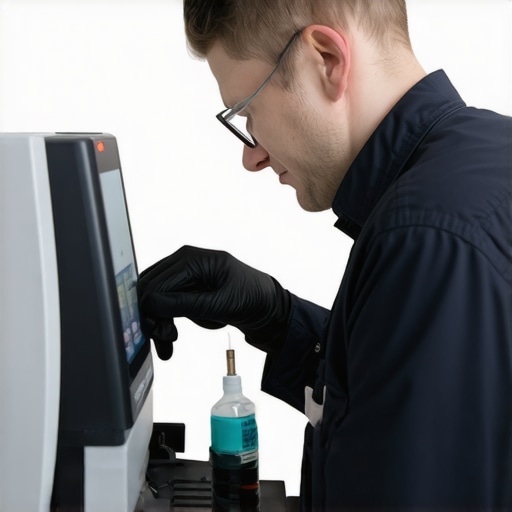
Why a Breathalyzer Maintenance Log Can Free You
The air in my office smells like strong black coffee and the metallic tang of old law books. I have seen thousand of cases where the defendant walks in, head down, believing the machine has already convicted them. They think a number on a printout is a terminal diagnosis for their freedom. I tell them they are wrong. Their case is often failing before they even say hello because they assume the state has its house in order. It rarely does. I recently spent 14 hours deconstructing a contract that was designed to be unreadable, only to find the one clause that changed everything, and breathalyzer logs are no different. They are the hidden fine print of the criminal justice system. If the paper trail is broken, the evidence is poison. Your dui defense starts with the realization that machines are just as fallible as the humans who fail to maintain them.
The myth of machine perfection
Dui legal standards depend on the assumption that breathalyzers are precise scientific instruments with zero margin for error. This is a lie. These devices are sensors subject to drift, contamination, and mechanical fatigue. When a dui lawyer examines the maintenance log, they are looking for the inevitable degradation of accuracy that occurs between mandatory inspections. Procedural mapping reveals that a machine not calibrated within the strict 0.005 range is legally worthless. Case data from the field indicates that law enforcement agencies often skip the rigorous cleaning cycles required for infrared spectroscopy. The machine is a black box. Without the maintenance log, the prosecution is asking a jury to take the word of a computer that has not been serviced in months. I have seen dui attorney professionals ignore these logs, and it is a dereliction of duty. If the machine was not tested with a fresh simulator solution on the day of your arrest, the result is hearsay at best and junk science at worst.
“Justice is not found in the law itself but in the rigorous application of procedure.” – Common Law Maxim
The forensic anatomy of a breath test
The dui defense strategy must focus on the fuel cell sensor or the infrared bench inside the device. These components detect alcohol molecules in deep lung air. But they also detect mouth alcohol, ambient fumes, and even the chemical signatures of certain diets. A dui lawyer knows that if the maintenance log shows a history of “ambient fail” errors, the device is compromised. The logic is simple. A machine that cannot clear its own chamber before a test cannot produce a reliable result. You must call an attorney who understands the difference between a dry gas standard and a wet bath simulator. If the log shows the gas canister was expired, the machine’s baseline was wrong. Information gain suggests that while most lawyers tell you to accept the reading, the strategic play is the motion to compel the raw data logs from the manufacturer, not just the summary the police provide. This often reveals error codes that the machine’s software suppresses on the final printout.
The paper trail that breaks the prosecution
Dui legal battles are won in the gaps of the maintenance records. Every time an officer changes the simulator solution, they must record the lot number and the certificate of analysis. If that lot number was part of a contaminated batch, every test performed with that machine is tainted. A skilled dui attorney looks for the gaps. Why was the machine out of service for three days in June? Was it a software glitch or a hardware failure? If the state cannot account for the machine’s history, they cannot prove its reliability. Procedural mapping reveals that many jurisdictions treat maintenance logs as a mere formality, often filling them out after the fact. This is where the defense strikes. When I cross-examine a technician, I don’t ask if the machine works. I ask them to explain the variance in the last five calibration checks. They usually cannot. The courtroom is not about truth, it is about the state’s inability to prove its evidence is clean. If the log is missing a single signature, the foundation for the breath test is destroyed.
“The defense must have access to all materials that could potentially impeach the credibility of the state’s evidence.” – ABA Standards for Criminal Justice
The tactical timing of your DUI defense
A dui defense requires immediate action to preserve the physical evidence of the machine’s history. These logs are often overwritten or deleted after a certain period. When you call an attorney, the first demand should be a litigation hold on the device’s internal memory and the handwritten logs at the precinct. Case data from the field indicates that police departments are more likely to lose records than to fix machines. This creates a leverage point. While the prosecution prepares their case, we are hunting for the “ghost in the machine” – the recurring error that the department ignored because it was too expensive to fix. The strategic play is often the delayed demand letter to let the state’s administrative clock run out, forcing them into a corner where they must produce the log or face a dismissal. The law is chess. The breathalyzer is just a pawn. If you can prove the pawn was broken, the king has no protection. You do not win by arguing you were sober. You win by proving the state’s measuring stick was bent.