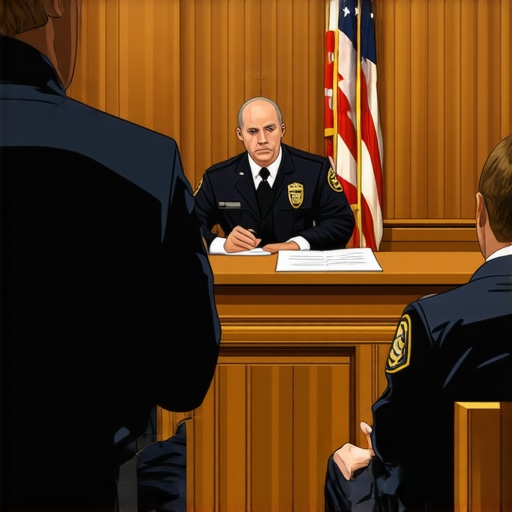
I smell like strong black coffee and the cold reality of a courtroom where your rights are currently being shredded by a prosecutor who cares nothing for your dignity. Your case is failing. You think that because a police officer told you that you must submit to a needle, you have no recourse. You are wrong. I watched a defendant lose their entire defense in the first ten minutes of a suppression hearing because they ignored one simple rule about silence. They thought being cooperative with the technician would help. It did not. It provided the state with the consent they lacked. Most people walk into a DUI charge like lambs to the slaughter because they do not understand that the needle is a search and every search requires a warrant. If you are looking for a gentle explanation, find another blog. If you want to know how to win, keep reading.
The myth of automatic consent
A DUI attorney challenges warrantless blood draws by invoking the Fourth Amendment protections established in Missouri v. McNeely. The police cannot claim exigent circumstances simply because blood alcohol content dissipates over time. Your DUI legal defense relies on a motion to suppress evidence obtained without a search warrant. Procedural mapping reveals that many officers rely on outdated implied consent laws to bully suspects into submission. They tell you that you already agreed to the test when you signed for your driver license. This is a half truth designed to bypass the judicial system. While you may face administrative penalties for refusal, the physical intrusion of a needle requires a higher standard of constitutional compliance. The state wants you to believe their convenience outweighs your bodily integrity. It does not. The law is a series of gates. If the police do not have the key, they must not enter. Case data from the field indicates that officers often forgo the warrant process because they are lazy or overconfident. This is where the defense begins. We do not look for the truth of your sobriety; we look for the failure of their procedure. A single gap in the timeline between the stop and the draw can be enough to collapse the state case. If they had time to call a judge but chose not to, the evidence is tainted. It must be excluded.
“Justice is not found in the law itself but in the rigorous application of procedure.” – Common Law Maxim
Why the Fourth Amendment protects your veins
The Fourth Amendment protects individuals against unreasonable searches and seizures, which includes the extraction of biological samples like blood. A dui lawyer argues that blood draws are significantly more intrusive than breath tests and require a search warrant under Birchfield v. North Dakota. This dui defense strategy focuses on constitutional violations. The needle is a breach of the fortress of the self. Unlike a breath test, which only captures what you are already exhaling, a blood draw requires the piercing of skin and the removal of a part of your body. The Supreme Court has been clear. The state cannot use the search incident to arrest doctrine to justify a blood draw. It is too personal. It is too invasive. We analyze the specific language used by the officer at the scene. Did they threaten you? Did they imply that a warrant was already on its way when it was not? Misrepresentation of legal authority is a common tactic. If the officer lied about the necessity of the draw, any consent given is legally hollow. We strip away the layers of police bravado to find the moment of coercion. Once that moment is identified, the blood test results become fruit of the poisonous tree. They cannot be used against you. The jury will never see the numbers. The case dies in the dark.
The physical intrusion of the needle
The mechanical process of a blood draw involves a venipuncture that must be performed by a licensed professional under strict medical protocols. Your dui legal counsel investigates the phlebotomist and the sanitary conditions of the draw site to ensure no procedural errors occurred during the evidence collection. The needle entered. The skin broke. The state took what was not theirs. We look at the gauge of the needle used. We look at the alcohol swab. If the technician used an ethanol based swab to clean the site, the entire sample is scientifically useless. It is contaminated by the very substance the state is trying to measure. This is the microscopic reality of the case. We demand the training records of the person who pulled the trigger on that needle. Often, these are not high level medical professionals but entry level techs working under pressure. They skip steps. They forget to invert the tube the required number of times. They fail to check the expiration date on the vacuum seal. Each of these failures is a brick in the wall we build against the prosecution. While most lawyers tell you to sue immediately, the strategic play is often the delayed demand for the lab’s calibration logs. We let the state commit to their timeline first. Then we strike when the logs show the machine was malfunctioning the week of your arrest.
McNeely and the end of automatic emergency
The Supreme Court ruling in Missouri v. McNeely established that the natural dissipation of alcohol in the bloodstream does not create a per se exigency for a warrantless search. A dui attorney uses this precedent to invalidate blood evidence obtained without judicial oversight or a demonstrated emergency situation. Before this ruling, police treated your body like a ticking clock. They claimed that every second they waited for a judge, evidence was disappearing. The court finally told them that the Fourth Amendment does not have a stopwatch. In today’s digital age, a warrant can be obtained in minutes via a tablet or a phone call. If the officer did not even try to contact a magistrate, they have no excuse. We map the geography of the arrest. We show the court exactly how many judges were available within a five mile radius. We show the cell phone towers that would have carried the warrant request. We turn the officer’s convenience into their downfall. The state must prove that a true emergency existed. A car crash is not an automatic emergency. A busy night at the precinct is not an emergency. If they had time to wait for a tow truck, they had time to wait for a judge. The law is not a suggestion. It is a mandate.
“The Fourth Amendment is not a mere formality but a fundamental check on state power.” – American Bar Association Journal
The toxicological failure of the chain of custody
A blood sample is a volatile substance that requires chemical preservation and a documented chain of custody to remain admissible in court. Your dui lawyer scrutinizes the laboratory records and refrigeration logs to identify contamination or fermentation that could artificially inflate blood alcohol concentration levels. Blood is alive. It contains enzymes and bacteria. If the sample is not stored at the correct temperature, or if the sodium fluoride preservative is insufficient, a process called neo-genesis occurs. Yeast in the blood begins to ferment the glucose, creating its own alcohol inside the tube. You could be stone cold sober at the time of the draw and still test over the limit if the lab was negligent. We look for the white powder at the bottom of the vial. We check the lot numbers. We look for the gap in the log where the blood sat on a warm desk for six hours because the technician was on a lunch break. The state will present a clean report. We find the filth behind it. This is the information gain the prosecution fears. They want you to believe the machine is infallible. The machine is only as good as the human who fed it. We cross examine the chemist. We ask about the carryover effect in the gas chromatograph. We force them to admit that the margin of error is wider than they want the jury to believe. This is how you win.
Questions your attorney must ask the phlebotomist
The phlebotomist must be cross examined regarding their certification, the disinfection protocol, and the tube inversion sequence used during the warrantless blood draw. A dui defense relies on exposing technical failures that compromise the integrity of the sample and the veracity of the evidence presented by the government. Did you use a non alcoholic antiseptic? This is the first question. If they hesitate, the case is wounded. Did you observe the vacuum seal break? If they cannot remember, the sample is suspect. How many times did you invert the tube to mix the anticoagulant? The manual says eight to ten. If they did it twice, the blood will clot. Clotted blood produces inconsistent results. We don’t care about their excuses. We care about the protocol. The courtroom is territory. We hold every inch of it. We look for the specific phrasing of the consent. Did the officer say you must or you should? The difference is the difference between a constitutional search and an illegal seizure. Silence is leverage. Procedure is the weapon. If the state cannot prove every link in the chain, the chain is broken. Your life does not have to be ruined because of a needle. You just need a lawyer who knows how to break the state’s tools.