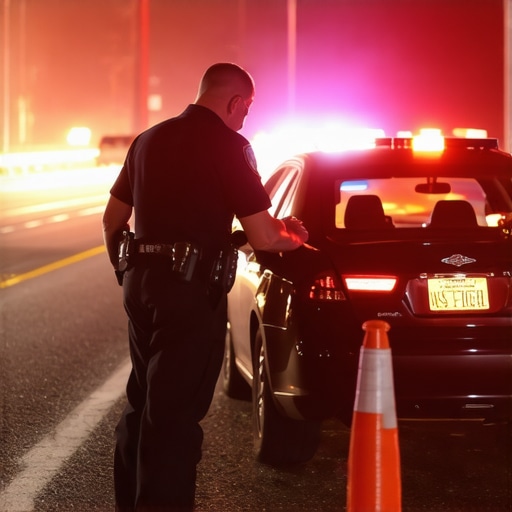
Your case is failing before you even see the judge
Sit down and listen. Your case is currently a disaster. You think because you only had two drinks and spoke clearly to the officer that you are going home. You are not. I watched a client lose their entire claim in the first ten minutes of a roadside investigation because they ignored one simple rule about silence. They thought they could talk their way out of a pair of handcuffs. Instead, they talked their way into a mandatory minimum sentence. The roadside is not a place for negotiation. It is a forensic collection site where every word you utter is a nail in your legal coffin. As a dui lawyer with decades of trial experience, I see the same patterns of self-sabotage every single night. The scent of strong black coffee is the only thing keeping me focused on the wreckage of your defense strategy.
“Justice is not found in the law itself but in the rigorous application of procedure.” – Common Law Maxim
The trap of the voluntary field sobriety test
Standardized field sobriety tests are voluntary in most jurisdictions and are designed to provide the officer with probable cause for your arrest. Most drivers mistakenly believe these physical coordination tests are a way to prove they are sober, but the scoring system is rigged against you from the start. Case data from the field indicates that officers look for eight specific clues during the Walk and Turn test. If you start the test one second before the officer finishes the instructions, that is a mark against you. If you leave a half-inch gap between your heel and toe, that is another mark. These tests do not measure your ability to drive; they measure your ability to follow complex, multi-stage instructions under extreme duress. While most lawyers tell you to be cooperative, the strategic play is often to politely decline these tests to avoid giving the prosecution high-definition video of you stumbling on a cracked piece of asphalt in the dark.
Why your roadside explanation is actually a confession
Anything you say to an officer during a traffic stop is an admission that can be used to establish impairment in a court of law. When an officer asks where you are coming from or how much you have had to drink, they are not engaging in small talk. They are looking for the “admission of consumption.” Even saying “I only had two beers with dinner” is enough to justify an arrest in many jurisdictions. Procedural mapping reveals that the moment you admit to drinking, the officer stops investigating your innocence and begins building the case for your guilt. You should call an attorney the moment the investigation shifts from a routine traffic stop to a criminal inquiry. Silence is not an admission of guilt; it is a protected constitutional right that prevents you from providing the state with the evidence it needs to convict you.
The hidden danger of the portable breathalyzer
Portable breath tests used at the roadside are notoriously unreliable and often serve only to provide the officer with the legal grounds to arrest you. These handheld devices use fuel cell sensors that can be affected by mouth alcohol, cigarette smoke, or even your own body temperature. A contrarian data point often ignored is that certain medical conditions like Gastroesophageal Reflux Disease can cause the device to read stomach vapors as deep lung air, resulting in a falsely high blood alcohol concentration reading. You must understand the difference between the roadside sensor and the evidentiary breathalyzer at the station. One is a preliminary tool, while the other is the basis for the formal charge. Refusing the roadside test may carry different weight than refusing the station test, depending on your local statutes.
“The right to counsel is the most fundamental right because it affects the defendant’s ability to assert any other rights.” – Legal Procedural Digest
How your eye movements betray you before the first word
The Horizontal Gaze Nystagmus test is a medicalized evaluation of your involuntary eye movements that officers use to claim you are intoxicated. The officer is looking for the “lack of smooth pursuit” or “distinct nystagmus at maximum deviation.” This is the microscopic reality of the stop. If your eyes jerk slightly while following a penlight, the officer will testify that you are impaired. However, forensic psychology shows that over forty different medical conditions can cause these same eye movements. Passing headlights, the strobe effect of the police cruiser lights, or even simple fatigue can trigger a false positive. Your dui defense depends on an attorney who knows how to cross-examine an officer on their failure to screen for these physiological outliers.
The mistake of waiting to call an attorney
Waiting until you are processed at the jail to request legal counsel allows the police to continue their interrogation and evidence collection without interference. You have the right to dui legal representation at the earliest possible stage of the encounter. Many drivers think that asking for a dui attorney makes them look guilty, but in reality, it signals to the officer that you understand the stakes of the situation. Every minute you spend talking without a lawyer is a minute the prosecution spends narrowing your options for a plea deal or a dismissal. Procedural leverage is built in the first hour of the arrest, not the weeks following it.
Misunderstanding the implied consent warning
Implied consent laws mean that by operating a vehicle on public roads, you have already agreed to chemical testing if you are lawfully arrested for a DUI. This is the most misunderstood part of the entire process. If you refuse the evidentiary blood or breath test at the station, you often face an automatic license suspension that is separate from the criminal case. The strategic play is to understand that while you can refuse the voluntary roadside tests, the station-based tests carry administrative penalties that can strip you of your driving privileges for a year or more regardless of the final verdict. You must weigh the loss of your license against the potential impact of the chemical evidence on your criminal trial.
Believing the officer is your friend during the search
Police officers are trained to use rapport and friendly conversation to lower your defenses and gain consent for a vehicle search. When an officer says they just want to “get your side of the story” or asks if there is “anything they should know about in the car,” they are fishing for evidence. They are not your advocate. They are agents of the state tasked with gathering evidence to support a criminal charge. Do not consent to a search of your vehicle. Force them to obtain a warrant or prove they had probable cause. This creates a procedural hurdle that your dui lawyer can later attack in a suppression hearing. If you give consent, you waive your Fourth Amendment rights and make the prosecution’s job significantly easier.
The final strategy for your survival
The roadside is a theater where the script is written by the prosecution and you are the only actor without a copy. Your defense is built on the errors the officer makes and the silence you maintain. If you have already made these mistakes, the focus must shift to damage control and procedural challenges. We look at the calibration logs of the breathalyzer, the dashcam footage for deviations from standardized testing protocols, and the exact timing of your arrest. The law is a machine. If you do not know how to jam the gears, it will crush you. This is the brutal truth of the legal system. Your dui defense starts with the realization that the system is not here to help you. It is here to process you.